
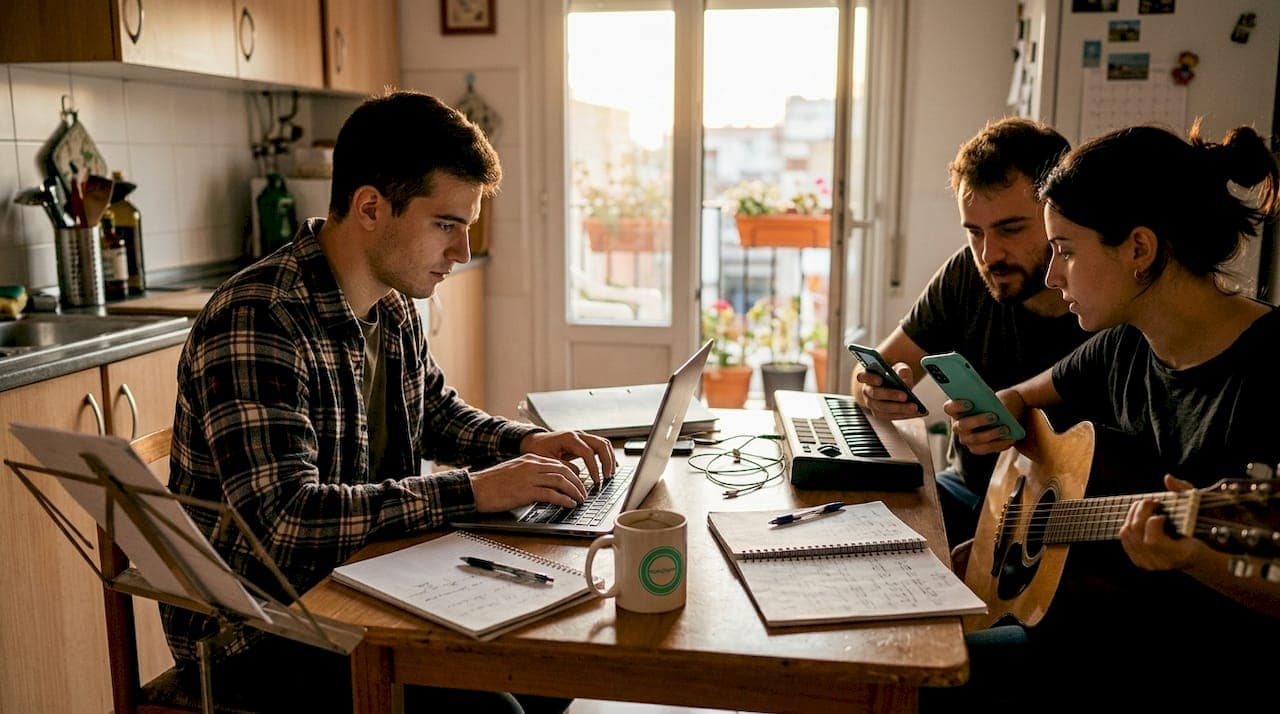
Playing music alone can feel isolating, especially when you crave collaboration and creative energy. Many musicians struggle to find meaningful local connections that lead to real opportunities. Building a strong local music network transforms your musical journey by opening doors to jam sessions, band formations, and performance opportunities. This guide delivers actionable strategies to help you prepare, execute, and sustain a thriving music community in your area. Whether you're a beginner or seasoned player, these proven methods will connect you with fellow musicians who share your passion.
Table of Contents
- Key takeaways
- Preparation: essentials for building your local music network
- Execution: how to organize and run successful jam sessions
- Sustaining and growing your music network
- Explore JamClub's tools to connect and create
- How to build a local music network frequently asked questions
Key Takeaways
| Point | Details |
|---|---|
| Establish infrastructure | Create a simple digital hub with a shared calendar and clear communication channels to coordinate events. |
| Recurring jam sessions | Set fixed recurring schedules to build routine and keep participants engaged. |
| Partner with local groups | Collaborate with existing local groups and venues to expand reach and share resources. |
| Balance inclusivity and skill levels | Invite a mix of skill levels and provide mentorship to sustain growth. |
| Promote events widely | Use social media, email lists, and physical flyers to maximize attendance. |
Preparation: essentials for building your local music network
Before hosting your first jam session, you need solid infrastructure. Core mechanics for building a local music network include establishing infrastructure like a shared calendar, landing page, and communication tools. Start by setting up a dedicated communication channel using Discord or WhatsApp where musicians can coordinate schedules, share updates, and build relationships between events. These platforms create ongoing dialogue that keeps your community engaged beyond physical meetups.
Your venue selection matters significantly. Scout accessible locations like coffee shops, bars, community centers, or even your home if space permits. Consider acoustics, parking availability, and whether the venue welcomes regular musical gatherings. Many cafes appreciate live music during slow hours, creating mutually beneficial partnerships. A local jam sessions platform can help you discover existing venues and connect with musicians already active in your area.
Create a simple digital hub where newcomers find essential information. This doesn't require fancy web development, just a single page with your schedule, location details, and contact information. Include a shared calendar that displays all upcoming events, making it easy for musicians to plan ahead. Consistency builds habits, so establish recurring event schedules on fixed nights like "First Friday Acoustic Jams" or "Tuesday Night Blues Sessions."
Promotion requires multiple channels. Post regularly on social media platforms where local musicians gather, build an email list for direct updates, and distribute physical flyers at music stores, instrument repair shops, and performance venues. The hip-hop networking checklist demonstrates how targeted outreach in specific music communities amplifies your reach effectively.
Essential preparation checklist:
- Set up Discord or WhatsApp group for coordination
- Create shared Google Calendar for events
- Secure accessible venue with good acoustics
- Build simple landing page with key information
- Design promotional materials for distribution
- Establish fixed recurring schedule
| Infrastructure Element | Primary Purpose | Recommended Tool |
|---|---|---|
| Communication | Real-time coordination | Discord, WhatsApp |
| Scheduling | Event visibility | Google Calendar, Calendly |
| Information Hub | Centralized details | Simple website, social media page |
| Promotion | Audience growth | Instagram, Facebook, physical flyers |
Pro Tip: Start small with monthly events before committing to weekly sessions. This allows you to refine your process and gauge community interest without overwhelming yourself or participants.
Execution: how to organize and run successful jam sessions
Executing effective jam sessions requires clear planning and intentional facilitation. Methodologies for jam sessions include defining goals and style, selecting accessible venues, inviting mixed skill levels, and setting ground rules. Begin by determining whether your sessions will focus on specific genres like jazz or blues, or embrace open-style exploration. Genre-specific jams attract dedicated players while open formats encourage experimentation and diversity.
Invite participants through local music forums, social media groups, and existing musician networks. Aim for a mix of skill levels rather than excluding beginners. Experienced players provide mentorship while newcomers bring fresh energy and perspectives. This balance creates dynamic sessions where everyone learns. Use jam session creation tools to manage RSVPs and communicate participant lists ahead of time.
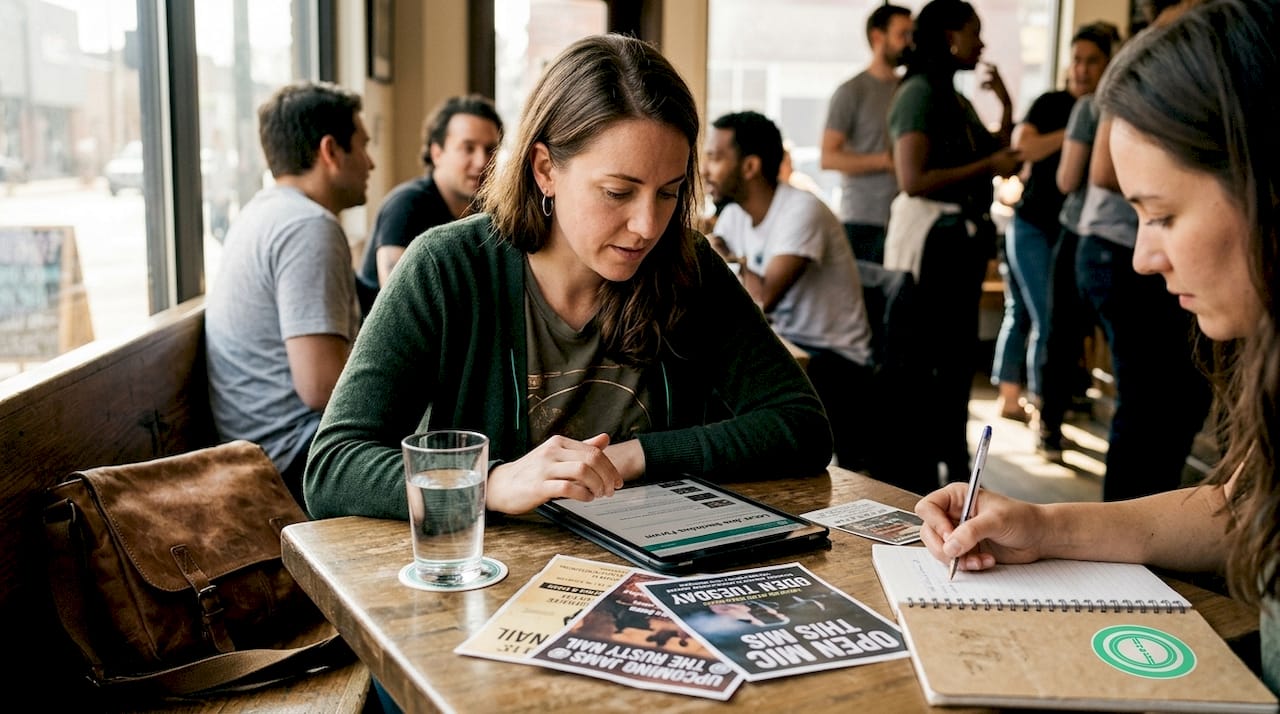
Establishing "jamiquette" prevents common frustrations. Communicate ground rules clearly before sessions start, covering topics like volume levels, turn-taking for solos, respectful listening, and time limits per song. These guidelines create psychological safety where musicians feel comfortable taking creative risks. Post rules visibly at your venue and review them briefly at the start of each session, especially when new participants join.
Steps to organize your first jam session:
- Define your session goal and musical style
- Select and confirm venue availability
- Set date and time at least two weeks ahead
- Invite 5 to 10 participants through multiple channels
- Share ground rules and expectations via email
- Prepare basic equipment list and backups
- Arrive early to set up and greet participants
- Facilitate introductions and ice-breaking
- Monitor session flow and enforce jamiquette gently
- Gather feedback afterward for improvements
Target participant numbers around 5 to 10 for optimal engagement. Smaller groups ensure everyone gets playing time while maintaining conversational intimacy. Larger gatherings can fragment into side conversations or leave players waiting too long between contributions. If demand exceeds capacity, consider splitting into multiple sessions or rotating participants.
Include at least one experienced musician who can guide song selections, demonstrate techniques, and encourage quieter members to participate. This mentorship accelerates skill development and models collaborative behavior. Review jam session best practices to understand facilitation techniques that keep energy high and conflicts minimal. Consider setting jam session rules transparently so participants know what to expect.
Pro Tip: Create a shared song list before each session where participants suggest tunes. This prevents awkward silences and ensures everyone knows at least some material being played.
Sustaining and growing your music network
Maintaining momentum requires intentional relationship-building beyond individual events. Focus on cultivating deep connections with a core group rather than chasing large numbers of superficial contacts. For beginners, use slow jams to avoid overwhelming new players, and prioritize a few meaningful relationships over many shallow ones. Implement beginner-friendly sessions with slower tempos and simpler chord progressions, creating safe spaces for skill development without pressure.
Structured professional jams differ significantly from organic social gatherings. Professional sessions often feature hired musicians, paid performances, and specific repertoire requirements. Social jams emphasize community-building, learning, and informal collaboration. Both serve valuable purposes in your network. Professional events showcase talent and generate income while social jams foster the relationships that lead to band formations and creative partnerships.
| Aspect | Professional Jams | Social Jams |
|---|---|---|
| Primary Goal | Performance quality, income | Community building, learning |
| Skill Requirements | Advanced players | All levels welcome |
| Structure | Planned setlists, rehearsals | Spontaneous, flexible |
| Compensation | Paid gigs, door splits | Free participation |
| Atmosphere | Performance-focused | Relaxed, experimental |
Partner with established local music societies, instrument stores, and venues to sustain growth. These organizations provide built-in audiences, promotional support, and credibility. Jam sessions in Nashville demonstrate how venue partnerships create sustainable ecosystems where musicians, businesses, and audiences all benefit. Approach potential partners with clear value propositions showing how your events drive foot traffic or enhance their community reputation.
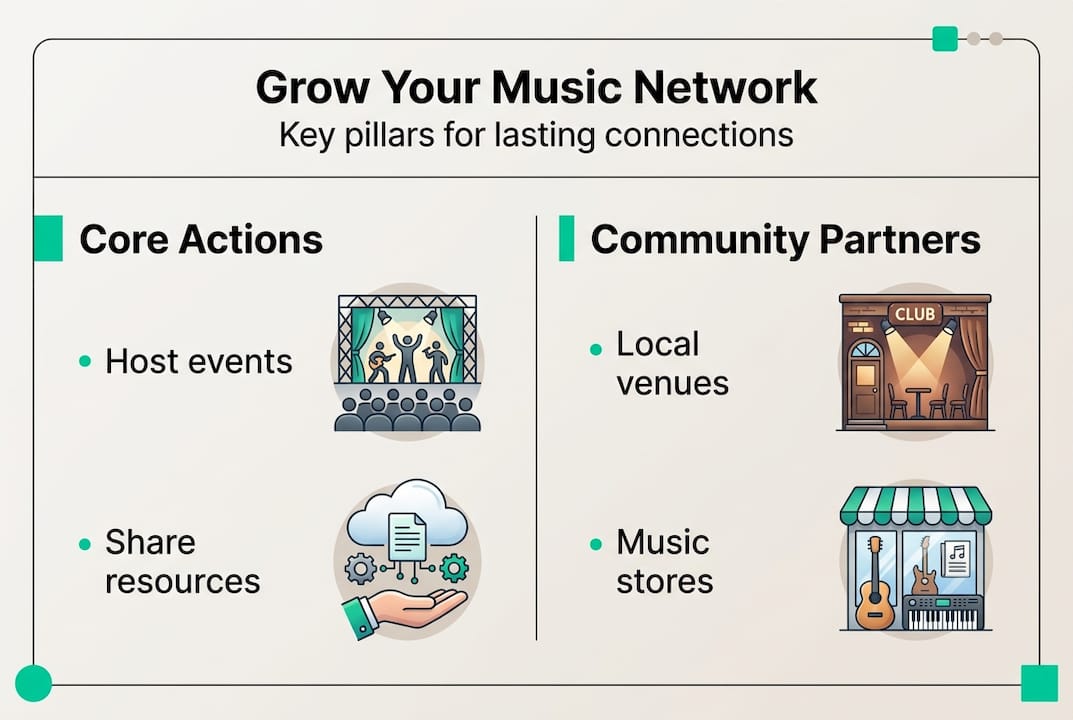
Monetization becomes relevant as your network matures. Consider sponsorships from music equipment companies, instrument retailers, or local businesses seeking cultural association. Implement fair artist compensation models like door splits or tip jars for featured performers. Transparency about money prevents resentment and professionalizes your operation. Balance free community events with occasional ticketed showcases that generate revenue for venue costs and musician pay.
Strategies for long-term network health:
- Rotate facilitation responsibilities to prevent burnout
- Survey participants regularly for feedback and ideas
- Celebrate milestones like anniversaries or member achievements
- Document sessions through photos and recordings
- Create mentorship pairs between experienced and new members
- Host periodic social events beyond musical performance
- Maintain consistent communication between sessions
Avoid fatigue by pacing your commitments realistically. Monthly events prove more sustainable than weekly sessions for volunteer organizers. Delegate tasks like promotion, equipment management, and venue coordination to willing participants. This distributes workload and increases community ownership. The jam session community mission emphasizes collective responsibility where everyone contributes to network success.
Pro Tip: Create a "jam alumni" group for musicians who move away or become less active. They often return for special events and refer new participants, extending your network's reach beyond your immediate geography.
Explore JamClub's tools to connect and create
Building your local music network becomes effortless with the right platform supporting your efforts. JamClub helps you discover musicians in your area actively seeking collaboration and jam opportunities. Instead of starting from scratch, you tap into an existing community of players across all instruments and skill levels. The platform's search features connect you with compatible musicians based on location, genre preferences, and availability.
Create and manage your own sessions through intuitive jam session platform tools that handle RSVPs, participant messaging, and event logistics. Set your session parameters, communicate expectations clearly, and build anticipation through integrated promotion features. When you report jam sessions on JamClub, you contribute to a growing database that helps other musicians find opportunities while raising your own visibility.
Join a supportive community focused on musical collaboration rather than competition. The jam session community mission centers on making music accessible and social, breaking down barriers that keep talented musicians isolated. Whether you're looking for weekly blues jams, monthly songwriter circles, or one-time collaborative projects, JamClub provides the infrastructure that turns musical aspirations into real-world connections.
How to build a local music network frequently asked questions
What digital tools help coordinate a local music network?
Discord and WhatsApp help coordinate times and share updates between musicians in real time. These platforms create ongoing conversations that maintain engagement between physical events. Shared calendars keep everyone informed about upcoming sessions, preventing scheduling conflicts. The hip-hop networking checklist shows how targeted digital outreach in specific music communities amplifies coordination effectiveness.
How many musicians should participate in a jam session?
Five to 10 participants optimizes group dynamics and ensures everyone gets adequate playing time. Too many musicians dilute individual participation and create logistical challenges. Too few limit musical diversity and energy. This range achieves critical mass while maintaining quality interaction where each voice matters.
What are best practices for welcoming beginners to jams?
Implement welcoming jamiquette with clear guidelines posted visibly at your venue. Use slow jams or separate rounds for beginners and include experienced players as mentors who demonstrate techniques and encourage participation. Create psychologically safe environments where mistakes become learning opportunities rather than sources of embarrassment. Consider setting jam session rules that explicitly welcome all skill levels and prohibit criticism during performance.
How can I promote my jam sessions effectively?
Use targeted social media posts in local musician groups and genre-specific forums where your ideal participants already gather. Promote via social media, flyers, and email lists to grow attendance and awareness across multiple channels. Distribute physical flyers at music stores, instrument repair shops, and performance venues. Build an email list for regular updates that keep your community informed without relying solely on social media algorithms.
How do I handle skill level differences in mixed sessions?
Rotate between accessible songs that beginners can follow and challenging pieces that engage advanced players. Pair experienced musicians with newcomers during specific songs, creating natural mentorship moments. Use song selection strategically to showcase different skill levels, allowing everyone to shine in their comfort zone while stretching slightly beyond it. Celebrate progress publicly and frame mistakes as essential parts of musical growth.
What makes a venue ideal for regular jam sessions?
Accessible locations with adequate parking, good acoustics, and welcoming management create ideal jam environments. Venues that appreciate regular musical gatherings often provide equipment storage, reducing setup time. Consider noise tolerance, available space for 10 to 15 people including instruments, and whether the venue permits or encourages audience members. Coffee shops during slow hours and community centers with flexible booking often prove most accommodating for emerging music networks.
Recommended
- Our Platform - Find & Create Jam Sessions Easily | JamClub
- JamClub - Find Musicians & Jam Sessions Near You | Music Community App
- Our Mission - Connecting Musicians Through Jam Sessions | JamClub
- JamClub - Find Musicians & Jam Sessions Near You | Music Community App
- Music marketing workflow for hip-hop artists in 2026