
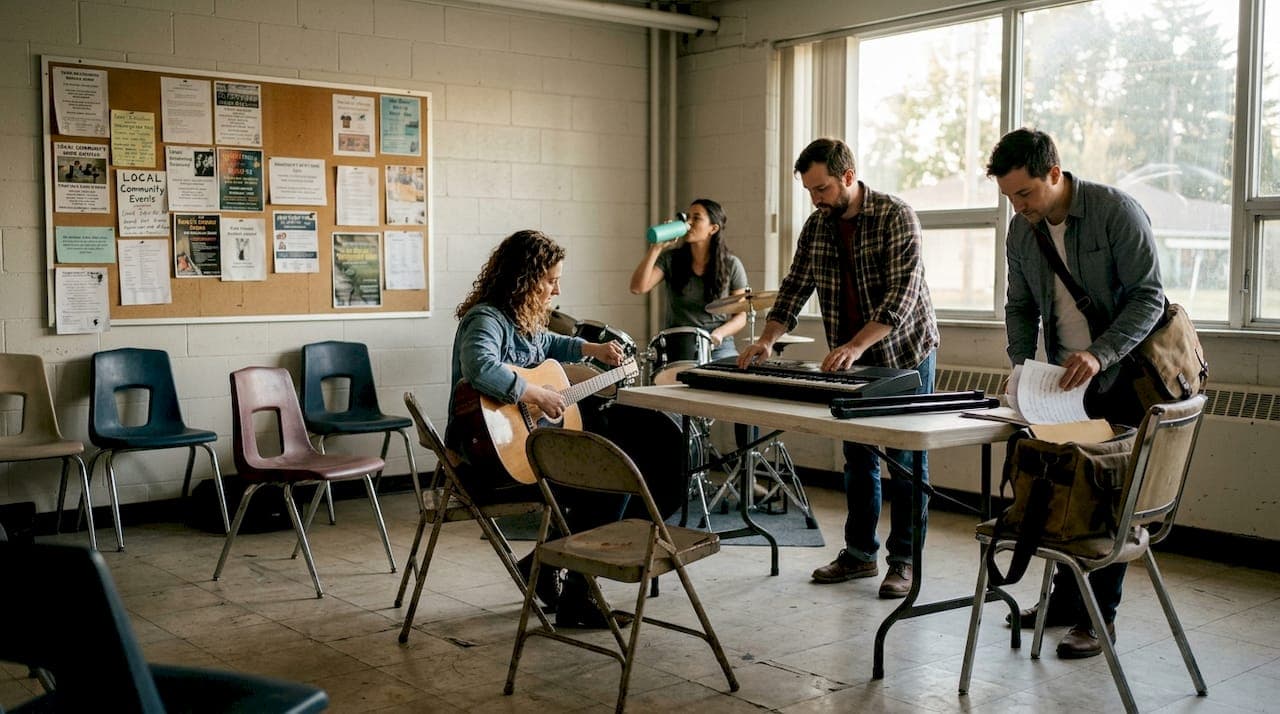
Finding fellow musicians who share your passion and schedule feels impossible when you're searching alone. Most players give up after a few failed attempts at cold-calling venues or posting on dead forums. This guide shows you exactly how to discover thriving jam sessions, build authentic relationships with local musicians, and create collaborative opportunities that transform your musical journey from solitary practice to vibrant community engagement.
Table of Contents
- Gather Your Tools And Understand Jam Session Basics
- Building And Nurturing Your Local Music Network
- Create And Anchor Your Own Music Events To Deepen Connections
- Why Local Music Communities Matter: Social And Economic Impact
- Discover And Grow Your Musical Network Effortlessly With JamClub
- FAQ
Key takeaways
| Point | Details |
|---|---|
| Find jams online | Platforms like Meetup.com connect you to inclusive local sessions for all skill levels. |
| Master jam etiquette | Listening first and playing backup during solos builds trust and learning opportunities. |
| Network consistently | Attending shows regularly and deepening three new connections monthly creates sustainable career momentum. |
| Anchor community events | Organizing house concerts or pop-ups establishes leadership and cross-pollinates audiences. |
| Recognize economic impact | Local scenes generate billions in revenue and thousands of events annually. |
Gather your tools and understand jam session basics
Before stepping into your first jam, you need to know where to find welcoming sessions and how to participate without disrupting the flow. The right preparation transforms anxiety into confidence.
Use platforms like Meetup.com to locate jam sessions tailored to your instrument and skill level. Groups such as Salt Lake City Music Meetup and NYC Guitar School host regular gatherings that explicitly welcome beginners alongside seasoned players. These digital hubs eliminate the guesswork of cold-calling venues or hoping to stumble upon sessions by accident. You can filter by genre, location, and experience requirements to match your current abilities.
Once you find a session, understanding jam etiquette becomes critical. Listen for at least 15 minutes before attempting to join. This observation period helps you gauge the group's tempo preferences, typical tune rotation, and social dynamics. When you're ready to participate, make eye contact with the session leader or current player and wait for acknowledgment before jumping in. During someone else's solo, play backup parts quietly or rest entirely to give them space.
Beginners should prepare one or two simple tunes in common keys like C, G, or D major. Focus on rhythm parts and chord progressions rather than attempting flashy solos immediately. Playing supportively builds credibility faster than trying to impress with technical skills you haven't mastered yet. If you make a mistake, smile and keep going. Everyone remembers being new.
Being mindful of group dynamics means noticing when the session needs more rhythm support versus melody. If three guitarists are already strumming, consider sitting out that round or switching to a different instrument if you play multiple. This awareness shows respect and helps you integrate smoothly into established communities.
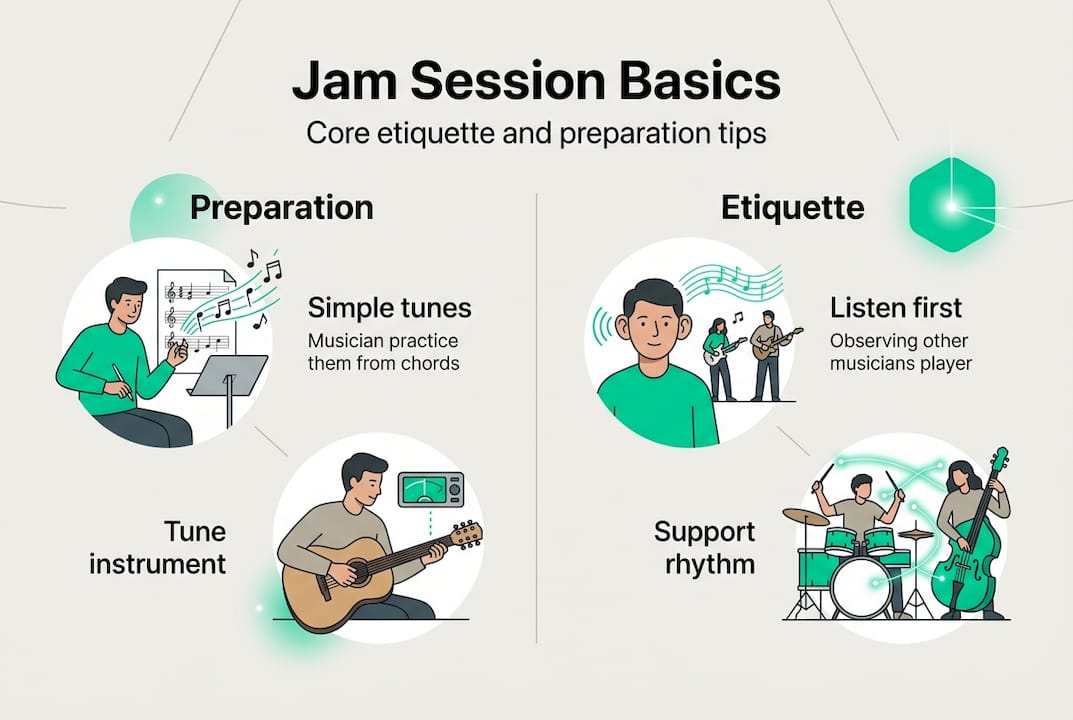
Pro Tip: Prepare a short repertoire of three to five jam-friendly tunes before your first session. Practice them until you can play confidently while chatting, which simulates the relaxed atmosphere of real jams and boosts your participation comfort.
Practical steps to start:
- Search Meetup.com for "jam session" plus your city name to discover active groups
- Review JamClub's platform to find and create jam sessions with RSVP management
- Watch YouTube videos of jam sessions in your genre to observe etiquette in action
- Check jam session guidelines to understand reporting and community standards
- Bring a tuner, spare strings, and a positive attitude to every session
Building and nurturing your local music network
Casual attendance won't build the relationships that lead to band formations, recording projects, or paid gigs. You need intentional strategies to transform acquaintances into collaborators.
Consistently attending shows and engaging accelerates network growth exponentially. Aim for two live performances per week, whether they're jam sessions, open mics, or ticketed concerts. This frequency puts you in regular contact with the same musicians, allowing relationships to develop naturally through repeated positive interactions. Introduce yourself genuinely after sets, compliment specific musical choices you noticed, and ask thoughtful questions about their creative process.
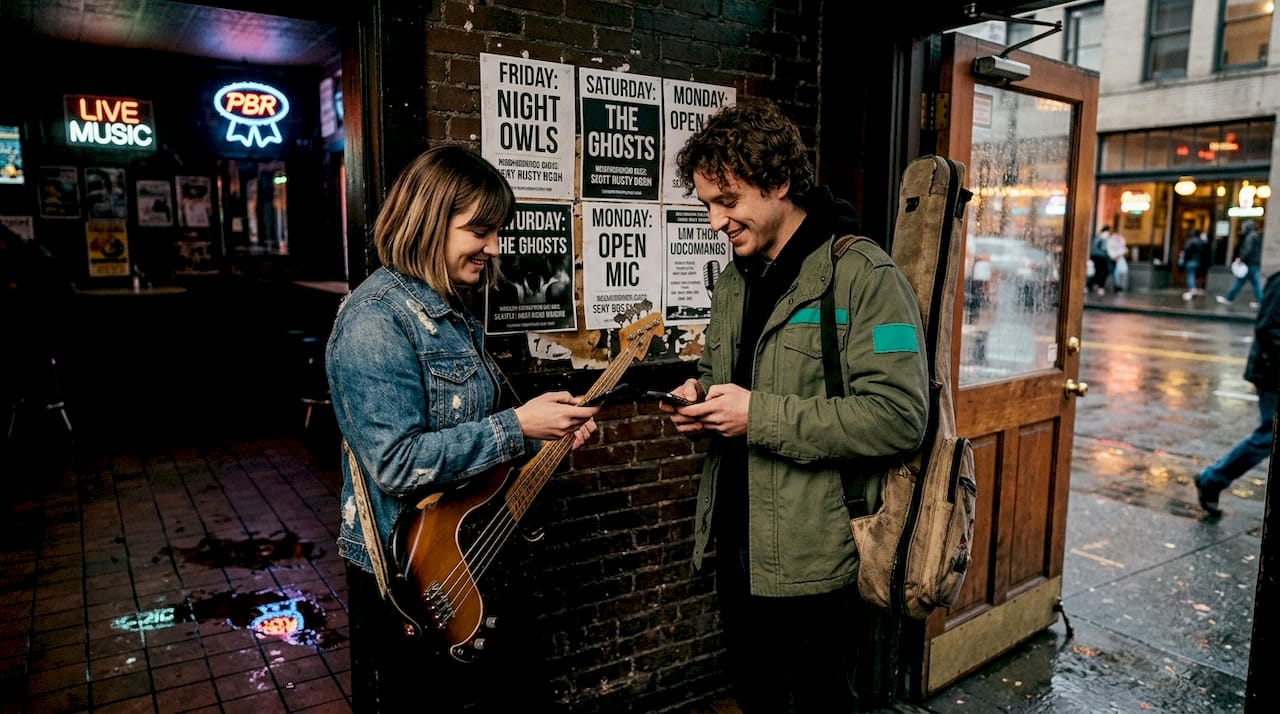
Adding value distinguishes you from musicians who only take. Create Spotify playlists featuring local artists and share them across your social networks. This promotion costs you nothing but provides tangible marketing benefits to your peers. Offer to help with load-in or sound check. Share venue contacts when appropriate. These small gestures build goodwill that returns multiplied when you need support.
Implement a 90-day strategic plan to structure your networking efforts. Month one focuses on visibility: attend those two weekly shows, introduce yourself to five new musicians each week, and document your journey on social media to establish presence. Month two emphasizes stage time: secure three open mic slots, volunteer to sit in with bands during jams, and approach venue bookers about showcase opportunities. Month three targets monetization: launch simple merchandise like stickers or download cards, form a collective with three to five collaborators to share resources, and book your first paid gig.
This timeline prevents the overwhelm that causes many musicians to quit networking before seeing results. Breaking the process into monthly objectives with specific actions creates momentum and measurable progress.
Pro Tip: Focus on deepening three new connections each month rather than collecting 50 shallow contacts. Schedule coffee meetings, collaborate on a cover song, or attend non-music events together to build genuine friendships that survive career ups and downs.
Your networking roadmap:
- Week 1-4: Attend eight shows, introduce yourself to 20 musicians, create your first local artist playlist
- Week 5-8: Play three open mics, sit in at two jam sessions, contact five venue bookers
- Week 9-12: Launch merch, form a three-person collective, book one paid performance
- Ongoing: Use JamClub to find musicians near you and coordinate schedules efficiently
- Monthly review: Assess which relationships are deepening and adjust your time investment accordingly
Explore the music collaboration platform to streamline coordination and discover players whose schedules align with yours.
Create and anchor your own music events to deepen connections
Waiting for others to organize gatherings limits your growth. Taking initiative positions you as a community leader and multiplies your networking impact.
Organizing or anchoring events establishes you as a central hub in your scene. Musicians remember who creates opportunities for them to play and connect. Start small with house concerts in your living room or backyard. These intimate settings foster conversation and collaboration impossible in noisy bars. Invite 15 to 20 people, feature two or three acts with 20-minute sets each, and pass a tip jar to compensate performers.
Community halls, libraries, and coffee shops offer reliable venues when your home isn't suitable. Many provide free space in exchange for bringing an audience. These partnerships benefit both parties: you get a professional setting, they get foot traffic and cultural programming. Approach managers with a simple proposal outlining your event format, expected attendance, and how you'll promote their business.
Digital coordination tools prevent the chaos that kills recurring events. Discord servers centralize communication, allowing musicians to share availability, discuss setlists, and coordinate gear sharing in organized channels. Shared Google calendars display upcoming jams and gigs so everyone can plan around conflicts. These systems reduce the friction that causes events to fizzle after initial enthusiasm fades.
Collaborating with local businesses for pop-up events cross-pollinates audiences and creates fresh opportunities. Partner with breweries for acoustic sessions during slow afternoons, bookstores for album release readings, or art galleries for opening receptions with live soundtracks. These venues attract people who enjoy culture but might not seek out traditional music venues, expanding your listener base beyond the usual suspects.
| Event Type | Coordination Method | Pros | Cons | | --- | --- | --- | | House concerts | Text group, email list | Intimate atmosphere, low cost, flexible scheduling | Limited capacity, neighbor noise concerns | | Community halls | Shared calendar, Discord | Professional setting, larger capacity, reliable access | Booking fees, restricted hours, formal atmosphere | | Business pop-ups | Direct contact, social media | New audiences, revenue sharing, marketing support | Dependent on business schedules, acoustic limitations | | Public parks | Meetup.com, flyers | Free access, casual vibe, high visibility | Weather dependent, permit requirements, no sound system |
Choose formats that match your organizational capacity and musical goals.
Launching your first event:
- Select a date six weeks out to allow promotion time
- Invite three to five musicians whose styles complement each other
- Create a Facebook event and share across local music groups
- Prepare a simple PA system or confirm venue provides one
- Follow up with attendees afterward to build your mailing list
JamClub's mission aligns with creating these community hubs, providing tools to coordinate and promote your events effectively.
Why local music communities matter: social and economic impact
Your participation in local music scenes contributes to something larger than personal career growth. These communities drive significant economic activity and social cohesion.
Local music scenes generate billions in revenue annually across the United States. Lafayette, Louisiana alone produces $13.2 million in economic impact from its music ecosystem. King County, Washington's music industry contributes over $6 billion to regional GDP. Minneapolis hosts more than 17,000 venue events each year, supporting thousands of jobs in performance, production, and hospitality sectors. These numbers prove that local scenes aren't hobby activities but vital economic engines.
Strong music communities foster social cohesion that transcends economic metrics. They create third spaces where people from diverse backgrounds connect through shared passion. Lexington's old-time jam sessions bond players across generations and skill levels, preserving traditional music while welcoming innovation. Fox Valley Jammers in Wisconsin grew from a handful of participants to hundreds within months, demonstrating the hunger for musical connection in communities nationwide.
These gatherings provide crucial opportunities for emerging musicians to develop skills in supportive environments. Unlike competitive showcases or high-pressure auditions, jam sessions emphasize learning through doing. Beginners absorb techniques by playing alongside experienced musicians. Intermediate players experiment with new styles without career risk. Veterans mentor the next generation while staying creatively engaged.
Vibrant local music scenes generate measurable economic benefits while fostering irreplaceable social bonds. They transform isolated players into collaborative communities that enrich entire regions culturally and financially. Every musician who shows up, plays supportively, and helps organize strengthens this ecosystem for everyone.
| Region | Annual Economic Impact | Events per Year | Key Insight |
|---|---|---|---|
| Lafayette, LA | $13.2 million | Not reported | Concentrated impact in mid-sized city |
| King County, WA | $6+ billion GDP | Not reported | Major metropolitan music economy |
| Minneapolis, MN | Not reported | 17,000+ venue events | High event density drives engagement |
| Fox Valley, WI | Not quantified | Rapid growth from startup | Demonstrates unmet demand for connection |
Understanding this broader context motivates continued participation even when individual progress feels slow. Your attendance at a Tuesday night jam contributes to economic activity, social capital, and cultural preservation simultaneously.
JamClub's mission directly supports this impact by lowering barriers to participation and helping musicians find each other efficiently.
Discover and grow your musical network effortlessly with JamClub
Building local music connections requires consistent effort, but the right tools eliminate unnecessary friction. JamClub streamlines the discovery and organization process so you spend more time playing and less time coordinating.
JamClub's platform helps you locate musicians and jam sessions matching your style, skill level, and schedule. Instead of scrolling through generic social media groups or hoping to stumble upon sessions, you access a curated directory of active players and events in your area. Filter by instrument, genre, and experience level to find compatible collaborators immediately.
Create and report jam sessions to help your community thrive while tracking your musical growth. The platform's RSVP management prevents overcrowded sessions and ensures appropriate skill distribution. Real-time messaging coordinates last-minute changes without endless group text confusion. These features transform chaotic organizing into smooth execution.
JamClub operates as a free service focused on connecting musicians through collaboration rather than monetizing your data or charging membership fees. This mission-driven approach prioritizes community building over profit extraction, aligning with the values that make local music scenes special.
Pro Tip: Use JamClub's scheduling tools to avoid conflicts and maximize your jam session attendance. Sync the calendar with your phone to receive reminders and plan your week around musical opportunities instead of treating them as afterthoughts.
Explore JamClub's platform features to see how RSVP management, messaging, and discovery tools work together. Review the mission and vision to understand the community values driving the platform's development.
FAQ
How do I find jam sessions that welcome beginners?
Use Meetup.com to search for jam sessions in your area, filtering by skill level and instrument. Many groups explicitly label themselves as beginner-friendly or all-levels-welcome. Read session descriptions carefully for phrases like "supportive environment" or "learning focused," which signal openness to newer players. Local Facebook groups for musicians often post weekly jam schedules with skill expectations clearly stated.
What are the best practices to avoid common jam session mistakes?
Listen carefully before playing and respect the established tune rotation order. Play backup parts quietly during others' solos instead of competing for attention. Stay in tune and time by checking your tuning between songs and watching the leader for tempo cues. Ask permission before joining by making eye contact with the session leader rather than jumping in uninvited. Review jam session guidelines for community-specific expectations.
How can I contribute to my local music community besides playing?
Promote local shows and artists through Spotify playlists, social media shares, and word-of-mouth recommendations. Help organize events or coordinate musician schedules using Discord servers or shared calendars. Offer skills like sound engineering, graphic design for posters, or photography for promotional materials. Build relationships by showing up consistently, introducing musicians to each other, and creating opportunities for collaboration. Give value first without expecting immediate returns.
How long does it take to build meaningful connections in a local music scene?
Most musicians report feeling integrated within three to six months of consistent participation. Attending two events weekly and deepening three new relationships monthly accelerates this timeline significantly. Quality matters more than quantity, so focus on genuine interactions rather than collecting contacts. Some connections spark immediately while others develop gradually over repeated encounters. Patience and authenticity yield better long-term results than aggressive networking tactics.
What if my area doesn't have an active music scene?
Start small by organizing monthly house concerts or acoustic gatherings with even two or three musicians. Post in local Facebook groups, community bulletin boards, and Nextdoor to find hidden players who haven't connected yet. Partner with coffee shops or libraries to host events that attract both musicians and audiences. Use JamClub to connect with players in neighboring towns who might travel for quality sessions. Building a scene from scratch takes longer but creates exactly the community you want rather than adapting to existing limitations.