
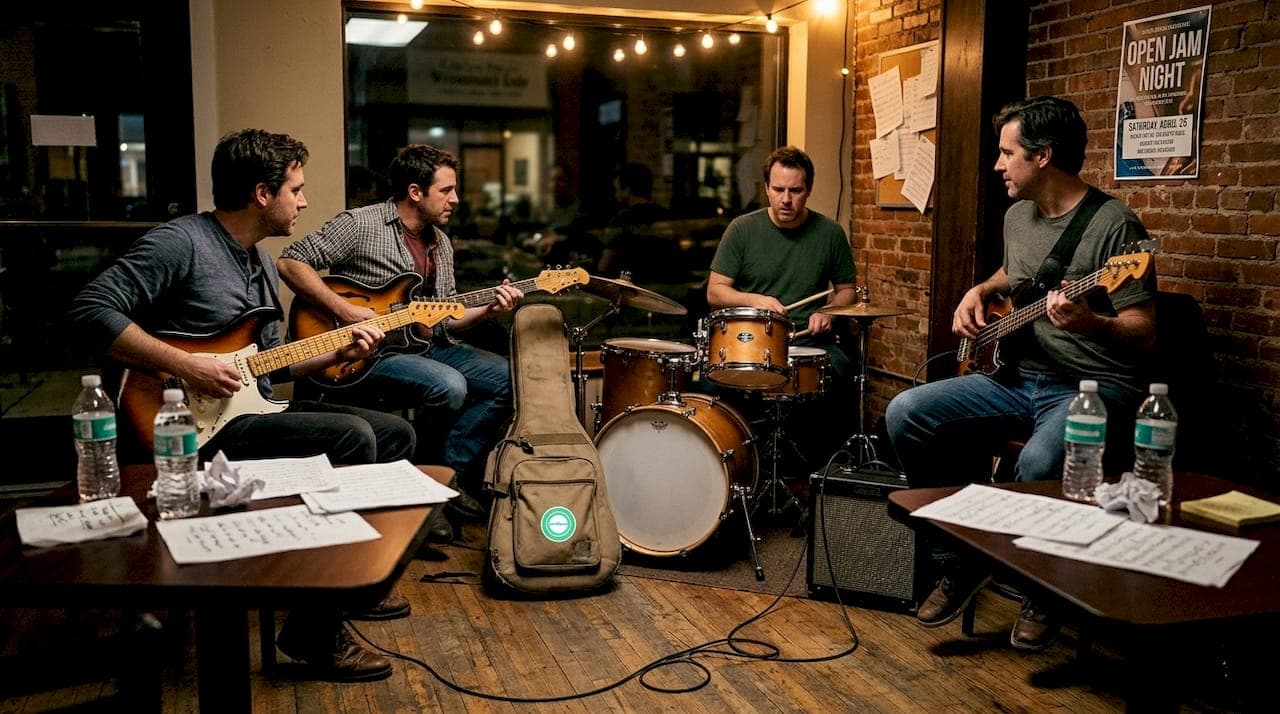
Finding local musicians who share your passion is tough. Organizing a jam session that brings everyone together without chaos feels even tougher. You want collaboration, not confusion. This guide walks you through planning, executing, and sustaining local jam sessions that foster genuine musical community. Whether you're hosting your first event or refining your approach, you'll learn actionable strategies to create welcoming spaces where musicians thrive, connect, and grow together through shared improvisation and respect.
Table of Contents
- Key takeaways
- Understanding local jam sessions and why they matter
- Preparation essentials: What you need to start your local jam session
- Step-by-step guide to executing a successful local jam session
- Troubleshooting common jam session challenges and ensuring lasting success
- Build your local jam session community with JamClub
- FAQ
Key Takeaways
| Point | Details |
|---|---|
| Planning matters for jams | Successful jams hinge on venue choice, clear communication, and inclusive protocols. |
| Start small and grow | Begin with a single venue and a few musicians, then expand as routines and community stabilize. |
| Inclusive etiquette essential | Set welcoming norms and avoid gatekeeping to encourage broad participation. |
| Digital tools for coordination | Use apps and social platforms to connect players and organize events efficiently. |
Understanding local jam sessions and why they matter
Local jam sessions are informal gatherings where musicians improvise together, often without rehearsed material. These events create space for spontaneous collaboration, skill development, and genuine connection among players of all levels. Unlike structured performances, jams prioritize experimentation and mutual learning over perfection.
The value extends beyond musical growth. Jam sessions build community, reduce isolation, and offer networking opportunities that lead to band formations and collaborative projects. Live music saw 70% monthly attendance with repeated events growing post-pandemic, reflecting renewed appetite for in-person musical experiences. This surge makes now an ideal time to organize local jams.
Understanding the social and economic impact motivates better planning. Musicians who regularly attend jams report improved confidence, expanded repertoires, and stronger local networks. These gatherings also support local venues and create cultural vibrancy in neighborhoods.
Digital platforms amplify reach and simplify logistics. Instead of relying solely on word of mouth, you can use dedicated tools to connect musicians across your area and coordinate schedules efficiently. This accessibility removes traditional barriers to participation.
Key benefits of local jam sessions include:
- Skill development through real-time improvisation and feedback
- Community building that reduces musician isolation
- Networking opportunities leading to bands and collaborations
- Cultural enrichment for local neighborhoods and venues
- Accessible entry points for musicians at all experience levels
"Jam sessions transform individual practice into collective creativity. They remind us that music thrives in community, not isolation."
The mission behind platforms like JamClub centers on making these connections effortless. By removing logistical friction, more musicians can focus on what matters: playing together and building lasting relationships through shared musical experiences.
Preparation essentials: What you need to start your local jam session
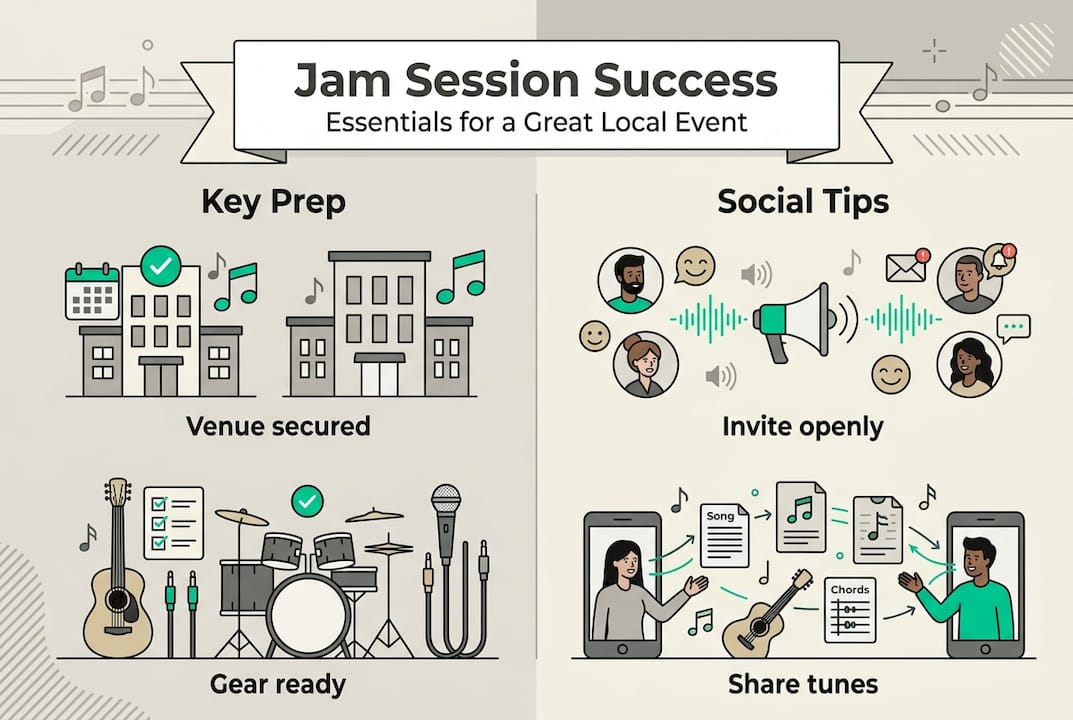
Successful jams begin long before the first note. Preparation determines whether your event feels welcoming or chaotic. Start by identifying a suitable venue that balances acoustics, accessibility, and atmosphere. Coffee shops, community centers, rehearsal studios, and even outdoor spaces work well depending on your group size and style.
Venue considerations include:
- Adequate space for musicians and basic equipment
- Reasonable noise tolerance or soundproofing
- Accessibility for players with mobility needs
- Affordability or willingness to host for free in exchange for foot traffic
Equipment needs vary by format. At minimum, secure a PA system with microphones, amplifiers for guitars and bass, and a drum kit if acoustic drums fit the space. Some organizers ask musicians to bring their own instruments and small amps, reducing logistical burden. Have backup cables, picks, and drumsticks available for emergencies.
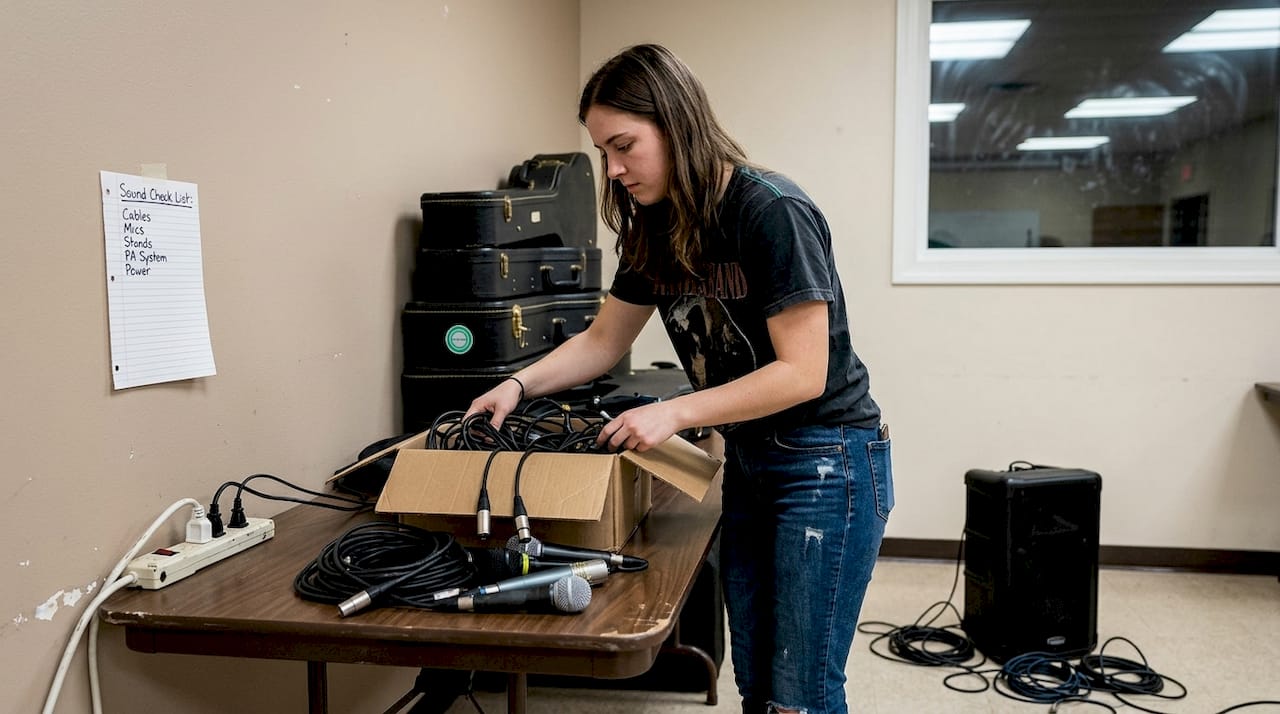
Inviting musicians requires clear communication and inclusivity. Specify the jam's style, whether it's blues, jazz, rock, or open genre. Mention the expected skill level, but avoid gatekeeping language. Phrases like "all levels welcome" or "beginner-friendly" encourage broader participation. Use social media, local music forums, and apps to spread the word and manage RSVPs.
Understanding 'jamiquette' is crucial. This etiquette includes listening actively, respecting turns, keeping backing simple to support others, and fostering inclusive participation. Players who dominate or ignore these norms disrupt the collaborative spirit. Communicate these expectations upfront in invitations and reinforce them gently during sessions.
Establish clear session guidelines before your first event. Decide on format: will you rotate soloists, call tunes democratically, or follow a loose structure? Starting small with 5 to 8 musicians helps you refine processes before scaling. Smaller groups also make it easier to manage dynamics and ensure everyone gets playing time.
Pro Tip: Create a shared document or group chat where musicians suggest tunes in advance. This preparation reduces awkward silences and helps less experienced players feel ready to contribute.
| Preparation item | Purpose | Estimated cost |
|---|---|---|
| Venue rental or partnership | Provides space and atmosphere | Free to $100 per session |
| PA system and mics | Amplifies vocals and acoustic instruments | $200 to $500 one-time or $50 rental |
| Backup cables and accessories | Prevents technical disruptions | $30 to $50 |
| Promotional materials | Attracts diverse musicians | Free (digital) to $20 (flyers) |
By addressing these fundamentals, you create a foundation for jams that feel organized yet spontaneous. Musicians arrive knowing what to expect, bringing the right gear and mindset. This preparation transforms good intentions into memorable, repeatable events that strengthen your local music community.
Step-by-step guide to executing a successful local jam session
Execution separates well-intentioned plans from thriving events. Follow these steps to run sessions that balance structure with creative freedom.
-
Welcome everyone and review etiquette briefly. Start by introducing yourself and thanking attendees. Spend two minutes outlining jam session norms: listen actively, share solos, keep backing supportive, and respect the invitational nature of improvisation. This sets expectations without lecturing.
-
Establish rhythm and count off to set a steady pace. Begin with a simple tune everyone knows or a 12-bar blues progression. The drummer or bassist typically anchors the rhythm. Count off clearly ("One, two, three, four") to ensure everyone starts together. Prioritizing rhythm and inclusivity creates a positive foundation.
-
Manage turns fairly, allowing all musicians to contribute. Rotate solos using visual cues like pointing or nodding. Limit solo length to prevent one player from dominating. If someone takes too long, the host or bandleader can gently signal a transition by starting the next section or cueing another player.
-
Diffuse conflicts calmly and remind players of the invitational nature. Tension arises when egos clash or someone ignores etiquette. Address issues with humor and kindness: "Let's make sure everyone gets a turn" or "Remember, we're here to support each other." If problems persist, speak privately during a break rather than calling someone out publicly.
-
Encourage experimentation while keeping jams fun and accessible. Invite players to try unfamiliar styles or instruments. Celebrate mistakes as learning moments. Avoid overly complex tunes that alienate beginners. Balance challenge with accessibility so everyone leaves feeling accomplished.
Pro Tip: Designate a "vibe keeper" who monitors energy and suggests breaks or tune changes when momentum lags. This role prevents burnout and keeps sessions dynamic.
| Jam hosting approach | Pros | Cons |
|---|---|---|
| Structured format (set list, assigned solos) | Predictable, easier for beginners, clear organization | Less spontaneous, may feel rigid |
| Open format (call tunes on the fly, organic solos) | Spontaneous, creative freedom, mirrors professional jams | Can feel chaotic, intimidating for newcomers |
| Hybrid format (loose structure with flexibility) | Balances predictability and creativity | Requires experienced host to navigate |
The hybrid approach works best for most local jams. Prepare a few tunes but leave room for spontaneous calls. This flexibility accommodates varying skill levels while maintaining enough structure to prevent confusion.
Between songs, allow brief downtime for tuning, hydration, and casual conversation. These moments build camaraderie and give less confident players time to mentally prepare for the next tune. Avoid rushing from song to song, which can feel overwhelming.
Close the session on a high note. Choose an upbeat, familiar tune everyone can enjoy together. Thank attendees, remind them of the next session date, and invite feedback. This positive conclusion encourages return visits and word-of-mouth promotion.
Troubleshooting common jam session challenges and ensuring lasting success
Even well-planned jams encounter obstacles. Anticipating common issues and preparing solutions keeps your events running smoothly.
Disruptive players are the most frequent challenge. Some musicians dominate solos, ignore etiquette, or play too loudly. Address this by reinforcing jam norms at the start and during breaks. If someone repeatedly disrupts, speak privately: "I noticed you took several long solos. Let's make sure others get chances too." Most players respond positively to respectful reminders.
Last-minute cancellations leave you scrambling. Build a buffer by inviting slightly more musicians than needed. Use digital tools to send reminders 24 hours before the session. Maintain a waitlist of interested players who can fill gaps on short notice.
Technical issues like equipment failure or poor sound quality frustrate everyone. Bring backup cables, batteries, and a spare mic. Test all gear 30 minutes before start time. If you're hosting at a venue, confirm their equipment works and familiarize yourself with their setup.
Common challenges and solutions include:
- Low attendance: Promote consistently across multiple channels and offer incentives like free refreshments
- Skill level mismatches: Clearly communicate expected level in invitations or host separate beginner and advanced sessions
- Venue conflicts: Secure backup locations and maintain good relationships with venue owners through respectful behavior
- Lack of engagement: Introduce icebreaker activities or themed jams to spark interest
Pro Tip: Survey attendees after every few sessions to identify pain points and gather suggestions. This feedback loop helps you adapt and shows participants their input matters.
Measuring success goes beyond attendance numbers. Track attendee retention: are the same musicians returning? Collect qualitative feedback on musical interaction quality and community feeling. Live music events see frequent attendees and repeat buyers, indicating successful engagement. Your jam should foster similar loyalty.
Growing your jam community sustainably requires patience and consistency. Host sessions regularly, even if initial turnout is modest. Consistency builds trust and allows musicians to plan around your schedule. As word spreads, you'll attract more participants organically.
Leverage digital platforms to expand reach without overwhelming yourself. JamClub simplifies scheduling, promotion, and community building, letting you focus on the music rather than logistics. These tools also help you connect with musicians you might never meet through traditional channels.
Foster inclusivity to create loyal participation. Welcome musicians of all backgrounds, genders, and skill levels. Actively invite underrepresented groups and create policies that ensure everyone feels safe and valued. Inclusive communities grow faster and produce richer musical experiences.
Build your local jam session community with JamClub
Organizing jam sessions gets easier when you have the right tools. JamClub helps you discover local musicians and jam events without endless searching or guesswork. The platform connects you with players who share your interests and skill level, removing the friction that often stops jams before they start.
Create, promote, and manage your sessions using user-friendly features designed for musicians, not tech experts. Set dates, send invitations, track RSVPs, and communicate with attendees all in one place. This streamlined approach saves time and reduces the logistical headaches that derail well-intentioned events.
Report your jams to connect with a wider music community and get support from other organizers. Sharing your events on JamClub's platform amplifies visibility and attracts musicians who might not find you otherwise. Whether you're hosting your first session or managing a thriving weekly event, JamClub provides the infrastructure to grow your local music scene sustainably. Start creating jam sessions today and watch your community flourish.
FAQ
How do I find musicians interested in local jam sessions?
Use dedicated platforms like JamClub to connect with musicians actively seeking jam opportunities in your area. Attend open mic nights, music workshops, and local concerts to meet potential jam partners face to face. Post in community Facebook groups, music forums, and on venue bulletin boards with clear details about your session's style and inclusivity.
What should I include in a jam session invitation?
Include date, time, venue address, musical style or genre, expected skill level, and equipment needs like "bring your own guitar and amp." Mention etiquette expectations such as respecting turns and listening actively. Provide RSVP instructions so you can plan for the right number of attendees and avoid overcrowding or under-preparation.
How can I handle disruptive players in my jam sessions?
Politely remind players of jam etiquette focused on respect, listening, and sharing turns during natural breaks in the session. If problems persist, speak privately and explain how their behavior affects others: "I noticed you've been taking long solos. Let's make sure everyone gets a chance." If someone refuses to cooperate, ask them to step back for the session's sake, prioritizing the group's experience over individual egos.
What are some ways to promote my local jam session?
Use social media platforms like Facebook, Instagram, and Twitter to share event details with hashtags like #LocalJam or #MusiciansMeet. Post on music forums such as Reddit's local music communities and specialized sites like Bandmix. Leverage JamClub for targeted musician engagement and distribution to players actively searching for jams. Hang flyers at music stores, coffee shops, and community centers. Partner with local venues to cross-promote, and encourage attendees to invite friends, creating organic growth through word of mouth and strategic music event promotion.
Recommended
- Our Platform - Find & Create Jam Sessions Easily | JamClub
- JamClub - Find Musicians & Jam Sessions Near You | Music Community App
- JamClub - Find Musicians & Jam Sessions Near You | Music Community App
- Our Mission - Connecting Musicians Through Jam Sessions | JamClub
- Rising from the Shadows: The Role of Vancouver Vibrationz in Personal Transformation – Stevie The Manager aka Stangr The Man