
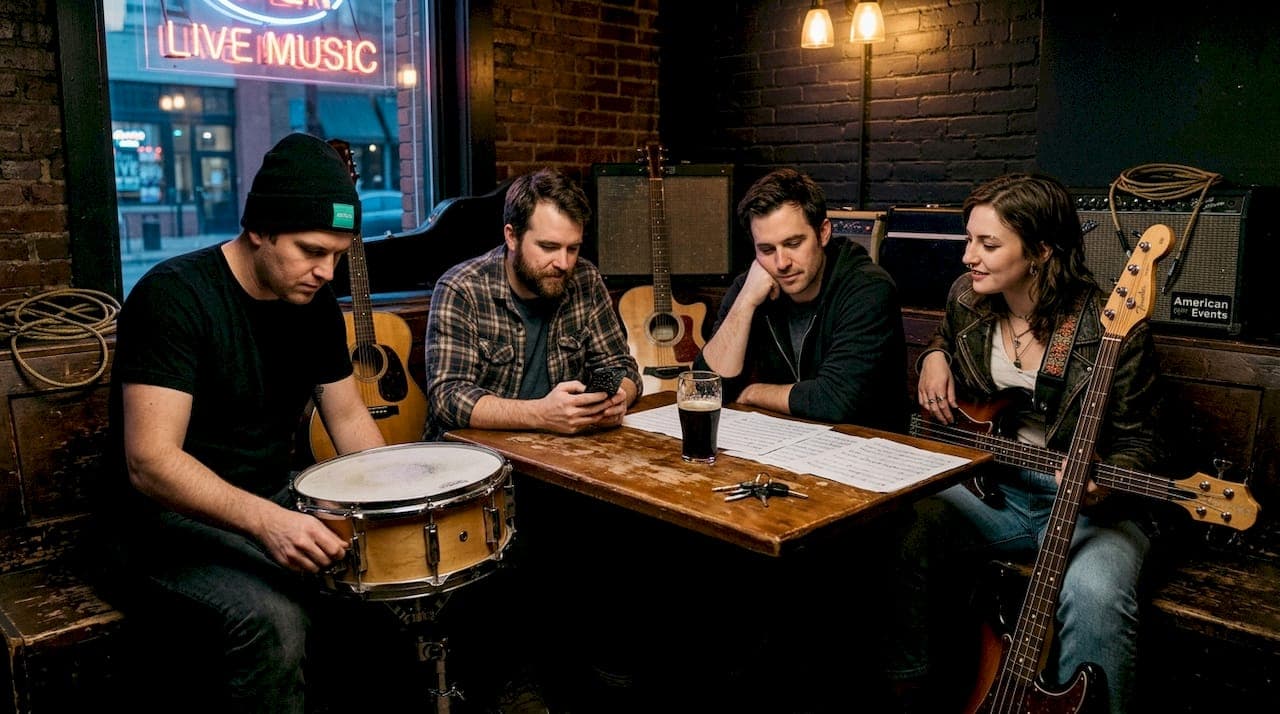
Finding the right jam session isn't about scrolling through endless event listings. Music event discovery is a sophisticated ecosystem combining musician profiles, smart algorithms, and community knowledge to connect you with collaborative opportunities that match your style, skill level, and location. This guide reveals how modern discovery platforms work beyond surface-level browsing, the technology powering recommendations, and practical strategies to help you find and join local jam sessions that accelerate your musical growth and expand your network.
Table of Contents
- Understanding Music Event Discovery: Mechanics And Platforms
- How Recommendation Algorithms Shape Music Event Discovery
- Challenges And Nuances In Discovering Local Jam Sessions
- Practical Tips For Musicians To Discover And Join Local Jam Sessions
- Discover And Connect With Jam Sessions On Jamclub
- FAQ
Key takeaways
| Point | Details |
|---|---|
| Discovery combines profiles and algorithms | Platforms use musician data, event calendars, and matching systems to suggest relevant jam sessions based on your instruments, location, and availability. |
| Specialized platforms outperform streaming apps | Dedicated jam discovery tools offer better local results than generic music recommendation engines designed for passive listening. |
| Popularity bias limits emerging artist exposure | Algorithms often favor established musicians, making it harder to discover grassroots local events and new collaborators. |
| Jam sessions differ from formal performances | These informal gatherings emphasize improvisation and community over structured sets, requiring different etiquette and expectations. |
| Hybrid approaches work best | Combining algorithmic suggestions with human curation and social networks delivers the most accurate local event discovery. |
Understanding music event discovery: mechanics and platforms
Music event discovery platforms operate through interconnected systems designed to match musicians with opportunities. At the core, musician profiles include instruments, location data, genre preferences, and availability windows. These profiles feed into event calendars that aggregate jam sessions, open rehearsals, and collaborative gatherings across neighborhoods and cities. Search filters let you narrow results by distance, musical style, and skill level, ensuring you find sessions that align with your current abilities and interests.
Matching algorithms analyze your profile against event requirements and other musician profiles to suggest collaborators and sessions. Platforms like Gigsy, Bandup, and JazzProveIt provide specialized tools that go beyond basic event listings. They incorporate RSVP management, real-time messaging for coordination, and community features that help you build lasting musical relationships. These jam session platform features create a comprehensive ecosystem where discovery becomes active rather than passive.
The mechanics work best when musicians maintain updated profiles and engage regularly with the platform. Active participation improves algorithm accuracy over time, leading to better recommendations. Here's how different discovery components interact:
- Profile completeness directly impacts match quality and visibility to other musicians
- Event calendars pull from multiple sources including venue submissions and user reports
- Location-based search prioritizes geographic proximity while considering travel preferences
- Genre tags enable cross-pollination between related musical styles
Pro Tip: Update your availability calendar weekly to receive timely notifications about jam sessions that match your schedule, increasing your chances of joining spontaneous musical gatherings.
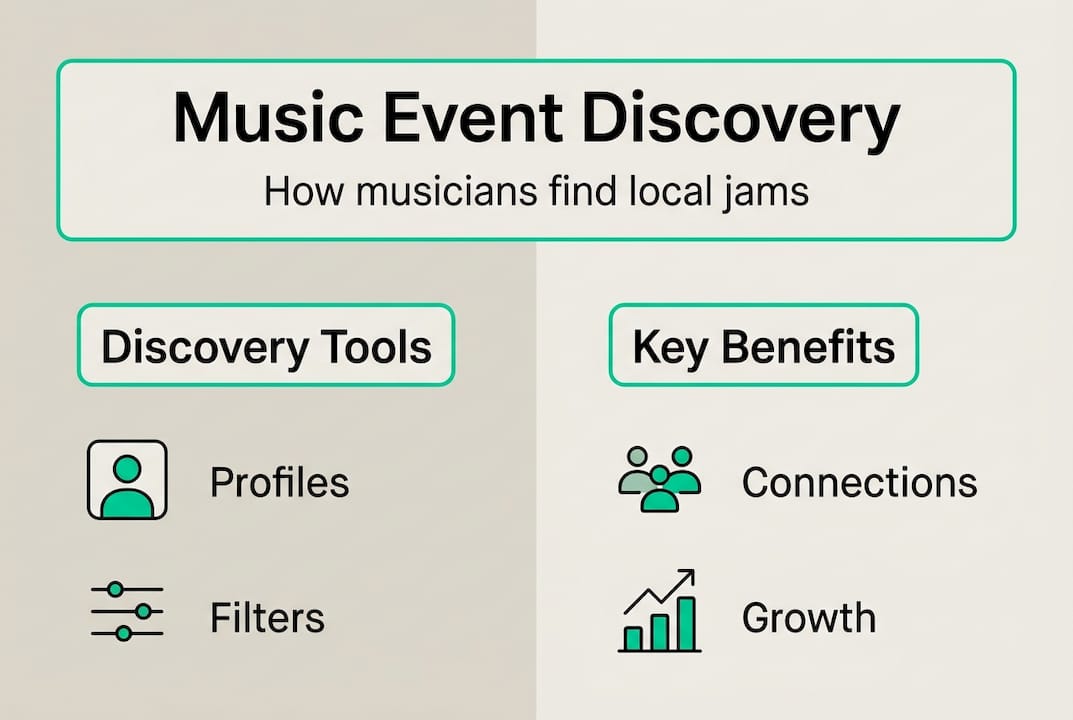
| Platform Feature | Primary Function | Musician Benefit |
|---|---|---|
| Musician Profiles | Store instruments, genres, skill level | Enables accurate matching with compatible sessions |
| Event Calendars | Aggregate local jam sessions | Provides centralized discovery hub |
| Search Filters | Narrow by location, genre, date | Reduces time spent finding relevant events |
| Matching Algorithms | Suggest collaborators and events | Surfaces opportunities you might miss manually |
| RSVP Management | Track attendance and capacity | Ensures appropriate session size and planning |
How recommendation algorithms shape music event discovery
Recommendation systems adapted from streaming platforms now power music event discovery, though with important modifications for local contexts. Collaborative filtering leverages user-event interaction patterns to identify similarities between musicians and predict which jam sessions you'll enjoy based on attendance patterns of users with similar profiles. Content-based filtering analyzes audio features, metadata tags, and event descriptions to match musical characteristics directly.
Advanced platforms employ graph attention networks for artist similarity, creating more nuanced connections than traditional methods. These graph models map relationships between musicians, venues, genres, and events as interconnected nodes, identifying non-obvious matches that simpler algorithms miss. The result is discovering jam sessions outside your usual genre that still align with your musical sensibilities.
However, these algorithms face distinct challenges in the event discovery context. Popularity bias remains a persistent issue, where established artists and well-attended venues dominate recommendations even when newer, smaller jams might better suit your needs. Event-specific benchmarks for music recommendation algorithms remain limited compared to streaming contexts, making it harder to optimize for discovery versus passive listening.
Pro Tip: Actively engage with diverse event types and musician profiles to train the algorithm beyond mainstream preferences, expanding your recommendation diversity and uncovering hidden local talent.
| Algorithm Type | How It Works | Strengths | Limitations |
|---|---|---|---|
| Collaborative Filtering | Matches based on similar user behavior | Discovers unexpected connections | Requires large user base |
| Content-Based | Analyzes musical features and metadata | Works with limited interaction data | Can create filter bubbles |
| Graph Networks | Maps complex relationships between entities | Captures nuanced similarities | Computationally intensive |
| Hybrid Systems | Combines multiple approaches | Balances accuracy and diversity | More complex to implement |
The most effective discovery platforms combine algorithmic recommendations with local knowledge and community input. Pure algorithmic approaches struggle with the hyperlocal nature of jam sessions, where venue atmosphere, musician chemistry, and unstructured formats matter as much as musical compatibility. Human curation fills these gaps, providing context that algorithms can't capture from data alone.
Challenges and nuances in discovering local jam sessions
Discovering authentic local music events involves complexities that generic recommendation systems often miss. Popularity bias favors established artists, systematically overshadowing emerging local musicians and grassroots events that might offer richer collaborative experiences. This algorithmic tendency creates a discovery paradox where the most accessible recommendations lead to oversaturated mainstream events, while vibrant local scenes remain hidden.
Defining what constitutes local music presents another challenge. Geographic proximity alone doesn't capture the cultural and stylistic elements that make a scene truly local. Datasets lack standardized tags for regional characteristics, making it difficult for algorithms to distinguish between a touring act playing locally and homegrown talent. This ambiguity affects discovery quality, especially for musicians seeking to connect with their immediate musical community rather than just nearby events.
Jam sessions differ fundamentally from structured performances, requiring a different discovery approach. These informal gatherings emphasize improvisation, collaboration, and musical conversation over prepared setlists. The spontaneous nature means event details often change last minute, and the quality depends heavily on who attends rather than just the venue or organizer. Understanding this distinction helps you evaluate which discovery platforms and strategies will actually lead to meaningful musical experiences.
Jam session etiquette further complicates discovery for newcomers:
- Listen actively before jumping in to understand the musical direction and group dynamics
- Take turns playing rather than dominating the session, respecting others' opportunities to contribute
- Bring appropriate gear and be self-sufficient rather than relying on shared equipment
- Respect the host's guidelines regarding recording, inviting others, and session structure
Expert musicians recognize that effective discovery requires hybrid approaches. Purely algorithmic systems miss the social dynamics and real-time changes that define jam culture. Geo-aware platforms that incorporate community reporting and peer recommendations address these limitations, creating discovery ecosystems that balance technological efficiency with human insight. This combination helps you find local jam sessions that match not just your musical style but also your collaborative preferences and skill development goals.
"The best jam sessions aren't found through algorithms alone. They're discovered through community networks where musicians share real experiences and vouch for quality, creating trust that no recommendation engine can replicate."
Practical tips for musicians to discover and join local jam sessions
Successful jam discovery starts with choosing the right platforms. Specialized local jam platforms outperform generic streaming recommendations because they're built specifically for event discovery and musician coordination. Generic music apps optimize for passive listening, not active collaboration. Look for platforms with detailed filters for skill level, genre, and session format so you can find events that match your current abilities and musical interests.
Once you've identified potential platforms, follow these discovery strategies:
- Complete your musician profile thoroughly with instruments, experience level, and availability to improve match accuracy and make yourself discoverable to session organizers.
- Set up location-based alerts for new jam sessions within your travel radius, ensuring you catch opportunities as they're posted rather than discovering them too late.
- Join musician-focused social media groups in your area for real-time updates that platforms might miss, as many jams are shared informally through community networks.
- Check event reviews and attendee lists to gauge session quality and whether the skill level and atmosphere align with your expectations before committing.
- Start with beginner-friendly or open-level sessions if you're new to jamming, building confidence and connections before tackling more advanced gatherings.
Attending your first jam session requires preparation beyond just showing up. Research the venue's typical format, whether it's structured with a house band or completely open. Bring your instrument in good working condition plus necessary accessories like cables, picks, or reeds. Arrive early to introduce yourself to the organizer and other musicians, establishing rapport before the music starts. This social foundation often matters as much as your playing ability.
Pro Tip: After attending jam sessions, report your experience and leave reviews on discovery platforms to improve community recommendations and help other musicians find quality events that match their needs.
Your approach during the session significantly impacts your experience and future invitations. Listen carefully to understand the musical direction before contributing. Watch for visual cues from other musicians about when to join or step back. Engage socially during breaks, asking questions and showing genuine interest in others' musical journeys. This combination of musical sensitivity and social engagement builds your reputation within the local scene, leading to more opportunities through word-of-mouth recommendations that complement platform-based discovery.
Remember that effective discovery is an ongoing process. As you attend more sessions and build relationships, your understanding of the local scene deepens. You'll learn which venues consistently host quality jams, which musicians you connect with musically, and which discovery methods work best in your area. This accumulated knowledge makes you both a better discoverer and a valuable community member who can guide others navigating the same journey.
Discover and connect with jam sessions on JamClub
Finding the right jam session shouldn't require hours of searching across disconnected platforms and social media groups. JamClub brings together all the discovery tools you need in one specialized platform designed specifically for musicians seeking local collaborative opportunities.
You can discover jam sessions using detailed filters that match your instruments, skill level, and musical preferences with nearby events. The platform's musician profiles and availability calendars ensure you connect with compatible collaborators at times that work for your schedule. When you can't find the perfect session, create your own jam and let the platform handle RSVP management and coordination through real-time messaging.
The community thrives on shared knowledge. Report jam sessions you discover elsewhere to help fellow musicians, and review events you attend to build a trusted resource for quality recommendations. These contributions improve discovery for everyone while establishing your presence in the local music scene. Explore the platform features to see how JamClub transforms scattered event hunting into streamlined musical connection.
FAQ
What is the difference between a jam session and an open mic?
Jam sessions are informal, collaborative gatherings where musicians improvise together without predetermined setlists or performance order. Open mics feature structured individual performances with scheduled time slots and a defined audience. Jam sessions emphasize spontaneous musical conversation and community building, while open mics focus on showcasing prepared material. The collaborative nature of jam sessions makes them ideal for skill development and networking, whereas open mics serve as performance practice venues.
How can I find local jam sessions if I'm a beginner musician?
Use platforms with explicit skill level filters to identify beginner-friendly or open-level sessions that welcome musicians at all stages. Join local musician groups on social media where experienced players often recommend welcoming jams and provide guidance for newcomers. Look for community-oriented sessions at music schools, community centers, or cafes that explicitly encourage participation regardless of experience. These beginner-accessible environments prioritize learning and support over technical prowess, creating safe spaces to develop your collaborative skills.
Why do recommendation algorithms sometimes miss local music events?
Popularity bias and local music data challenges limit algorithm accuracy for hyperlocal event discovery. Algorithms favor established artists and well-attended venues because they generate more interaction data, systematically underrepresenting emerging local events with smaller audiences. Local music identification lacks standardized definitions and tags, making it difficult for systems to distinguish truly local events from touring acts. This is why combining algorithmic recommendations with community-based discovery through social networks and specialized platforms produces better results for finding authentic local jam sessions.
How often should I update my musician profile for better jam recommendations?
Update your profile whenever your availability, skill level, or musical interests change significantly. Weekly availability calendar updates ensure you receive timely notifications about sessions matching your schedule. Add new instruments, genres, or collaboration preferences as your musical journey evolves to keep recommendations aligned with your current goals. Regular engagement signals to the algorithm that you're an active participant, improving your visibility to session organizers and the quality of suggestions you receive.
Can I use music streaming app recommendations to find jam sessions?
Streaming app recommendations optimize for passive listening rather than active collaboration, making them ineffective for jam session discovery. These platforms lack event calendars, location-based search, and musician coordination features essential for finding and joining local gatherings. While streaming apps might introduce you to new genres or artists, dedicated jam discovery platforms provide the specialized tools, community features, and local focus necessary for meaningful event discovery and musical connection.