
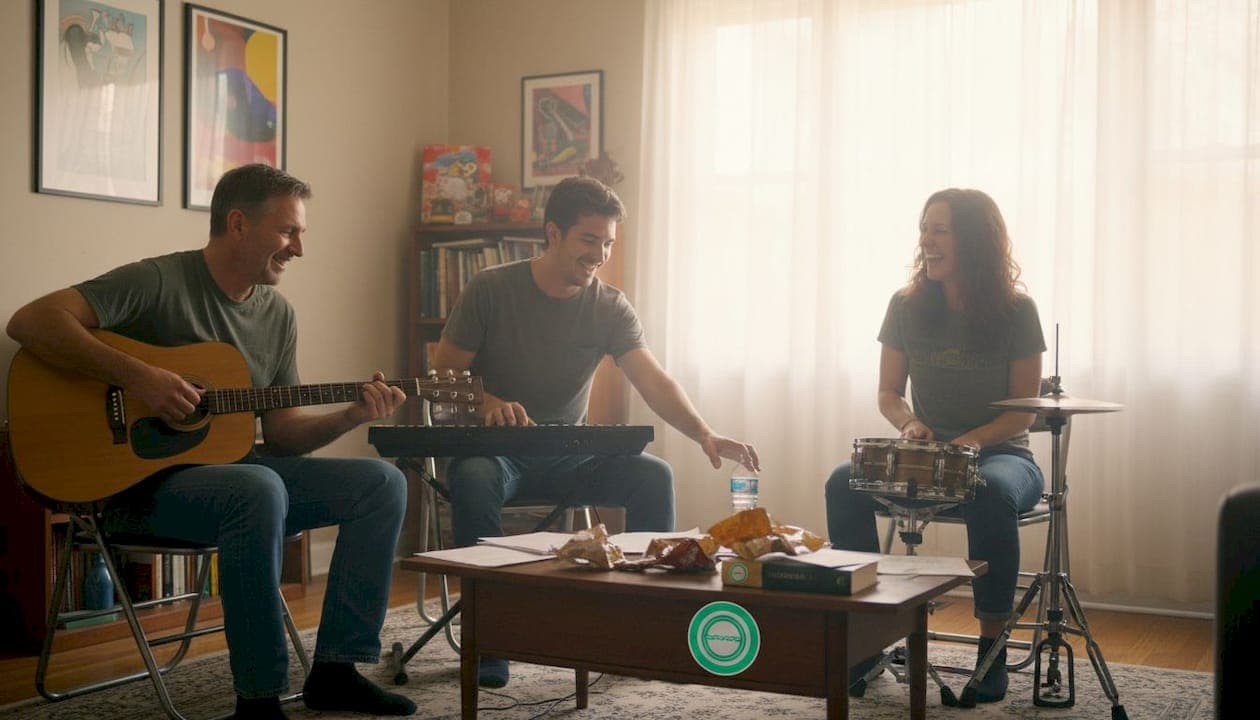
Playing music with others does something remarkable to your brain and social connections. Research shows group music participation promotes pro-social behavior through enhanced empathy and self-expression, fundamentally changing how musicians relate to each other. Whether you're jamming in a garage or collaborating on a new song, sharing musical experiences creates bonds that solo practice simply can't replicate. This article explores the science behind music's social power, compares solo versus collaborative experiences, and shows you practical ways to leverage shared music for deeper connections and creative growth.
Table of Contents
- Key takeaways
- Understanding the social power of shared musical experiences
- Comparing individual vs collaborative music experiences
- How sharing music enhances creativity and learning
- Practical ways to share musical experiences and engage your community
- Discover musical connections and jam sessions with JamClub
- Frequently asked questions
Key Takeaways
| Point | Details |
|---|---|
| Empathy through group music | Playing with others aligns breathing, movement, and emotion to boost empathy and social trust. |
| Synchrony drives bonding | Synchronised activity during jam sessions triggers oxytocin release and activates mirror neuron systems that underlie social connection. |
| Benefits across skill levels | The empathy and bonding effects occur for beginners and pros alike, as genuine collaboration matters more than technical prowess. |
| Low pressure collaboration | Creating a safe environment where mistakes are welcome maximizes social and creative benefits of shared music. |
Understanding the social power of shared musical experiences
When you make music with others, your brain activates neural pathways linked to empathy and social bonding. Self-expression through group music creates a unique psychological environment where trust flourishes and emotional barriers dissolve. This isn't just feel-good theory. Studies measuring pro-social behaviors like cooperation, generosity, and mutual support consistently show elevated levels among musicians who regularly share musical experiences compared to those who practice exclusively alone.
The mechanism works through synchronized activity and shared emotional expression. When you play together, your breathing patterns, physical movements, and emotional states begin to align. This synchronization triggers oxytocin release and activates mirror neuron systems, the same biological processes that underpin human empathy. You're literally experiencing the music through both your own perspective and sensing how your fellow musicians feel.
These benefits apply regardless of skill level. Beginners jamming through simple chord progressions experience the same empathy-building effects as professional session musicians recording complex arrangements. The key factor is genuine collaborative engagement, not technical proficiency. Amateur musicians often report stronger social connections from informal jam sessions than from formal performances because the pressure is lower and authentic interaction is higher.
Sharing music also breaks down social barriers that typically separate people. Age, background, profession, and personality differences fade when musicians focus on creating something together. A report jam session might bring together a retired teacher, a college student, a construction worker, and a healthcare professional who would never otherwise connect, yet they build genuine friendships through shared musical language.
Pro Tip: Start sharing musical experiences in low-pressure environments where mistakes are welcomed and experimentation is encouraged. The psychological safety of supportive jam sessions maximizes empathy-building benefits.
"Music is the universal language of mankind, but it speaks loudest when shared. The bonds formed through collaborative music-making transcend words and create communities built on mutual respect and creative expression."
The social power of shared musical experiences extends beyond immediate participants. When musicians collaborate regularly, they develop stronger community ties that ripple outward. They're more likely to support local music scenes, mentor newer players, and organize events that bring people together. This multiplier effect transforms individual musical sharing into broader cultural impact.
Comparing individual vs collaborative music experiences
Solo practice and collaborative sessions serve different but complementary purposes in musical development. Understanding when to focus on individual work versus shared experiences helps you optimize growth and satisfaction. Both approaches offer distinct benefits, and the most successful musicians strategically balance them.
| Aspect | Solo Practice | Collaborative Sessions |
|---|---|---|
| Primary focus | Technical skill refinement | Social connection and synergy |
| Learning pace | Self-directed and flexible | Accelerated through peer feedback |
| Creative scope | Personal expression | Collective improvisation and fusion |
| Emotional impact | Introspective satisfaction | Shared joy and belonging |
| Challenge level | Self-imposed standards | Coordination and communication |
Solo practice excels at building technical foundations. You control the tempo, can repeat difficult passages endlessly, and develop your unique voice without external pressure. This individual work is essential for mastering your instrument and discovering your personal style. The introspective nature of solo sessions allows deep exploration of musical ideas without compromise or negotiation.
Collaborative music-making elevates different dimensions of musicianship. Research highlights stronger pro-social effects when musicians share experiences in groups rather than practice alone. The real-time interaction demands active listening, adaptability, and communication skills that solo work can't replicate. You learn to anticipate other musicians' moves, adjust your playing dynamically, and contribute to something larger than yourself.
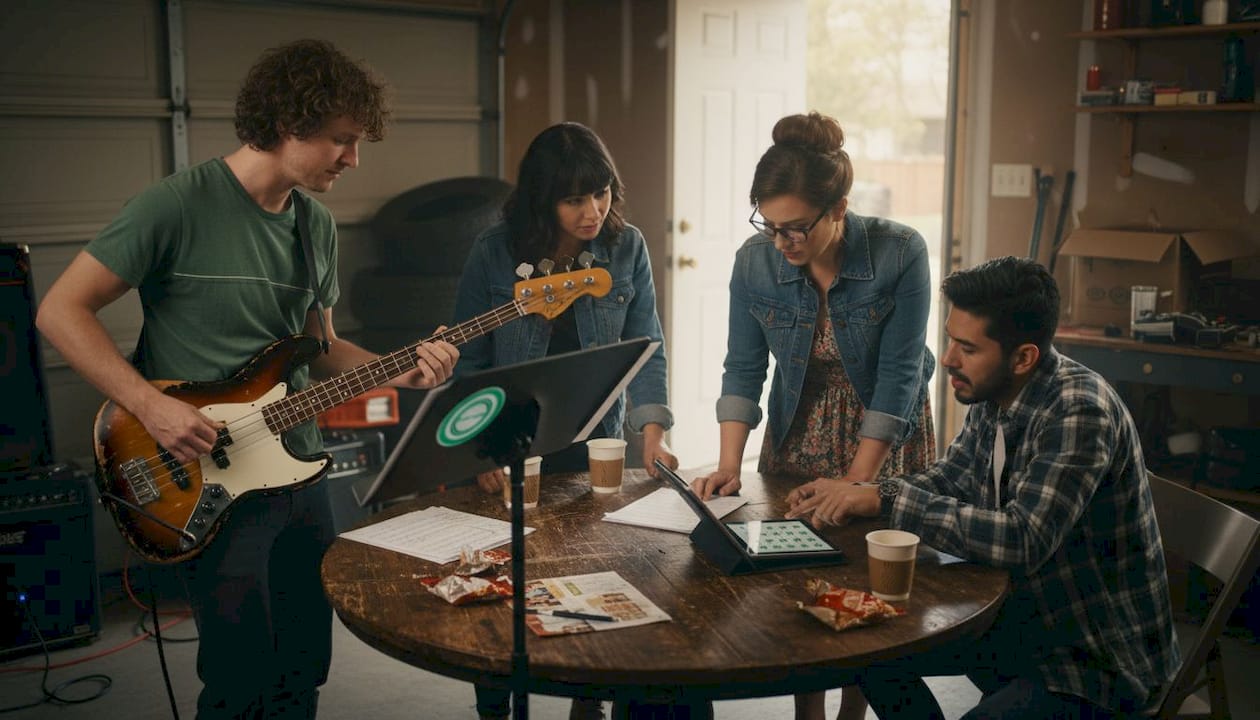
The creative synergy of collaboration often produces unexpected breakthroughs. A bassist might suggest a rhythm that transforms your melody. A drummer's groove might inspire a completely new song direction. These spontaneous creative moments rarely happen in isolation because they emerge from the intersection of multiple musical minds working together.
Challenges in collaborative settings include coordinating schedules, managing different skill levels, and navigating creative disagreements. Some musicians find group dynamics stressful, especially when personalities clash or musical visions diverge. Communication becomes as important as musical ability. Learning to give and receive constructive feedback gracefully is a skill that develops over time.
Balancing both approaches creates well-rounded musicianship. Use solo practice to build technical skills and prepare material. Then bring that preparation to collaborative sessions where you can test ideas, receive feedback, and experience the social and emotional rewards of shared music. A jam session platform makes finding the right balance easier by connecting you with musicians for regular collaborative opportunities.
Pro Tip: Schedule regular collaborative sessions even when you feel unprepared. The discomfort of playing with others before you're "ready" accelerates growth faster than waiting until you feel perfectly polished.
The distinction between solo and collaborative work blurs in modern music-making. Technology enables remote collaboration, where musicians record parts individually but still share the creative process. However, nothing fully replicates the immediate feedback and energy of making music together in real time. The spontaneity and human connection of live collaboration remain irreplaceable.
How sharing music enhances creativity and learning
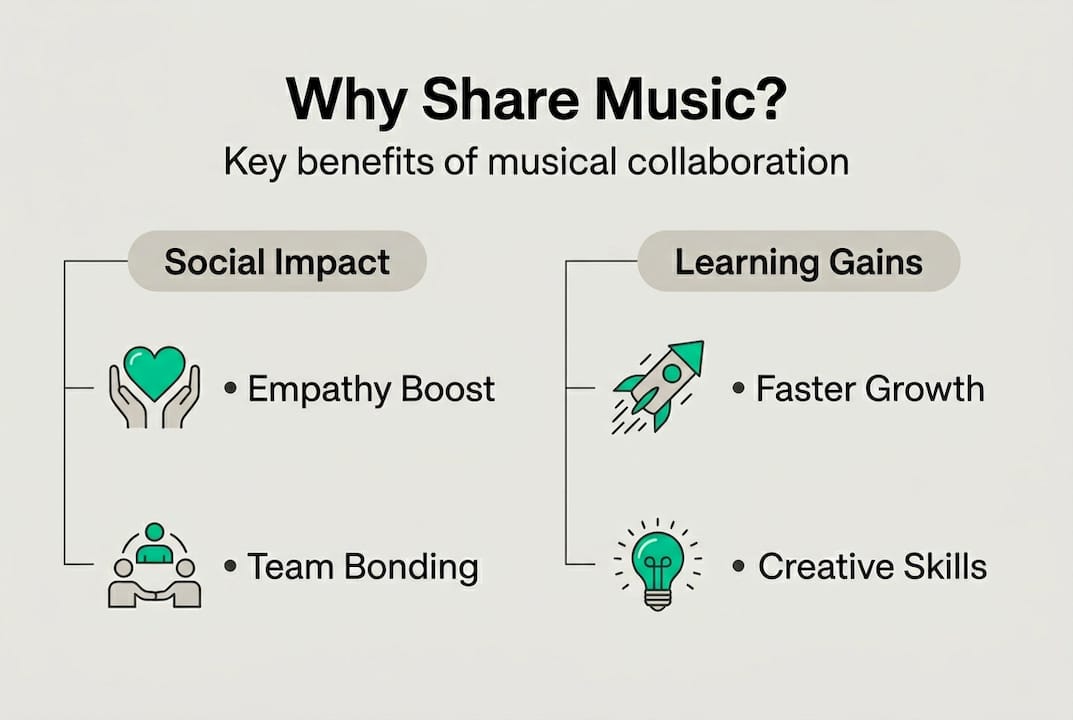
Collaboration fundamentally expands creative possibilities beyond what any individual musician can achieve alone. When you share musical experiences, you're exposed to different techniques, genres, and approaches that challenge your assumptions and spark new ideas. Musical sharing promotes expanded creative expression by creating environments where experimentation is encouraged and diverse perspectives merge.
Here's how shared musical experiences specifically accelerate creativity and skill development:
-
Cross-pollination of ideas happens naturally when musicians from different backgrounds collaborate. A jazz guitarist brings harmonic sophistication to a rock jam, while a folk singer introduces storytelling elements that reshape how everyone approaches lyrics.
-
Immediate peer feedback shortens the learning curve dramatically. Instead of practicing a technique for weeks before discovering a more efficient approach, a fellow musician can demonstrate it in seconds during a jam session.
-
Shared accountability keeps you motivated and consistent. When you commit to regular collaborative sessions, you're more likely to practice and prepare because others are counting on you.
-
Real-time problem-solving develops adaptability that solo practice can't replicate. When a song falls apart mid-performance, collaborating musicians must quickly adjust, communicate non-verbally, and find creative solutions together.
-
Collective improvisation pushes creative boundaries by forcing you to respond to unexpected musical choices. You can't plan every moment, so you develop the confidence to trust your instincts and take creative risks.
The learning acceleration comes from multiple angles simultaneously. You're not just learning from your own practice but absorbing techniques, musical vocabulary, and approaches from every musician you collaborate with. A single jam session might expose you to new chord voicings, rhythmic patterns, and song structures that would take months to discover independently.
Shared musical goals create powerful motivation. When you're working with others toward a performance, recording, or simply creating something beautiful together, the collective energy drives everyone forward. Individual motivation fluctuates, but group momentum carries you through creative blocks and practice plateaus.
Pro Tip: Deliberately collaborate with musicians outside your comfort zone. A classical violinist jamming with electronic producers or a metal drummer joining a folk circle creates the most dramatic creative growth.
Supportive musical communities provide psychological safety that's essential for creativity. When you know your fellow musicians will encourage experimentation rather than judge mistakes, you're willing to try unconventional ideas that might lead to breakthroughs. Fear of judgment kills creativity, while acceptance and support unleash it.
The music community app approach recognizes that creativity flourishes in connected environments. Musicians who regularly share experiences develop not just technical skills but the confidence and creative flexibility that define truly expressive players.
"The most innovative musical ideas rarely emerge in isolation. They're born in the dynamic space between musicians who trust each other enough to take risks and explore uncharted creative territory together."
Regular collaborative sessions build improvisation skills that translate across all musical contexts. Even if you primarily play composed music, the ability to spontaneously create and adapt serves you in performances when things go wrong, in songwriting when inspiration strikes, and in communication with other musicians. Improvisation is fundamentally about confident, creative decision-making, and sharing musical experiences is the most effective way to develop that confidence.
Practical ways to share musical experiences and engage your community
Finding and creating meaningful musical collaborations requires intentional effort, but the rewards justify the investment. Modern tools and platforms make connecting with fellow musicians easier than ever, while traditional community-building approaches remain equally valuable. Here's how to actively share musical experiences and build lasting connections.
Start by identifying musicians in your area through both digital and physical channels. Online platforms designed specifically for musicians offer searchable databases of players by instrument, skill level, genre preference, and location. These tools eliminate the guesswork of finding compatible collaborators. Simultaneously, attend local open mic nights, music stores, and community events where musicians naturally gather.
Once you've identified potential collaborators, take initiative to organize casual sessions:
- Invite two or three musicians for a low-pressure jam at your home or a practice space
- Choose a simple song everyone knows or a basic chord progression to start
- Focus on connection and fun rather than perfection in early sessions
- Gradually introduce more challenging material as comfort builds
- Establish regular meeting times to create consistency and momentum
Set collaborative goals that give your shared musical experiences direction and purpose. Goals might include learning a specific genre together, preparing for an open mic performance, recording a demo, or simply mastering improvisation over common chord progressions. Shared objectives create accountability and give sessions structure without eliminating spontaneity.
Leverage technology to expand your reach and maintain connections. Video calls enable remote jam sessions when in-person meetings aren't possible. Messaging apps keep your musical community engaged between sessions. File-sharing platforms let collaborators exchange recordings and ideas asynchronously. While technology can't fully replace in-person music-making, it extends and enriches collaborative relationships.
Track your progress and celebrate achievements together. Record sessions periodically to hear how your collective sound evolves. Acknowledge milestones like learning a challenging song, successfully improvising through changes, or performing together publicly. Recognition reinforces positive experiences and motivates continued engagement.
| Strategy | Implementation | Expected Outcome |
|---|---|---|
| Use musician platforms | Create detailed profile, search locally, message potential collaborators | Find compatible musicians within weeks |
| Start small sessions | Invite 2-3 players, choose simple material, meet weekly | Build comfort and chemistry quickly |
| Set shared goals | Agree on performance date or recording project | Create accountability and direction |
| Leverage online tools | Use video calls, messaging, file sharing | Maintain engagement between sessions |
Platforms like JamClub streamline the entire process of finding and organizing musical collaborations. Instead of cobbling together various tools and hoping to stumble upon compatible musicians, create jam sessions with built-in RSVP management, location details, and real-time messaging. The platform's design specifically addresses the friction points that prevent musicians from connecting, making shared musical experiences accessible to everyone regardless of organizational skills or existing networks.
Pro Tip: When starting a new collaborative relationship, explicitly discuss expectations around commitment level, musical direction, and communication preferences. Clear agreements prevent misunderstandings and help partnerships thrive.
Expand your musical community by being generous with your knowledge and time. Mentor less experienced players, share resources, and actively introduce musicians who might benefit from knowing each other. Music experience communities thrive when members prioritize collective success over individual advancement. Your willingness to support others creates a culture where everyone benefits.
Consider organizing larger community events once you've built a core group. Host a jam session open to the public, organize a songwriter circle, or create a casual concert series. These events multiply the impact of musical sharing by bringing together musicians who might never otherwise connect. They also strengthen your local music scene and create opportunities for everyone to grow.
The practical work of sharing musical experiences requires consistent effort, but each session builds momentum. Your first jam might feel awkward and tentative. Your tenth will flow naturally. Your fiftieth will feel like coming home to a musical family. The key is starting and persisting through the initial discomfort until collaborative music-making becomes a natural, essential part of your musical life.
Discover musical connections and jam sessions with JamClub
Building meaningful musical connections doesn't have to be complicated or time-consuming. JamClub provides everything you need to find local musicians, organize jam sessions, and create the collaborative experiences that accelerate your growth and deepen your love of music. The jam session platform eliminates the logistical barriers that prevent musicians from connecting, making it simple to discover nearby players who share your interests and availability.
Whether you're searching for a weekly jazz jam, looking to form a band, or simply want to meet fellow musicians in your area, JamClub's tools make the process effortless. Create jam sessions with detailed descriptions, manage RSVPs, coordinate through real-time messaging, and build a network of musical collaborators who enhance your creative journey. The platform operates as a free service because we believe every musician deserves access to the social and artistic benefits of making music together.
Start by browsing local sessions to find opportunities that match your schedule and interests. Then report jam sessions you attend to help others discover great musical experiences in your community. As you engage with the platform, you'll naturally build connections that extend beyond individual sessions into lasting musical relationships.
Pro Tip: New to JamClub? Start by attending a few local jams as a participant before hosting your own. You'll build confidence, understand the platform's features, and begin forming the network that will make your own sessions successful.
Frequently asked questions
How does sharing music improve social connections?
Shared musical experiences activate empathy pathways in your brain and create synchronized emotional states between participants. This biological process builds trust and belonging faster than conversation alone. Regular collaborative music-making strengthens these bonds over time, creating genuine friendships rooted in mutual creative expression.
What if I'm not skilled enough to jam with others?
Skill level matters far less than willingness to engage authentically. Beginner-friendly jam sessions welcome all abilities and focus on learning together rather than showcasing expertise. Many experienced musicians specifically seek mixed-skill collaborations because teaching reinforces their own understanding while fresh perspectives spark creativity.
Can online collaboration replace in-person jam sessions?
Remote collaboration tools enable valuable musical sharing, especially for songwriting and production, but they can't fully replicate the immediate energy and non-verbal communication of in-person sessions. The ideal approach combines both, using technology to maintain connections between live collaborations and expand your network beyond geographic limitations.
How often should I participate in shared musical experiences?
Weekly collaborative sessions provide enough consistency to build skills and relationships without overwhelming your schedule. Even monthly participation delivers significant benefits if you engage fully during each session. The key is regularity rather than frequency, establishing a rhythm that makes shared music a sustainable part of your musical life.
What makes a jam session successful?
Successful sessions balance structure with spontaneity, providing enough direction to keep everyone engaged while leaving room for creative exploration. Clear communication about expectations, mutual respect for different skill levels, and focus on collective enjoyment rather than individual performance create environments where musical sharing thrives and participants return eagerly.
Recommended
- Our Platform - Find & Create Jam Sessions Easily | JamClub
- JamClub - Find Musicians & Jam Sessions Near You | Music Community App
- JamClub - Find Musicians & Jam Sessions Near You | Music Community App
- Our Mission - Connecting Musicians Through Jam Sessions | JamClub
- Educational Video for Musicians: Boosting Song Reach | Music Video Marketplace Blog
- Music Insights Best Practices for Early Artist Discovery - Blog - Music24.com