
TL;DR:
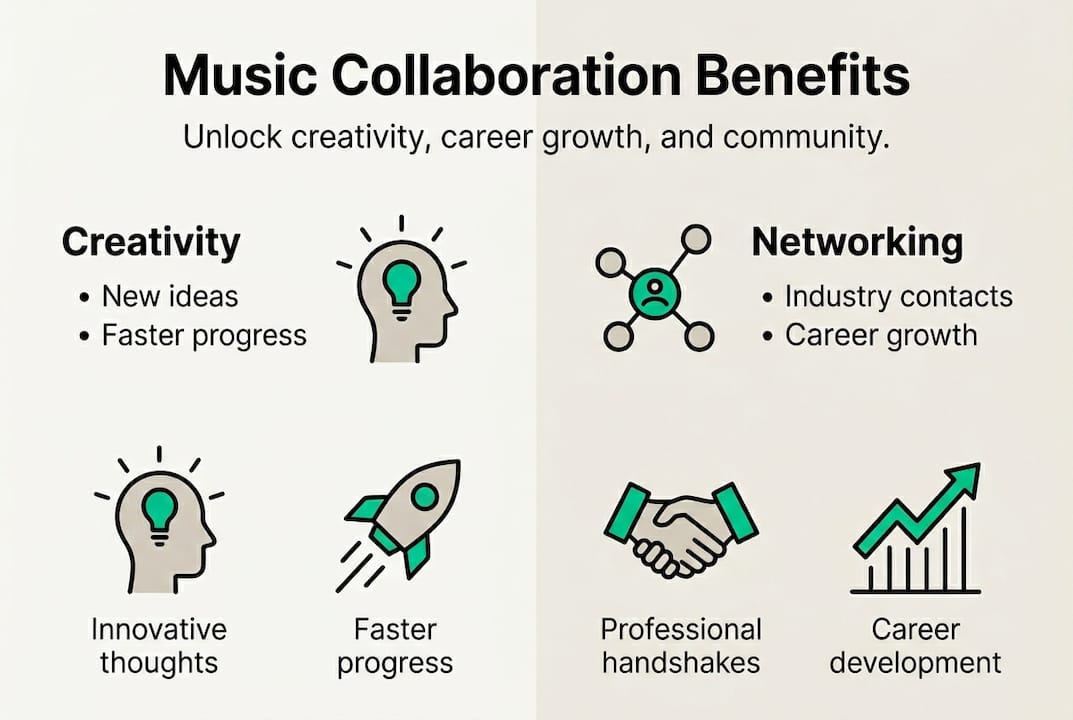
- Sharing musical ideas enhances creativity, skill growth, and motivation through collaboration.
- Collaboration accelerates career growth and strengthens networks, leading to more opportunities.
- Jam sessions and community building foster belonging, well-being, and collective musical development.
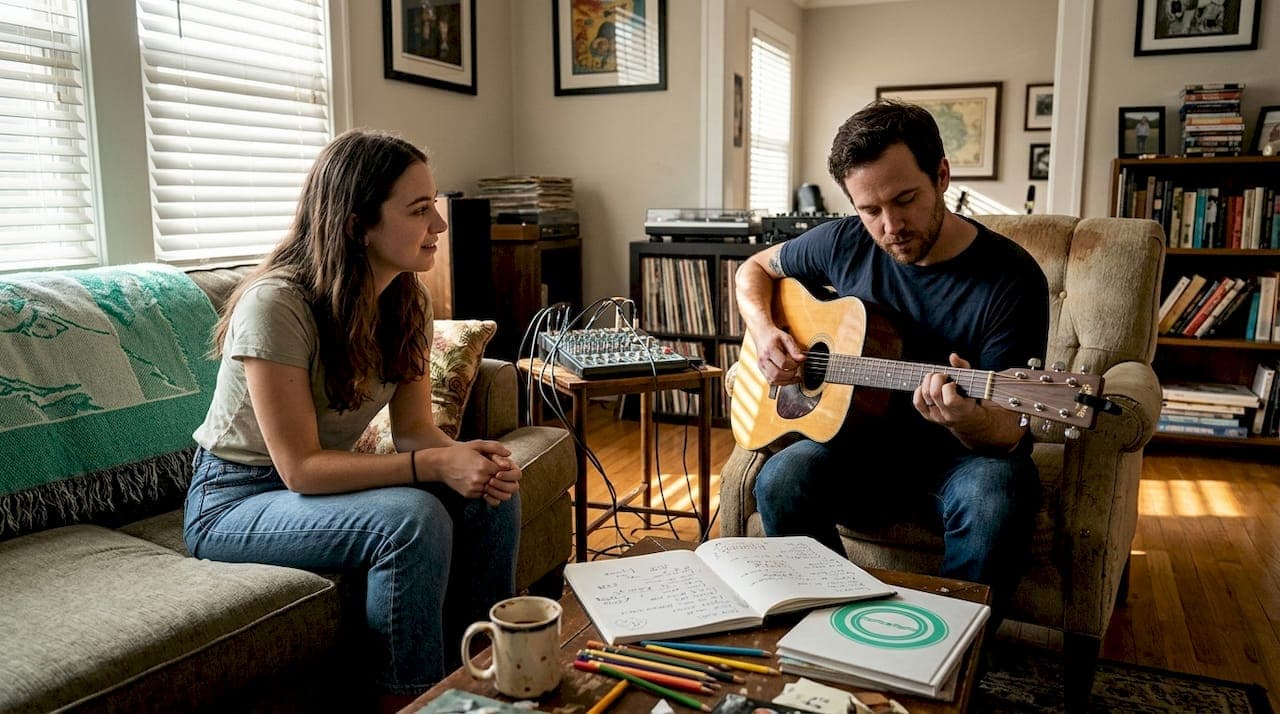
Most musicians picture a lone genius scribbling lyrics at midnight, but the data tells a different story. The biggest breakthroughs in music almost always happen when people share ideas, challenge each other, and build together. Whether you play guitar in your bedroom or front a band at local venues, sharing your musical ideas is one of the most powerful moves you can make. This article walks through the evidence-backed benefits, real-world examples, and practical strategies that show why opening up your creative process is essential for growth, networking, and belonging at every skill level.
Table of Contents
- How sharing ideas amplifies creativity
- Networking and career growth through collaboration
- Community, jam sessions, and personal well-being
- Navigating challenges and maximizing shared creativity
- Hit-making proof: Why sharing ideas rules the charts
- Why most musicians underestimate the power of shared ideas
- Take the next step: Share, jam, and connect today
- Frequently asked questions
Key Takeaways
| Point | Details |
|---|---|
| Collaboration sparks creativity | Sharing your music ideas introduces new perspectives that unlock inspiration and growth. |
| Networking opens doors | Working with others leads to career opportunities, new audiences, and more visibility for your music. |
| Jam sessions build community | Participating in group music sessions strengthens bonds, supports well-being, and creates lasting memories. |
| Preparation prevents pitfalls | Set clear goals and use the right tools to navigate skill gaps and creative disagreements. |
| Shared ideas drive success | Today’s music hits are built on collaboration—making idea sharing crucial for achieving big results. |
How sharing ideas amplifies creativity
Creativity does not live in isolation. When you expose your ideas to someone else's perspective, rhythms, and instincts, something unexpected happens: the idea grows in directions you never could have predicted alone. A chord progression you thought was finished suddenly becomes the foundation for a completely different genre when a collaborator hears it differently.
Diverse perspectives and skill exchange enhance creativity in ways that solo practice simply cannot replicate. When two musicians trade ideas, each person's blind spots become visible. You hear your own work through fresh ears. That feedback loop accelerates learning faster than any amount of solitary practice.
Here is what sharing music ideas consistently delivers for musicians:
- Skill growth: You absorb techniques from collaborators without even trying
- Challenge: Others push you past your comfort zone naturally
- New song approaches: Unexpected genre blends and structural ideas emerge
- Reduced isolation: Regular exchanges keep practice feeling alive and social
Motivation, accountability, and personal growth all increase when others depend on your creative input. When someone is waiting for your riff or your verse, you show up. That social pressure is not stressful. It is energizing. It gives your practice sessions a real purpose beyond personal enjoyment.
"The best ideas I ever had came from someone else finishing my sentence musically. Collaboration is not about giving up control. It is about gaining possibility."
Jam sessions are a perfect example of this in action. In a room full of musicians, you are forced to listen, respond, and adapt in real time. That kind of boosting musical connection through live exchange builds creative instincts that no amount of solo rehearsal can teach. You learn to trust your ideas enough to play them out loud, which is exactly the confidence every musician needs.
Pro Tip: When you feel stuck, share a rough, unfinished idea with another musician. Even a 30-second voice memo can trigger insights you would never reach working alone.
With the power of shared ideas now surfaced, let's examine how this openness translates into real-world networking and career momentum.
Networking and career growth through collaboration
Most career growth in music comes down to who you know, and sharing ideas is the most natural way to start those connections. You are not handing out a business card. You are creating something together, which builds trust far faster than any introduction ever could.
Sharing ideas builds networking opportunities that lead directly to gigs, co-writing projects, and industry relationships. A session musician who shares a bassline idea at a local jam might end up touring with that band six months later. These connections start with a single moment of creative generosity.
Here is how to build career momentum through idea sharing:
- Show up consistently to local jams and online sessions so people recognize your creative voice
- Contribute value first by offering ideas freely before asking for anything in return
- Follow up after collaborative sessions with a message or a shared file to keep the momentum going
- Seek cross-genre collaborators because blending styles creates the most shareable, unique content
- Document your collaborations so you build a portfolio of joint work that showcases your range
The numbers back this up. 75% of collaborating artists saw at least a 10% increase in streaming numbers after working with other musicians. Cross-promotion is a real force multiplier.
| Collaboration type | Networking benefit | Career impact |
|---|---|---|
| Local jam sessions | Meet musicians in your scene | Gigs, band slots, referrals |
| Online co-writing | Connect globally | Wider audience, streaming growth |
| Studio collaborations | Industry introductions | Label attention, sync licensing |
| Social media collabs | Audience cross-pollination | Follower growth, viral potential |
For practical musical networking tips that connect idea sharing with real career steps, the approach is always the same: lead with generosity. The musicians who grow the fastest are the ones who make everyone around them sound better. That reputation travels.
Strong networks grow from great ideas, but they are sustained through authentic collective experiences. Next, see how shared music sessions build deeper bonds and community.
Community, jam sessions, and personal well-being
Beyond career growth, sharing music ideas through organized jam sessions creates something harder to measure but just as real: a sense of belonging. Music has always been a communal act, and jam sessions are its most direct expression.
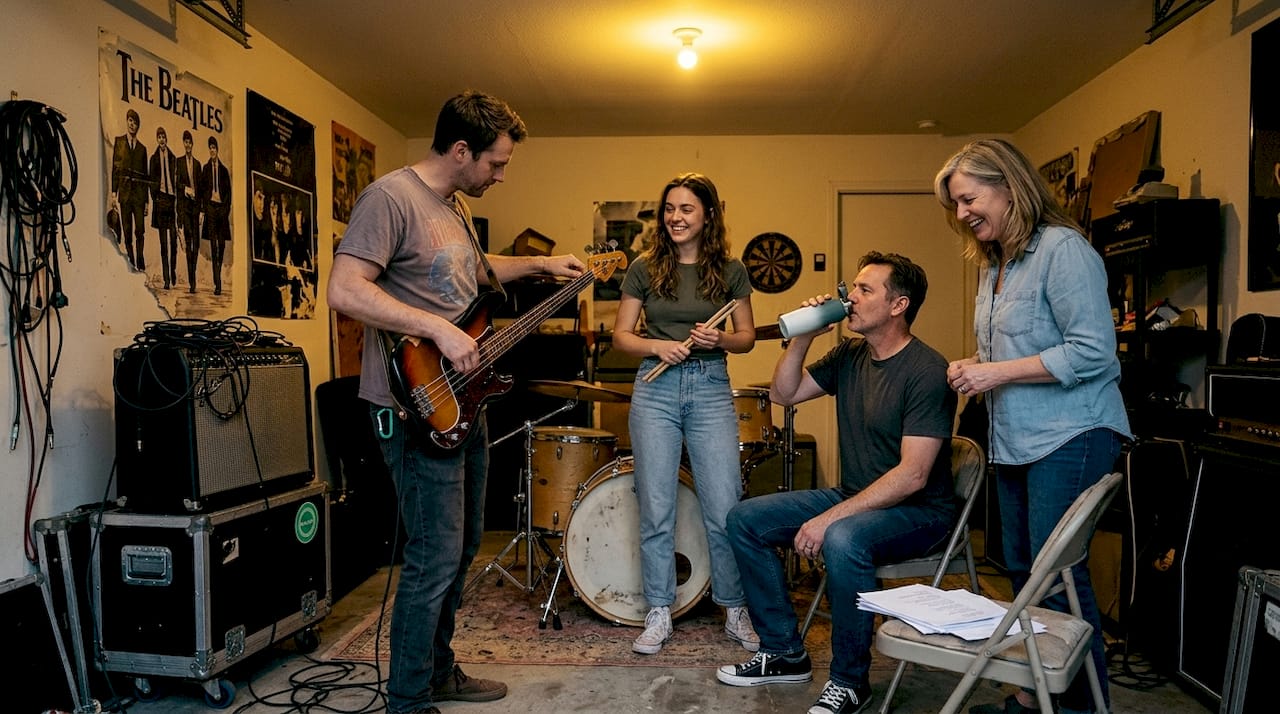
Jam sessions improve improvisation, listening, and teamwork for musicians at every skill level. A beginner learns to hold a groove by watching how a more experienced player responds. An advanced musician rediscovers joy by playing with someone hearing these ideas for the first time. Both leave better than they arrived.
| Solo music creation | Group music creation |
|---|---|
| Full creative control | Shared creative discovery |
| Flexible schedule | Structured accountability |
| Risk of stagnation | Constant fresh input |
| Limited feedback | Immediate, real-time response |
| Can feel isolating | Builds social bonds |
The emotional benefits are backed by research. Participatory music-making builds emotional synchrony, strengthens social bonds, and delivers measurable health benefits including lowered stress and improved mood. Playing music together is not just fun. It is genuinely good for you.
Here is what regular jam session participation tends to produce:
- A consistent circle of musician friends who understand your creative language
- Faster improvement through real-time feedback and observation
- Lower anxiety around performing because the environment feels safe
- A sense of contribution to something larger than your individual practice
For tips on [building successful jam sessions](https://blog.jam-club.com/blog/music community checklist successful jam sessions) that welcome all skill levels, the key is creating a low-pressure environment where ideas flow freely. When musicians feel safe to be imperfect, the best ideas surface.
"Community is not built in rehearsal rooms alone. It is built in the moments between songs, when someone says 'what if we tried it like this?'"
The benefits are impressive, but collaborations can hit roadblocks. Up next: proven methods for productive, smooth idea sharing.
Navigating challenges and maximizing shared creativity
Not every collaboration runs smoothly. Skill mismatches, creative conflicts, and sessions that drift without direction are all common. The good news is that most of these problems are predictable and fixable with the right approach.
Skill imbalances, creative conflicts, and unproductive sessions are the most common roadblocks musicians face. They are not signs that collaboration is failing. They are signs that the group needs a little more structure.
Here is a practical framework for keeping shared sessions productive:
- Set a clear goal before you start: Are you writing a verse, exploring a new sound, or just jamming freely? Name it.
- Clarify roles early: Who is leading the session? Who handles tempo, key, or arrangement decisions?
- Use a session structure: Start with a warm-up, move into focused idea exploration, then review and document what worked
- Communicate openly: If an idea is not working, say so kindly and offer an alternative
- Agree on ownership upfront: Use split sheets to document who contributed what before the session ends
Defining goals and roles upfront, using async tools like file sharing and collaborative DAWs for remote work, and establishing split sheets for ownership are the three pillars of effective collaboration. Skip any of these and friction builds fast.
For remote musicians, digital tools for jam sessions have made async collaboration genuinely powerful. You can share stems, leave timestamped notes, and build on each other's ideas across time zones without losing the creative spark.
Pro Tip: Keep sessions focused with one shared goal, and celebrate quick wins out loud. When the group hears "that riff is perfect, let's keep it," momentum builds and creativity flows.
Now that you are equipped with strategies to share ideas productively, let's look at what makes collaborative success so evident in today's music industry.
Hit-making proof: Why sharing ideas rules the charts
If you still need convincing, look at the charts. Collaboration is not just common in successful music. It is practically the standard operating procedure.
Over half of today's charting tracks are co-written or produced by multiple musicians. Songs reach 1 billion Spotify streams 14 times faster than they did a decade ago, and the tracks breaking those records almost always involve teams of collaborators working together.
Here is what the data consistently shows about collaboration and chart success:
- Multi-collaborator tracks dominate the top 50 on major streaming platforms
- Songs with two or more credited writers tend to reach wider, more diverse audiences
- Producer-artist collaborations drive the majority of viral streaming moments
- Cross-genre co-writes generate more playlist placements than single-genre tracks
The music industry has already voted with its streams. Openness wins. The musicians who position themselves inside active creative communities, sharing ideas freely and building on each other's work, are the ones showing up in the numbers. For a closer look at how [growing music scenes](https://blog.jam-club.com/blog/music scenes grow creativity connection 2026) are driving this shift, the pattern is consistent: community and collaboration are at the center.
Solo brilliance still exists. But it is increasingly rare, and it is no longer the model that the industry rewards most consistently.
Why most musicians underestimate the power of shared ideas
Here is the uncomfortable truth: most musicians hold back their best ideas out of fear. Fear that someone will steal them. Fear of sounding unfinished. Fear that sharing means losing ownership of something personal.
That fear costs more than it protects. In our experience watching hundreds of collaborations unfold, the musicians who share freely are the ones who grow fastest, build the strongest networks, and produce the most memorable work. Secrecy does not protect creativity. It suffocates it.
The cultural myth of the lone genius is persistent, but it is mostly fiction. Even the artists we celebrate as solo icons had collaborators, producers, and session musicians shaping their sound. Sharing is not a threat to originality. It is how originality gets refined into something worth releasing.
Authentic sharing in jam sessions leads to stronger music, new friendships, and faster personal evolution than almost any other practice. We have seen beginners become community leaders simply by showing up and offering their ideas without ego. That openness is magnetic. It attracts collaborators, opportunities, and audiences.
For anyone building toward [community-building for jams](https://blog.jam-club.com/blog/music community building process local jams), the first step is always the same: trust the process of sharing before you feel fully ready.
Pro Tip: Start small. Share a chorus, a riff, or a single lyric line. Build trust with one collaborator before diving into full co-writing. Small shares compound into big creative relationships.
Take the next step: Share, jam, and connect today
You now have the evidence, the frameworks, and the mindset shift. The only thing left is to act on it. Every insight in this article becomes real the moment you share your first idea with another musician.
JamClub is built exactly for this moment. Whether you want to find jam sessions near you, create your jam and invite musicians to collaborate, or simply explore the JamClub community to see who is making music in your area, the platform gives you everything you need to put these principles into practice. JamClub is free, welcoming to all skill levels, and designed to make sharing music ideas as easy and rewarding as possible. Your next creative breakthrough is one shared idea away.
Frequently asked questions
How can sharing music ideas benefit beginner musicians?
Sharing ideas builds confidence and accelerates learning because diverse perspectives and skill exchange give beginners real-time feedback that solo practice cannot provide. It also connects beginners with more experienced musicians who can mentor through collaboration.
Do most professional musicians collaborate on their songs?
Yes. Over half of charting tracks feature multiple collaborators, making co-writing and co-production the dominant model for professional success in modern music.
What's the best way to share music ideas remotely?
Defining goals and using async tools like collaborative DAWs and file sharing platforms makes remote sessions effective. Pair these with split sheets to keep ownership clear from the start.
How do you handle creative conflict in music jams?
Clear goals, open communication, and structure resolve most creative conflicts before they escalate. Establishing session roles and a shared direction at the start prevents the majority of disagreements from arising at all.