
TL;DR:
- Building genuine musical networks requires consistent, accessible spaces centered on support.
- Successful networking emphasizes relationship depth over quantity, fostering trust through ongoing engagement.
- Combining local, online, and event-based interactions enhances creative growth and career development.
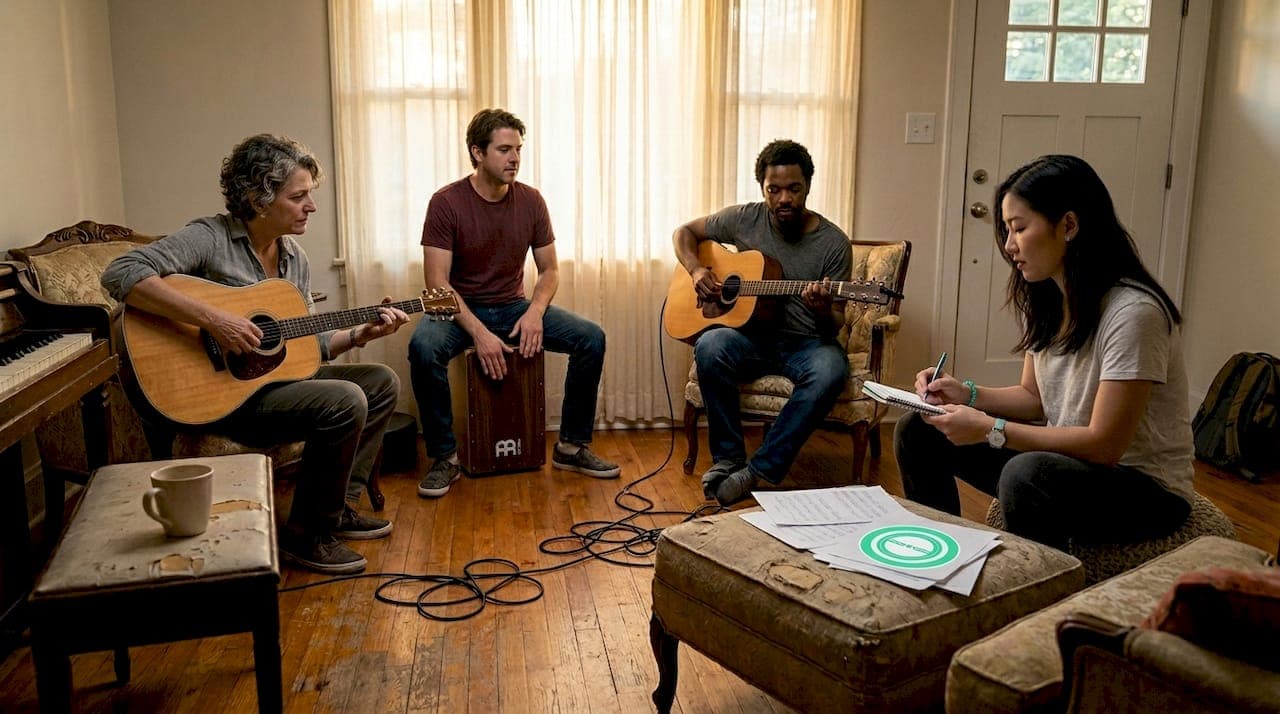
Finding your musical tribe is harder than it looks. You can play for years without ever landing a real collaboration, a bandmate who gets your vision, or a producer who believes in your sound. The local music scene can feel like a closed room, especially when you're new to a city or just starting out. But the right networking opportunities, whether that's a weekly jam, a songwriting circle, or a well-run online platform, can change everything. This article walks through real-world examples, honest comparisons, and practical tips to help you build connections that actually last.
Table of Contents
- Criteria for effective musical networking
- Jam sessions: Organic collaboration and community
- Songwriting circles and feedback sessions
- Online platforms and conference networking
- Why intentional networking beats transactional connections
- Get started with JamClub: Find musicians and jam sessions
- Frequently asked questions
Key Takeaways
| Point | Details |
|---|---|
| Community-based jams | Local jam sessions and open studios foster genuine relationships and organic collaboration. |
| Feedback circles | Songwriting circles provide constructive advice and help musicians overcome industry barriers. |
| Multiple networking channels | Combining in-person and digital platforms accelerates career growth and expands industry contacts. |
| Intentional over transactional | Deeper bonds through consistent participation outshine superficial networking events. |
| Mental health awareness | Choosing inclusive environments and balancing online activity reduces stress and supports well-being. |
Criteria for effective musical networking
Not every open mic or music meetup is worth your time. Before you show up somewhere new, it helps to know what separates a genuinely useful networking opportunity from one that just burns a Tuesday evening. The best musical networking spaces share a few core qualities: openness to different skill levels, a culture of support rather than competition, and enough consistency to build real trust over time.
Accessibility matters more than most people admit. If a session requires expensive gear, a certain reputation, or an invite from the right person, it filters out exactly the musicians who need community most. The best spaces lower the barrier on purpose. They welcome the beginner who just picked up a guitar and the seasoned session player who wants to try something new.
Here's what to look for when evaluating any networking opportunity:
- Openness: Can anyone join, or is there a gatekeeping process?
- Support culture: Do participants encourage each other, or is it competitive?
- Consistency: Does the event happen regularly enough to build relationships?
- Accessibility: Is it affordable, geographically reachable, and welcoming to different instruments and genres?
- Community trust: Do people return week after week, or is it a revolving door?
The numbers back this up. Artists maintaining 5+ industry relationships achieve 3x faster career growth than those who network sporadically. That's not about collecting business cards. It's about maintaining real, ongoing relationships across multiple channels.
It's also worth acknowledging that networking isn't equally easy for everyone. Research highlights mental health considerations that affect musicians, particularly beginners, including anxiety around judgment and social comparison. A good networking space actively reduces these pressures rather than amplifying them.
You should also think about channel diversity. Relying on one type of connection, say, only online platforms or only local jams, limits your reach. The strongest musicians build a local music network while also maintaining a presence in digital spaces. Both feed each other in ways that neither can do alone.
Pro Tip: Before attending any new session, check whether the organizers explicitly welcome beginners. A simple note on their event page or social profile tells you a lot about the culture before you walk in the door.
Jam sessions: Organic collaboration and community
Once you know what to look for, you can seek out sessions that match these criteria. Two very different examples show how jam sessions can build real community in very different ways.
In Nashville, Ca.mp3 fosters organic collaborations among 50+ local musicians through open studio time and beat battles. The model is deliberately low-cost and peer-driven. Musicians show up, share beats, give feedback, and build relationships through the work itself rather than through formal introductions. There's no industry rep in the corner deciding who's worth talking to. The collaboration happens naturally because the environment is designed for it.
Kentucky's old-time music scene takes a completely different approach. Kentucky Old Time Music Jams help transplants build community through unstructured participation and slow jams specifically designed for beginners. The etiquette is informal. You sit in a circle, you play what you can, and nobody expects perfection. For someone new to a city or new to an instrument, that social cohesion is genuinely life-changing.
Here's a quick comparison of these two models:
| Feature | Ca.mp3 (Nashville) | Kentucky Old Time Jams |
|---|---|---|
| Accessibility | Low cost, open studio | Free, community-run |
| Participation style | Beat battles, peer feedback | Unstructured, circle format |
| Skill level focus | Intermediate to advanced | All levels, beginner-friendly |
| Community impact | Local music scene growth | Social cohesion for newcomers |
| Genre focus | Hip-hop, electronic, beats | Old-time, folk, acoustic |
Both models prove that the format matters less than the intention. When organizers prioritize people over performance, real connections follow. Use a jam session checklist to evaluate whether a session fits your goals before you commit to it regularly.
If you want to boost creativity through jam events, the key is showing up consistently. One visit tells you almost nothing. Three or four visits tell you whether the community is real.
"The connections you make at a jam session aren't transactional. You're playing together before you ever exchange a phone number. That shared experience is the foundation of real trust."
Pro Tip: If you're a beginner, look for sessions that explicitly offer slow jams or beginner rounds. Jumping into an advanced session too early can be discouraging. Use local jam session discovery tools to filter events by skill level in your area.
Songwriting circles and feedback sessions
Beyond jams, feedback sessions and songwriting circles introduce a different dimension to musical networking. Instead of playing together in real time, you're sharing work in progress and receiving structured responses. That vulnerability creates a different kind of bond.
The Camden Songwriting Circle is a strong example of how this works. Camden Songwriting Circle prioritizes collaboration and actively counters industry gatekeeping by centering encouragement over critique. Genre doesn't matter. Career stage doesn't matter. What matters is that you show up with something to share and a willingness to listen.
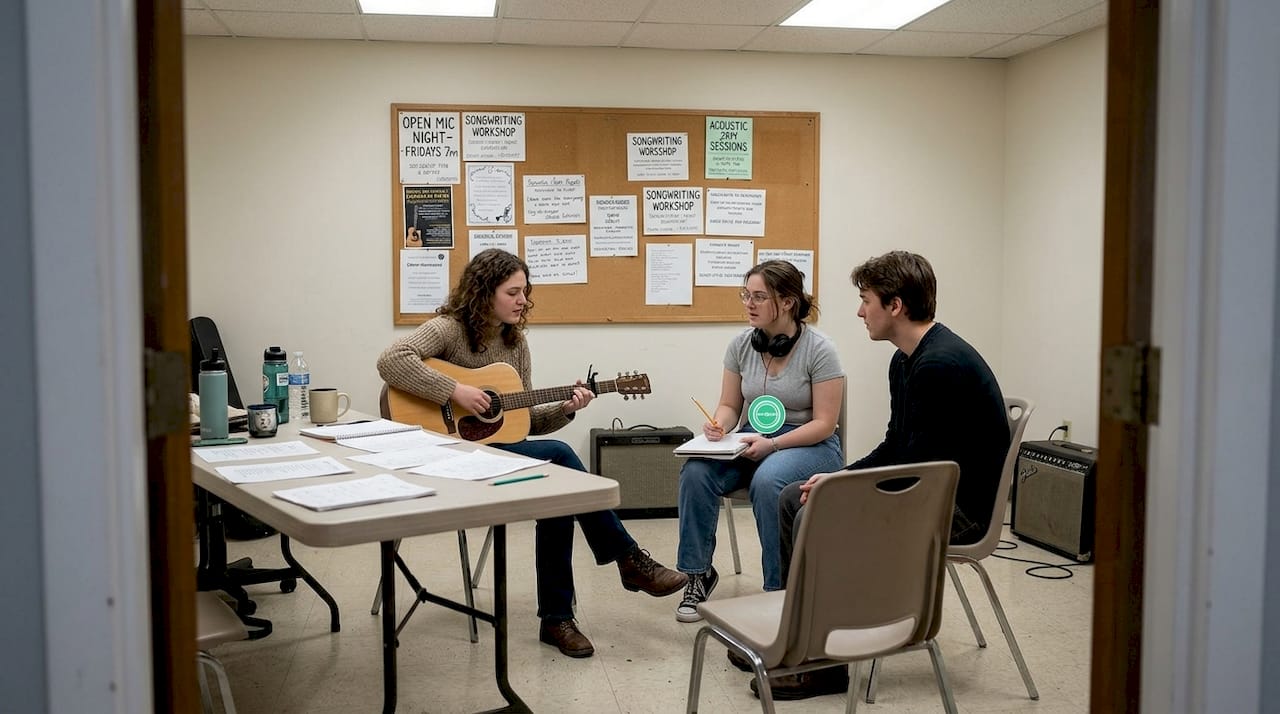
This model works because it removes the competitive dynamic that poisons so many music spaces. Instead of wondering whether the person next to you is trying to take your slot, you're both invested in each other's growth. That shift in dynamic changes everything about how people interact.
Key features of effective songwriting circles include:
- Genre inclusivity: No style is treated as more legitimate than another
- Structured feedback: Responses follow a format that keeps criticism constructive
- Showcase opportunities: Members get chances to perform finished work publicly
- Ongoing relationships: The same people return, building continuity and trust
Here's how to get the most out of a feedback session:
- Bring something unfinished. Finished songs invite performance anxiety. A work in progress invites collaboration.
- Listen more than you talk. The feedback you give shapes how people see you as a collaborator.
- Follow up after the session. A quick message about someone's song is how acquaintances become real connections.
- Be specific in your feedback. "I loved the chorus" is nice. "The chord change in the second verse surprised me in a good way" is useful.
- Return consistently. One session is an introduction. Ten sessions is a community.
"Songwriting circles taught me that my best collaborators weren't the most technically skilled people in the room. They were the ones who listened hardest."
For musicians who want to extend these connections beyond the room, online music sharing tools let you continue the feedback loop between sessions. And if you're just starting to establish local connections, a songwriting circle is often the lowest-pressure entry point available. The live music event benefits extend well beyond the music itself, touching mental health, creative confidence, and long-term career development.
Online platforms and conference networking
Digital and conference environments offer different but complementary networking opportunities. They extend your reach beyond your zip code and connect you with musicians, producers, and industry professionals you'd never meet at a local jam.
Conferences like SXSW create concentrated networking moments where years of relationship-building can happen in a few days. Online platforms, meanwhile, let you maintain and grow those relationships between events. The two work best together, not as substitutes for each other.
Here's a breakdown of how different networking channels compare:
| Channel | Reach | Relationship depth | Cost | Best for |
|---|---|---|---|---|
| Local jam sessions | Neighborhood | High | Low to free | Trust, collaboration |
| Online platforms | Global | Medium | Free to low | Visibility, discovery |
| Conferences (SXSW, etc.) | Industry-wide | Variable | High | Career acceleration |
| Feedback circles | Local to regional | Very high | Low | Creative growth |
The honest tension in digital networking is real. On one side, platforms have democratized access in ways that genuinely matter. An independent artist in rural Ohio can now connect with a producer in Atlanta without a label's help. On the other side, digital networking pros and cons include real risks: comparison fatigue, social media noise, and the illusion of connection without real depth.
The musicians who navigate this best treat online platforms as a discovery layer, not a relationship layer. You find people online. You build relationships in person or through sustained, personal communication.
Best practices for combining digital and in-person networking:
- Use online platforms to identify musicians in your area before reaching out in person
- Follow up every in-person connection with a digital touchpoint within 48 hours
- Prioritize event planning for vibrant jam sessions to create your own networking opportunities
- Engage with people's work online before asking for anything
Maintaining 5+ industry relationships across both digital and local channels is what separates musicians who grow steadily from those who plateau. The music networking platform you use matters less than how intentionally you use it.
Why intentional networking beats transactional connections
After looking at the landscape, it's worth reflecting on what actually works in practice. Most musicians have experienced transactional networking: the person who hands you a SoundCloud link before asking your name, or the producer who only calls when they need a favor. It feels hollow because it is.
Transactional networking often fails in tight-knit scenes precisely because everyone can see through it. Local music communities are small. Reputation travels fast. The musicians who build lasting careers are almost always the ones who showed up consistently, gave generously, and treated every connection as a person rather than a resource.
Local rituals, like the weekly jam, the monthly songwriting circle, the annual showcase, create the repetition that trust requires. You can't shortcut that. No amount of Instagram follows replaces the experience of playing music with someone for six months straight.
The real insight is this: your network's value isn't measured by how many people you know. It's measured by how many people would genuinely go out of their way for you. That number grows through depth, not volume. If you want to build that kind of network, start by establishing authentic connections in spaces where people show up for the music, not the opportunity.
Get started with JamClub: Find musicians and jam sessions
Ready to put these ideas into action? JamClub is built exactly for this moment. Whether you want to find a local jam session this weekend, host your own with RSVP management and real-time messaging, or simply connect with musicians in your area, the platform makes it easy to move from reading about networking to actually doing it.
JamClub is free to use, which means the only barrier is showing up. You can explore JamClub to browse sessions near you, use the music networking platform to connect with local musicians, or report a jam session you already know about so others can find it too. Every session added makes the community stronger for everyone.
Frequently asked questions
What are the best ways for beginners to join local networking events?
Attend slow jams for beginners and open studio sessions like Ca.mp3, which welcome newcomers and prioritize community participation over performance pressure.
How do digital platforms compare to in-person events for musical networking?
Digital platforms offer broad access but can create comparison fatigue, while in-person events build deeper trust. The optimistic vs. cautious views on digital networking suggest using both channels together for best results.
Are songwriting circles effective in overcoming industry gatekeeping?
Yes. Circles like Camden Songwriting Circle counter gatekeeping by centering collaboration and encouragement, making them one of the most inclusive networking formats available.
What are the risks of online music networking?
Online networking can increase comparison stress and expose musicians to social media pressure. Mental health risks are especially relevant for beginners who are still building confidence in their work.
How can musicians grow their careers through networking?
Maintaining relationships with at least five industry contacts across local and digital channels leads to 3x faster career growth and more consistent collaboration opportunities.