
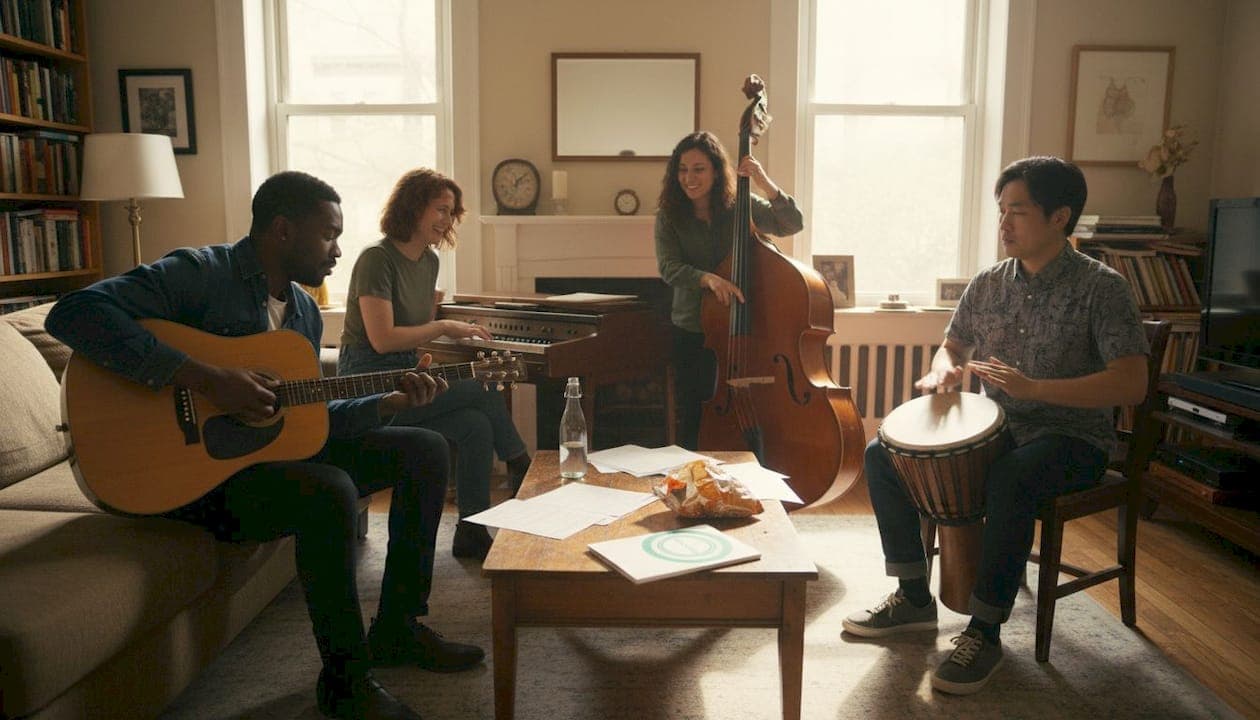
Most musicians spend years practicing alone, convinced that mastery is a solo mission. But the fastest-growing musicians in any local scene share one habit: they learn with others, not just beside them. Peer learning in music is the reciprocal exchange of musical knowledge, techniques, and experiences among musicians of varying skill levels, often through jam sessions, peer teaching, and community events. Whether you're picking up your first chord or navigating complex improvisation, music skill sharing can accelerate your growth in ways that solo woodshedding simply cannot match.
Table of Contents
- What is music skill sharing?
- How music skill sharing works: Practices and mechanics
- Who benefits: Inclusivity from beginners to advanced musicians
- Music skill sharing in action: Real-world scenarios and community stories
- Overcoming challenges: Online vs in-person skill sharing
- Getting started: How to join or create a skill sharing music group
- Discover, connect, and grow with music skill sharing
- Frequently asked questions
Key Takeaways
| Point | Details |
|---|---|
| Skill sharing defined | Reciprocal music learning enables musicians to grow and connect beyond solo practice. |
| Evidence-based methods | Practices like dyad learning and peer teaching deliver measurable skill, motivation, and community gains. |
| Inclusive for all levels | Both beginners and advanced musicians thrive in supportive, structured group environments. |
| Choose your setting | Mix online and in-person skill sharing to balance accessibility with real-time feedback. |
| Easy to start | Join or create local or online groups to begin sharing and building music communities right away. |
What is music skill sharing?
Music skill sharing is not just playing together in the same room. It is a structured, intentional exchange where musicians teach, learn, and inspire each other simultaneously. Music skill sharing is the reciprocal exchange of musical knowledge, techniques, and experiences, and it takes many forms depending on the setting and the people involved.
The most common forms include:
- Peer teaching: One musician explains a technique or concept to another, then they switch roles.
- Jam sessions: Informal or structured group playing where musicians experiment and respond to each other in real time.
- Group workshops and community recitals: Organized events where musicians share progress, receive feedback, and celebrate collective growth.
- Open mic nights: Low-pressure public performances that build confidence and invite community feedback.
Contrast this with solo practice, where feedback is limited to what you can hear yourself. Skill sharing introduces outside perspectives, unexpected musical ideas, and the kind of motivation that only comes from playing with real people.
"The moment you teach something to another musician, you understand it twice as deeply yourself." This is the core engine behind sharing musical experiences and why communities built around music grow so much faster than individuals practicing in isolation.
The core benefits are clear: you learn new techniques faster, build genuine community, and stay motivated far longer than you would alone. Online music skill sharing has expanded these benefits even further, connecting musicians across cities and time zones.
How music skill sharing works: Practices and mechanics
Knowing what skill sharing is gets you curious. Knowing how it works gets you results. The main practical methods each have a distinct structure and a proven track record.
Core methods include dyad practice, reciprocal peer teaching (RPT), jam sessions, and community recitals. Here is how each one plays out:
- Dyad practice: Two musicians work on the same piece or skill together, alternating between playing and observing. The observer gives real-time feedback, then they switch.
- Reciprocal peer teaching (RPT): One musician takes the role of tutor for a set period, then the roles reverse. This forces both players to articulate what they know.
- Jam sessions: A group improvises around a key, chord progression, or theme. The structure is loose, but the learning is deep because everyone responds to everyone else.
- Community recitals and open mics: Musicians perform for each other in a low-stakes setting, building performance confidence and receiving constructive feedback.
The results are measurable. Dyad practice groups showed superior motor skill transfer and higher scores in key music skills compared to solo practice groups. That is not a small edge. That is a fundamentally different learning curve.
| Method | Best for | Group size | Feedback speed |
|---|---|---|---|
| Dyad practice | Technique and motor skills | 2 | Immediate |
| RPT | Theory and articulation | 2 to 4 | Structured |
| Jam sessions | Creativity and ear training | 3 to 10+ | Real time |
| Community recitals | Performance confidence | Any | Post-performance |
Building successful jam session environments requires more than just showing up with an instrument. A clear key, a tempo everyone agrees on, and a leader who invites participation make the difference between a productive session and a chaotic one.
Pro Tip: Try alternating tutor and tutee roles during your next practice session with a fellow musician. Even if you are the more experienced player, explaining a concept out loud will reveal gaps in your own understanding and sharpen your technique.
If you want to build vibrant jam sessions from scratch, start with a simple structure: one key, one tempo, and one rule that everyone gets a solo.
Who benefits: Inclusivity from beginners to advanced musicians
One of the biggest myths about jam sessions is that they are only for experienced players. The reality is that every skill level gains something distinct and valuable from music skill sharing.
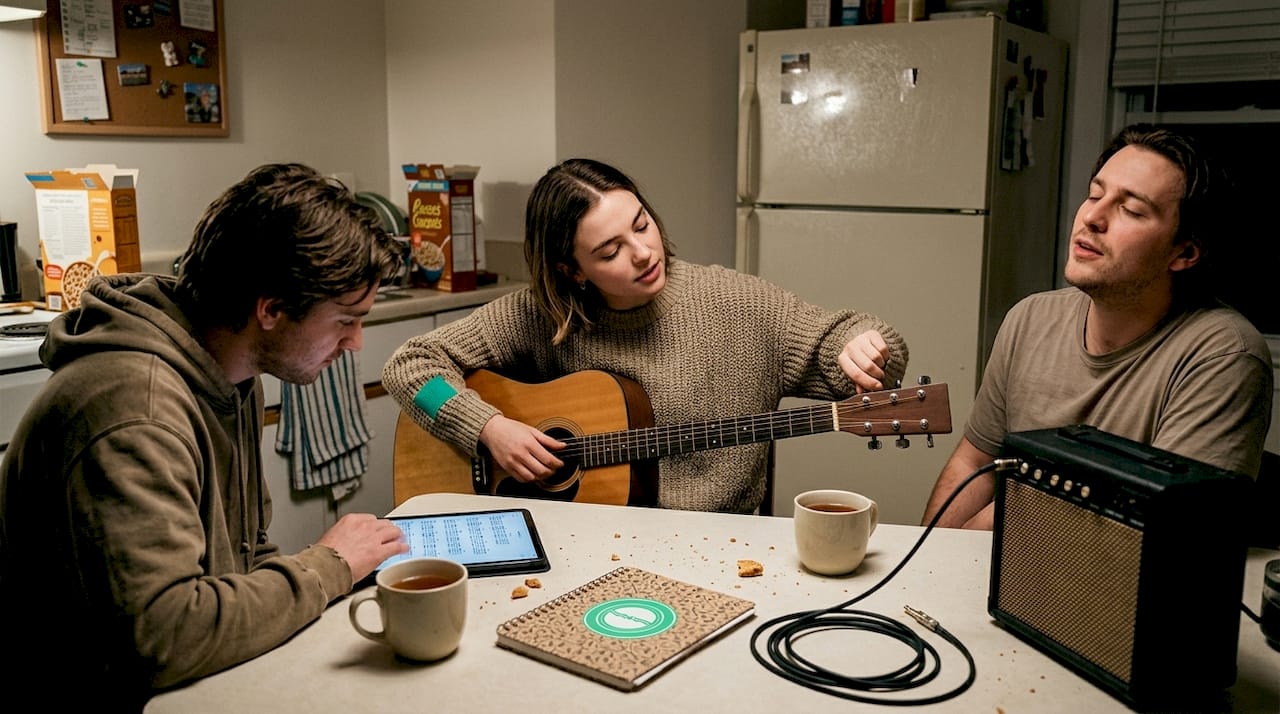
Beginners thrive in supportive environments like slow jams that emphasize patience and core community values. Advanced musicians, on the other hand, use structured improvisation to push their creative limits and develop leadership skills.
| Skill level | Primary benefit | Ideal setting |
|---|---|---|
| Beginner | Confidence, basic technique, ear training | Slow jams (90 to 100 bpm), peer teaching |
| Intermediate | Repertoire expansion, theory application | RPT groups, themed jam sessions |
| Advanced | Creative risk-taking, mentorship, leadership | Structured improvisation, community recitals |
The psychological benefits are just as real as the technical ones. Playing with others reduces performance anxiety, builds a sense of belonging, and creates accountability. You show up because people are counting on you.
Older adults and students both benefit from skill sharing, showing measurable gains in aural skills, replication, improvisation, and long-term motivation over extended periods. Age is not a barrier. Willingness is the only real requirement.
Key elements of a supportive skill sharing environment:
- Patience: Leaders set the tempo and wait for everyone to find their footing.
- Inclusivity: Every instrument and every level is welcomed without judgment.
- Clear invitation: New players are explicitly invited to join, not just tolerated.
- Consistent structure: Regular meeting times and simple formats reduce anxiety for newcomers.
Pro Tip: If you are new to jamming, look for sessions advertised as slow jams running at 90 to 100 bpm. These are specifically designed for players who are still building confidence, and the leaders running them expect and welcome beginners.
For deeper guidance on music community building for jams, focus on creating a culture before you worry about the music. The right culture makes the music better automatically. You can also use a checklist for jam session success to make sure nothing important gets missed when you organize your first event. Establishing local music connections early gives your community a foundation that grows organically over time.
Music skill sharing in action: Real-world scenarios and community stories
Theory is useful. Stories are what actually inspire action. Here is what music skill sharing looks like when it moves from concept to lived experience.
Scenario 1: The newcomer at their first jam
Imagine walking into a local jam session for the first time. You know three chords. Everyone else seems to know everything. A good host will:
- Introduce you to one or two other players before the session starts.
- Assign you a simple role, like holding down a rhythm pattern on a single chord.
- Check in with you between songs and offer one specific piece of feedback.
- Invite you back by name at the end of the night.
That structure transforms a terrifying experience into a memorable one. You leave with new skills, new contacts, and a reason to return.
Scenario 2: A peer teaching circle
A group of four intermediate guitarists meets weekly. Each week, one player teaches the others a technique they have been working on, whether it is fingerpicking patterns, chord inversions, or a specific scale. The teacher prepares, the learners engage, and everyone walks away with something new.
"Jam sessions and community events boost creativity, collaboration, and foster new local connections that outlast any single performance."
These small groups often grow into something larger. A weekly circle of four becomes a monthly open mic of twenty. A local open mic becomes a neighborhood music festival. The momentum is real.
To grow creativity and connection in your local scene, start small and stay consistent. One reliable weekly session builds more community than ten one-off events. Online music collaboration can extend that community beyond your zip code when in-person options are limited.
Overcoming challenges: Online vs in-person skill sharing
Both online and in-person skill sharing work. They just work differently, and knowing the tradeoffs helps you choose the right tool for the right moment.
Collaborative methods outperform individual practice across the board, but expert modeling in RPT and the online versus in-person dynamic each carries its own tradeoffs.
| Factor | In-person | Online |
|---|---|---|
| Accessibility | Limited by location | Global reach |
| Feedback quality | Rich, tactile, immediate | Visual and audio only |
| Group energy | High, spontaneous | Moderate, structured |
| Scheduling flexibility | Fixed time and place | Asynchronous options |
| Technical barriers | Low | Latency, audio sync issues |
In-person sessions win on energy and feedback depth. Online sessions win on access and flexibility. The smartest approach is to use both.
Common challenges and how to address them:
- Latency in online sessions: Use dedicated music collaboration platforms rather than standard video call apps.
- Uneven skill levels in person: Assign roles based on current ability, not experience level.
- Feedback that discourages: Train session leaders to frame all feedback as observations, not judgments.
- Inconsistent attendance: Keep sessions short (60 to 90 minutes) and at a fixed time each week.
Pro Tip: For tactile feedback and real group energy, prioritize local in-person groups whenever possible. Supplement with music sharing online to access teachers, styles, and collaborators you cannot find locally. The combination is more powerful than either alone.
When creating successful jam sessions, the format matters less than the culture. A well-run online session beats a poorly organized in-person one every time.
Getting started: How to join or create a skill sharing music group
You do not need a rehearsal space, a PA system, or years of experience to start sharing music skills. You need a few willing musicians and a simple plan.
Steps to launch your own skill sharing group:
- Choose a format: Start with a slow jam or a dyad practice session. Keep it simple.
- Find two or three musicians: Post in local Facebook groups, music stores, or community boards.
- Pick a consistent time and place: A living room, a community center, or a park all work.
- Set one simple guideline: For example, everyone gets a solo, or we play in the key of G tonight.
- Debrief after each session: Five minutes of honest feedback at the end accelerates everyone's growth.
Starting local with slow jams, moving into dyad and RPT formats, and using apps for remote sessions keeps the focus on community over perfection. That mindset is what makes groups last.
Essential etiquette for any skill sharing session:
- Listen more than you play, especially in your first few sessions.
- Offer feedback only when invited, and keep it specific and kind.
- Show up on time and communicate if you cannot make it.
- Celebrate small wins out loud. Encouragement is contagious.
For a full roadmap on building local music community, focus on relationships first and repertoire second. The music will follow naturally when the people feel connected.
Discover, connect, and grow with music skill sharing
You now have the framework, the methods, and the mindset to make music skill sharing a real part of your musical life. The next step is finding your people.
JamClub is built exactly for this moment. The JamClub community connects musicians of all levels who are ready to share, learn, and grow together. Whether you want to walk into your first local jam or launch a weekly session of your own, the platform makes it simple. You can find or create jam sessions near you, manage RSVPs, coordinate in real time, and build the kind of musical network that actually lasts. If you are ready to lead, you can start your own jam in minutes and invite musicians who match your style and skill level. JamClub is free, and the community is waiting.
Frequently asked questions
Is music skill sharing effective for absolute beginners?
Yes, beginners benefit most in supportive settings like slow jams at 90 to 100 bpm that emphasize patience, clear structure, and an inviting community culture.
What are the measurable benefits of peer-led music learning?
Peer-led approaches deliver real results: dyad groups showed superior motor skill transfer and significantly higher scores in key music skills compared to musicians who practiced alone.
How does online music skill sharing compare to in-person?
Online sharing increases accessibility and flexibility, but in-person sessions provide richer feedback and the kind of spontaneous group energy that is hard to replicate through a screen.
Can older adults participate and progress in music skill sharing?
Absolutely. Older adult novices showed measurable gains in aural skills, replication, and improvisation over 12 months of peer-based music learning, proving that skill sharing works at any age.