
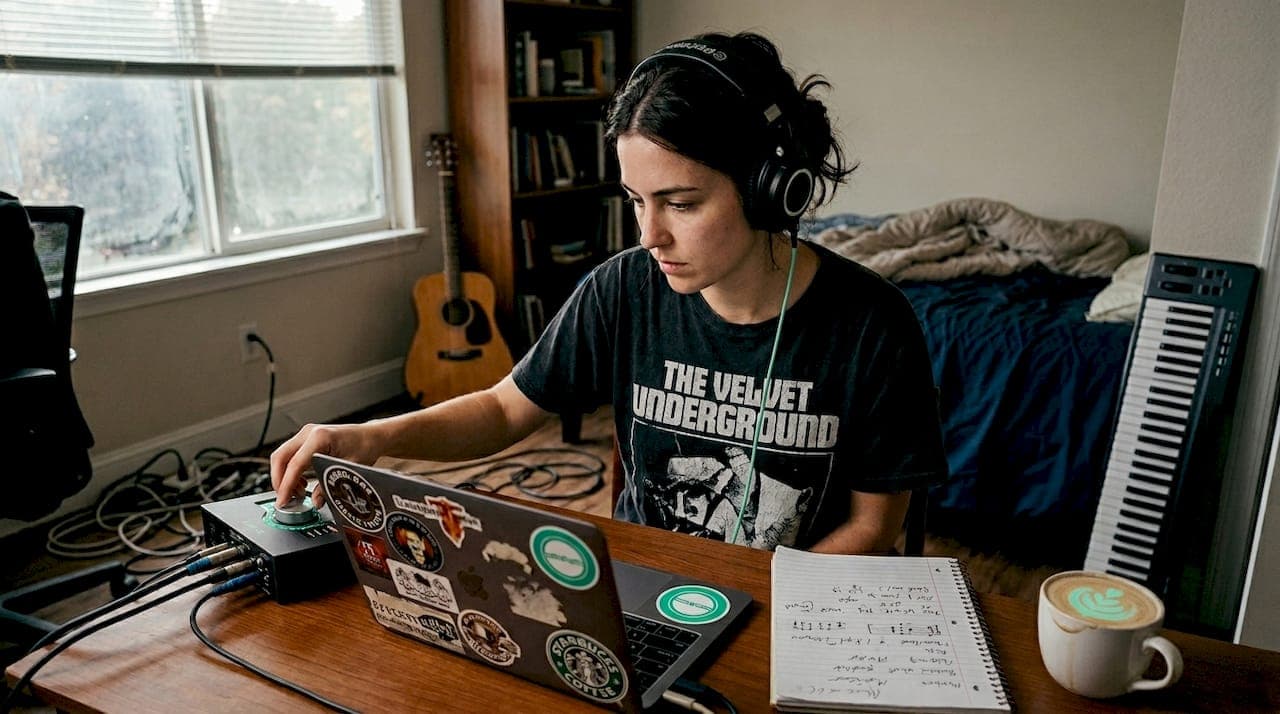
Many musicians assume that putting their music online is mostly about getting streams or downloads. That view misses the bigger picture. Online music sharing has quietly become one of the most powerful engines for real collaboration, community growth, and local discovery. Platforms built around sharing tracks, samples, and live sessions are connecting guitarists in Austin with bassists in Brooklyn, and helping bedroom producers find bandmates down the street. The data backs this up: sharing music digitally does far more than distribute sound. It builds relationships, sparks creativity, and opens doors to jam sessions you never knew existed.
Table of Contents
- Understanding online music sharing platforms
- How online music sharing fosters collaboration
- Community building: From digital spaces to local jam sessions
- Economic and creative impacts of music sharing online
- Tips for thriving in online music sharing and local jam discovery
- Connect and collaborate further with JamClub
- Frequently asked questions
Key Takeaways
| Point | Details |
|---|---|
| Platforms drive collaboration | Modern music sharing tools enable remote jamming and co-creation for all skill levels. |
| Community leads to opportunity | Online networks foster new relationships and open doors to local jam sessions. |
| Balanced approach is crucial | Musicians should balance creative production and engagement to avoid burnout. |
| Audience growth with online sharing | Digital platforms expand reach and sometimes boost sales for musicians. |
| Choose tools wisely | Select platforms and features that fit your collaborative needs and community goals. |
Understanding online music sharing platforms
Before diving into how sharing drives collaboration, it helps to know what each platform actually does well. The landscape has grown fast, and not every tool fits every musician.
Music sharing platforms today cover a wide range of needs. SoundCloud lets you upload full tracks, comment at specific timestamps, and build playlists for public discovery. Splice focuses on sample sharing, giving producers access to royalty-free loops and stems they can remix and build on together. JamKazam is built for low-latency live jamming, letting musicians play together in real time across distances. BandMix works more like a classifieds board, connecting musicians looking for bandmates or collaborators in their area.
Collaboration tools on these platforms include real-time jamming, sample sharing, track uploads with feedback channels, and remote co-creation features. Each platform uses different mechanics: SoundCloud relies on fan-powered royalties and embeddable players, while Splice uses hashtag-driven discovery and community sample packs. LANDR adds mastering and collaboration tools that let multiple musicians work on the same project file remotely.
Here is a quick comparison of the major platforms:
| Platform | Core feature | Best for | Community tools |
|---|---|---|---|
| SoundCloud | Track uploads | Amateurs and indie artists | Comments, reposts, playlists |
| Splice | Sample sharing | Producers and beatmakers | Packs, collabs, feedback |
| JamKazam | Live low-latency play | Live musicians | Real-time sessions |
| BandMix | Musician classifieds | Band formation | Local listings, messaging |
Key advantages by user type:
- Amateurs benefit most from SoundCloud's low barrier to entry and Splice's royalty-free sample library
- Producers thrive on Splice's collaborative pack system and LANDR's remote mastering workflow
- Live musicians get the most from JamKazam's real-time play and jam session discovery tools
- Band seekers find BandMix's classifieds format the most direct path to local connections
How online music sharing fosters collaboration
Knowing the platforms is one thing. Understanding how musicians actually use them to collaborate is where things get interesting.
A typical remote collaboration workflow looks like this:
- Upload a rough idea to SoundCloud or a shared Splice project and invite feedback from your network
- Collect timestamped comments or direct messages from collaborators who suggest changes or add parts
- Share stems or samples through Splice so each collaborator can work on their section independently
- Schedule a live session on JamKazam to play through the arrangement together in real time
- Finalize and publish the track back to your sharing platform, tagging all contributors for community visibility
The feedback loop is where most of the creative magic happens. When a drummer uploads a groove and a bassist responds with a complementary line three time zones away, that is genuine co-creation. Remote collaboration tools have made this workflow accessible to musicians at every skill level, not just those with studio budgets.
Common pitfalls include version confusion when multiple people edit the same file, and communication gaps that slow down the process. The fix is simple: use platform-native messaging and keep one person as the project lead who manages uploads and feedback rounds.
The community building process accelerates when musicians use tags and genre channels actively. Tagging your track with specific genres, instruments, and moods puts it in front of the right listeners and potential collaborators.
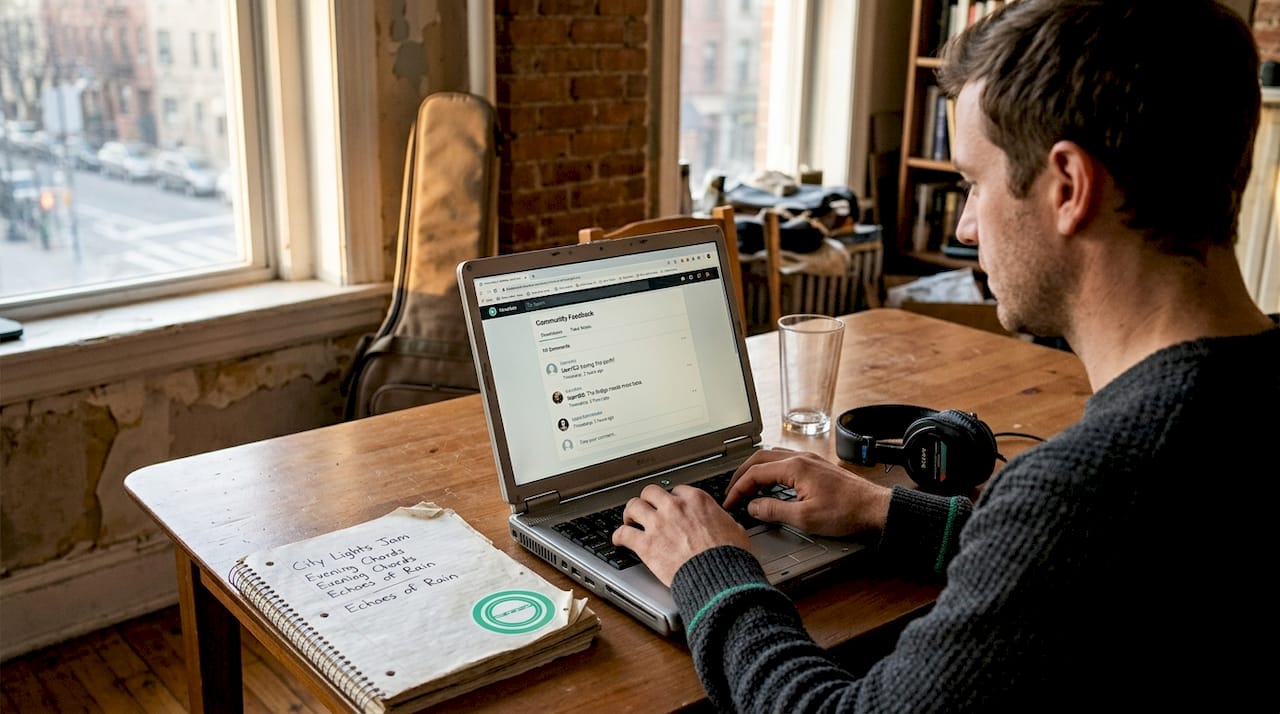
Pro Tip: When you upload a new track or sample, add three to five specific tags beyond just the genre. Include the key, tempo, and mood. Musicians searching for collaborators often filter by these details, and it dramatically increases your chances of finding jam sessions and co-creators who match your style.
Community building: From digital spaces to local jam sessions
Once musicians start collaborating online, something bigger tends to happen. Communities form. And those digital communities often spill into real-world gatherings.
Digital community tools that drive this include:
- Forums and genre channels where musicians discuss technique, gear, and upcoming projects
- Musician classifieds on platforms like BandMix that list open spots in bands and local session opportunities
- Event listings tied to geographic areas, making it easy to find or post local jam sessions
- Networking events organized through platforms like Meetup, which hosts over 40,000 jam session members globally
The research supports what musicians already feel. Social media improves relationships and skills among musicians, with online sharing building communities through forums, classifieds, and networking sites that connect amateurs and professionals alike.
"Online music sharing does not just distribute sound. It creates the social infrastructure that turns strangers into bandmates and online followers into real-world collaborators."
For musicians focused on establishing local music connections, the path often starts online. You find someone through a shared sample pack or a comment thread, then meet up for a live session. The digital layer removes the awkwardness of cold outreach and gives you a shared creative context before you ever meet in person.
Here is how community growth tends to progress:
| Stage | Digital action | Real-world outcome |
|---|---|---|
| Discovery | Follow, comment, repost | Awareness of local musicians |
| Engagement | Collaborate on tracks | Shared creative projects |
| Connection | Direct messaging | Meeting for live sessions |
| Community | Event listings, RSVPs | Regular local jam sessions |
Using a successful jam sessions checklist and actively building a local music network through these digital touchpoints turns online activity into a thriving local scene.
Economic and creative impacts of music sharing online
Sharing music online is not without trade-offs. The economic picture is more nuanced than most musicians expect.
On the positive side, streaming stimulates digital purchases with an elasticity of 0.01 to 0.09, meaning that exposure through sharing platforms does lead to measurable sales increases. For amateurs, the entry barrier is essentially zero. You can upload a track today and reach a global audience by tomorrow without spending a dollar.
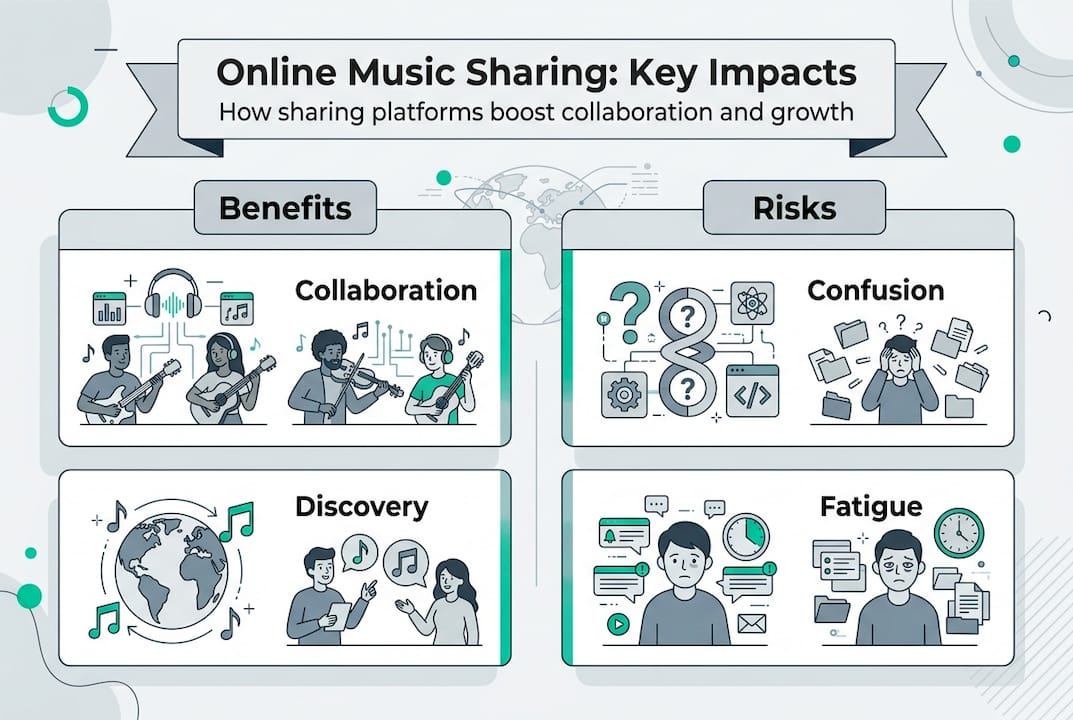
For professionals, the picture gets more complicated. Revenue per stream remains low across most platforms, and the pressure to post consistently can crowd out actual creative time. Mental health risks from social media include harmful comparisons, algorithm uncertainty, and the anxiety of optimizing content for engagement rather than artistic value.
Benefits and drawbacks at a glance:
- Amateurs gain: Global discovery, free distribution, community feedback, low-cost collaboration
- Professionals gain: Audience expansion, direct fan relationships, licensing opportunities
- Amateurs risk: Getting lost in oversaturated feeds without a clear strategy
- Professionals risk: Revenue dilution, burnout from content demands, creative compromise
The connection through sharing is real, but so is the fatigue. Musicians who treat every upload as a performance for an algorithm tend to burn out faster than those who share because they genuinely want feedback or collaboration.
Pro Tip: Set a simple rule for yourself. Share when you have something worth sharing, not on a schedule driven by platform algorithms. Consistent quality beats consistent quantity every time, and your community will respect the difference.
Tips for thriving in online music sharing and local jam discovery
Practical steps matter more than theory when you are trying to build a real presence and find genuine collaborators.
- Complete your profile fully on every platform you use. Include your instruments, skill level, influences, and location. Incomplete profiles get skipped.
- Engage before you promote. Comment on other musicians' tracks, join genre forums, and respond to feedback before asking for attention on your own work.
- Use location-based features on platforms like BandMix and JamClub to surface your profile to musicians in your area who are actively looking for collaborators.
- Post session recaps and short clips from live jams to show your real-world activity. This builds credibility and attracts musicians who want the same kind of experience.
- Cross-link your profiles so that someone who finds you on SoundCloud can easily reach your JamClub listing or BandMix profile.
Platforms democratize access but also pressure musicians toward constant content creation. The musicians who thrive long-term are those who use platforms intentionally, focusing on genuine connection rather than vanity metrics.
For promoting musical gatherings and planning jam sessions that actually draw people, your online presence is the foundation. A well-maintained profile with real activity signals that you are serious and approachable.
Pro Tip: Prioritize genuine connections over algorithm chasing. Reply to every comment on your tracks for the first month. Those early conversations often turn into your most reliable collaborators and the people who show up to your first jam session.
Connect and collaborate further with JamClub
Everything covered in this article points toward one core truth: the best music happens when musicians find each other and play together. Online sharing is the starting point, but the real payoff is the live session, the band that forms, the community that grows.
JamClub is built specifically for that next step. You can explore the JamClub platform to find musicians near you, browse upcoming sessions, and connect with players who match your style and skill level. If you already have a session in mind, create a jam session and invite your community directly. Spotted a great local jam happening nearby? You can report a jam session to help other musicians in your area discover it. JamClub is free to use and designed to turn your online connections into real musical moments.
Frequently asked questions
How do online music sharing platforms help musicians connect locally?
Online platforms use forums, local event listings, and networking features to connect musicians in nearby areas for jam sessions and collaborations. BandMix connects thousands locally, and Meetup hosts over 40,000 jam session members worldwide.
Can sharing music online increase a musician's audience?
Yes. Streaming stimulates purchases with a measured elasticity of 0.01 to 0.09, and digital sharing consistently expands audience reach beyond what traditional local promotion can achieve.
Are there risks to sharing music online?
Yes. Mental health risks include harmful social comparisons and algorithm-driven anxiety, while professionals also face revenue dilution and pressure to produce content constantly.
What online tools are best for live remote collaboration?
JamKazam offers low-latency live play for real-time sessions, while Splice provides royalty-free sample sharing and collaborative project tools for producers working remotely.
How can musicians maximize discovery on sharing platforms?
Optimize your profile with instruments, location, and influences, use specific hashtags including tempo and mood, and engage actively in community features like SoundCloud playlists and jam session postings.