
TL;DR:
- Musicians build communities through a blend of online platforms and in-person sessions.
- Effective online engagement involves complete profiles, sharing work-in-progress, and genuine interaction.
- Successful local jams require consistent scheduling, diversity, and inclusive etiquette to foster ongoing participation.
Finding your musical tribe used to mean hanging around the right local venue or knowing someone who knew someone. That barrier is gone. In 2026, musicians at every level — weekend hobbyists, bedroom producers, and touring professionals — are building rich, active communities through a mix of online platforms and in-person sessions. The tools are free, the entry points are everywhere, and the only thing holding most players back is not knowing where to start. This guide walks you through exactly how to network online, collaborate remotely, organize local jams, and sustain the kind of community that actually makes you a better musician.
Table of Contents
- Understanding music communities in 2026
- Networking and sharing: Online platforms and tools
- Remote collaboration and jam sessions: Tools and etiquette
- In-person jams: Building critical mass and diversity
- What most musicians miss about community building
- Connect and collaborate: Next steps with JamClub
- Frequently asked questions
Key Takeaways
| Point | Details |
|---|---|
| Hybrid engagement | Leveraging both online and local music communities maximizes collaboration and inspiration. |
| Platform selection | SoundCloud, BandLab, and JamClub each offer unique features for connecting with musicians and sharing your music. |
| Remote jams made easy | Modern remote tools like JamKazam allow musicians to jam together with minimal latency if technical basics are followed. |
| Etiquette matters | Positive jams rely on inclusivity, turn-taking, and guidance from experienced players. |
| Diversity drives creativity | Groups with varied instruments and backgrounds spark creative growth and memorable sessions. |
Understanding music communities in 2026
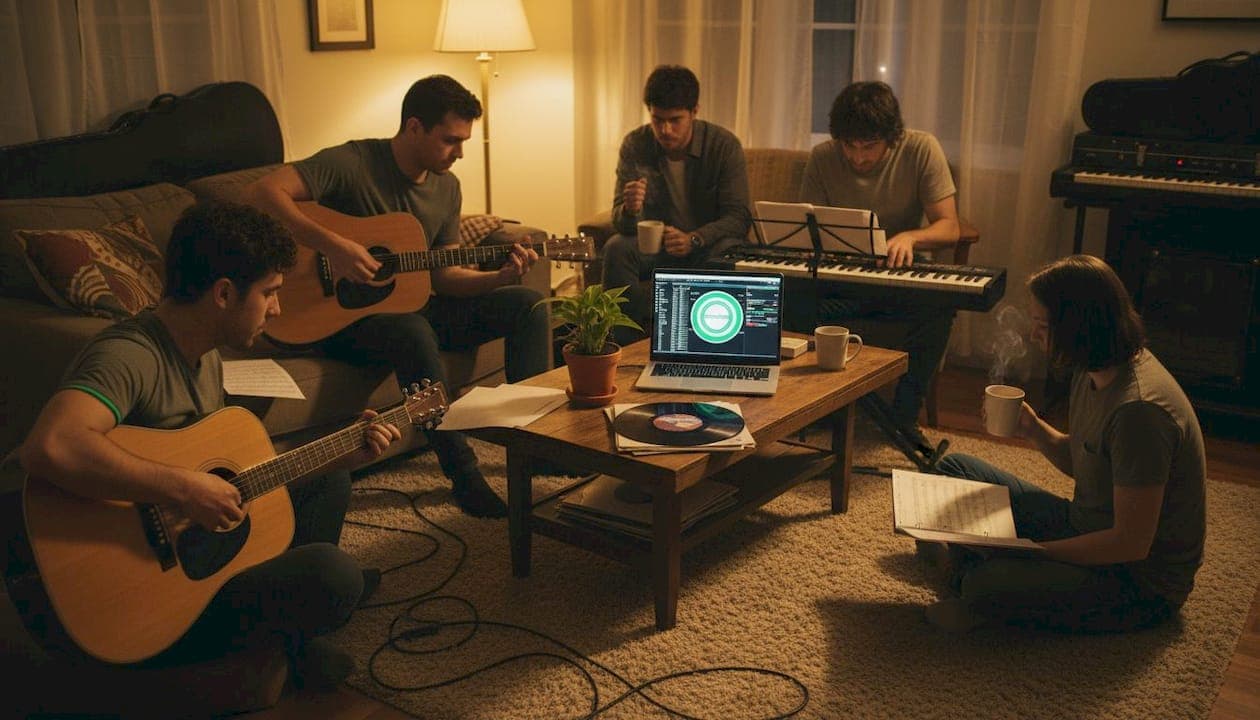
A music community is any group of musicians who share, support, and create together consistently. That definition sounds simple, but the shape of these communities has changed dramatically. Ten years ago, your community was mostly whoever showed up at your local rehearsal space or open mic. Today, it layers digital and physical spaces into something far more powerful.
Modern communities blend online interaction with offline energy. You might discover a guitarist on BandLab, trade ideas over messaging for a month, then meet up for a live session. That combination, digital discovery plus real-world chemistry, is what makes 2026 communities so effective for growth.
Why does joining a community matter so much? Here are the core benefits:
- Collaboration: You gain access to musicians whose skills complement yours, opening up projects you could never complete alone.
- Learning: Watching and playing with more experienced musicians accelerates your development faster than any lesson.
- Exposure: Shared posts, reposts, and community features push your music in front of listeners you would never reach solo.
- Accountability: A community gives you deadlines, feedback, and people who notice when you go quiet.
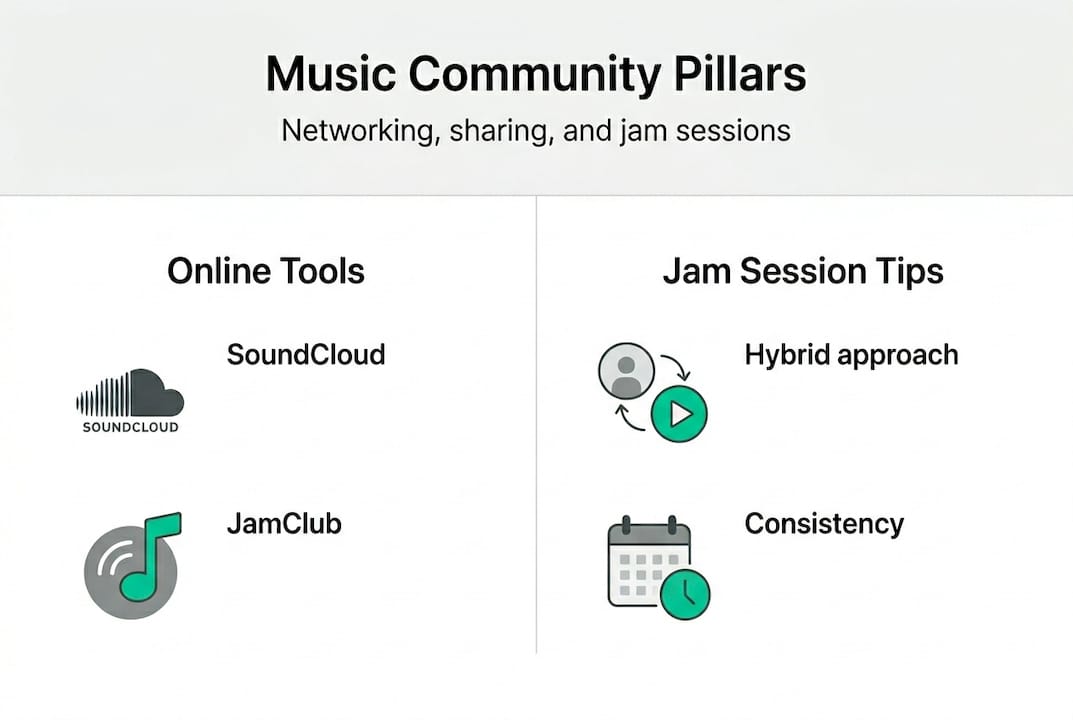
The platforms enabling all of this have scaled enormously. SoundCloud hosts 375M tracks across 40 million creators, making it one of the largest music networks on the planet. BandLab adds collaborative recording tools on top of social features. JamClub focuses specifically on music sharing online and organizing jam sessions, which makes it especially useful if your goal is real-time collaboration rather than just passive listening.
"The internet has turned music from a local conversation into a global one. The musicians who thrive are the ones who show up in both rooms." — common wisdom among working session players
Understanding which platform serves which purpose is the first step. Once you know the landscape, building local music connections alongside your online presence becomes a natural, reinforcing cycle rather than two separate efforts.
Networking and sharing: Online platforms and tools
Choosing the right platform depends on what you want from a community. Each major option has a distinct personality and feature set. Here is a quick comparison:
| Platform | Best for | Key features |
|---|---|---|
| SoundCloud | Sharing finished tracks, discovery | Reposts, comments, playlists, stats |
| BandLab | Collaborative recording, feedback | Cloud DAW, collab projects, feed |
| JamClub | Finding and hosting jam sessions | Event discovery, RSVP, messaging |
SoundCloud and BandLab both use comments and reposts as their primary networking engine. Leaving a specific, thoughtful comment on someone's track is the single fastest way to start a real conversation. Generic praise gets ignored. Specific feedback gets remembered.
Getting started does not need to be complicated. Follow these steps:
- Set up a complete profile. Use a real photo, list your instruments and influences, and upload at least two or three tracks or clips. Blank profiles get skipped.
- Join genre or instrument communities. Most platforms have groups or tags. Follow them, engage consistently, and you become a familiar face fast.
- Share music that invites response. Post works-in-progress, not just finished pieces. Asking for feedback generates far more interaction than showcasing a polished product.
- Repost generously. Sharing other musicians' work signals that you are a contributor, not just a self-promoter. It also gets noticed.
- Use direct messaging intentionally. Once you have engaged publicly a few times, a direct message feels natural rather than cold.
Pro Tip: Create profiles on at least two platforms simultaneously. SoundCloud builds your listening audience while JamClub connects you to local players. The overlap between those two groups is where your most valuable collaborators tend to live.
For deeper collaboration and community building, consistency beats volume. Posting once a week and engaging daily outperforms a burst of activity followed by silence. Treat your online presence like building local networks — it takes regular investment to see compound returns.
Remote collaboration and jam sessions: Tools and etiquette
Remote jamming has moved well past the awkward, laggy video call era. Dedicated tools now make real-time playing across distances genuinely musical. The key technical challenge is latency, the delay between one musician playing and another hearing it. Anything above 30 milliseconds starts to feel off. Below that, most players adapt naturally.
Here is how the main tools stack up:
| Tool | Latency | Best use case |
|---|---|---|
| JamKazam | Under 30ms | Live real-time jamming |
| SoundBridge | Low | Mixing and collab sessions |
| AudioMovers | Variable | Streaming audio to producers |
| Splice | Not real-time | Async sample and project sharing |
JamKazam achieves under 30ms latency when both players use a wired ethernet connection. That single requirement, ditching WiFi, is the most impactful thing you can do for remote session quality. Wireless introduces inconsistent packet loss that no software can fully compensate for.
Beyond the technical setup, remote jams have their own etiquette. Musicians sometimes call it "jamiquette." The core rules:
- Balance your volume. Nobody should be drowning out the room. Set levels before you start, not mid-song.
- Mute when not playing. Background noise from your room adds up across multiple participants.
- Encourage every level. If someone is newer, give them space to find their footing. Rushing past a beginner's mistake kills the creative atmosphere.
- Call out key and tempo clearly. Assumptions about what you are playing lead to frustrating starts. State the key, count in, and keep it simple until everyone locks in.
Pro Tip: Use a hybrid approach. Remote sessions work brilliantly for regular weekly check-ins and creative experimentation. Save in-person jams for when you need the physical energy of a room. The two formats feed each other rather than compete.
For anyone planning to host, solid event planning for jam sessions makes the difference between a one-time experiment and a recurring community anchor. Having a jam session checklist ready before your first remote or live session saves you from avoidable chaos.
In-person jams: Building critical mass and diversity
There is something that remote tools simply cannot replicate: the physical feedback loop of playing in a room with other musicians. The way a drummer's kick drum hits your chest, the way eye contact cues a transition — these are irreplaceable. In-person jams build trust and musical chemistry at a speed that online interaction rarely matches.
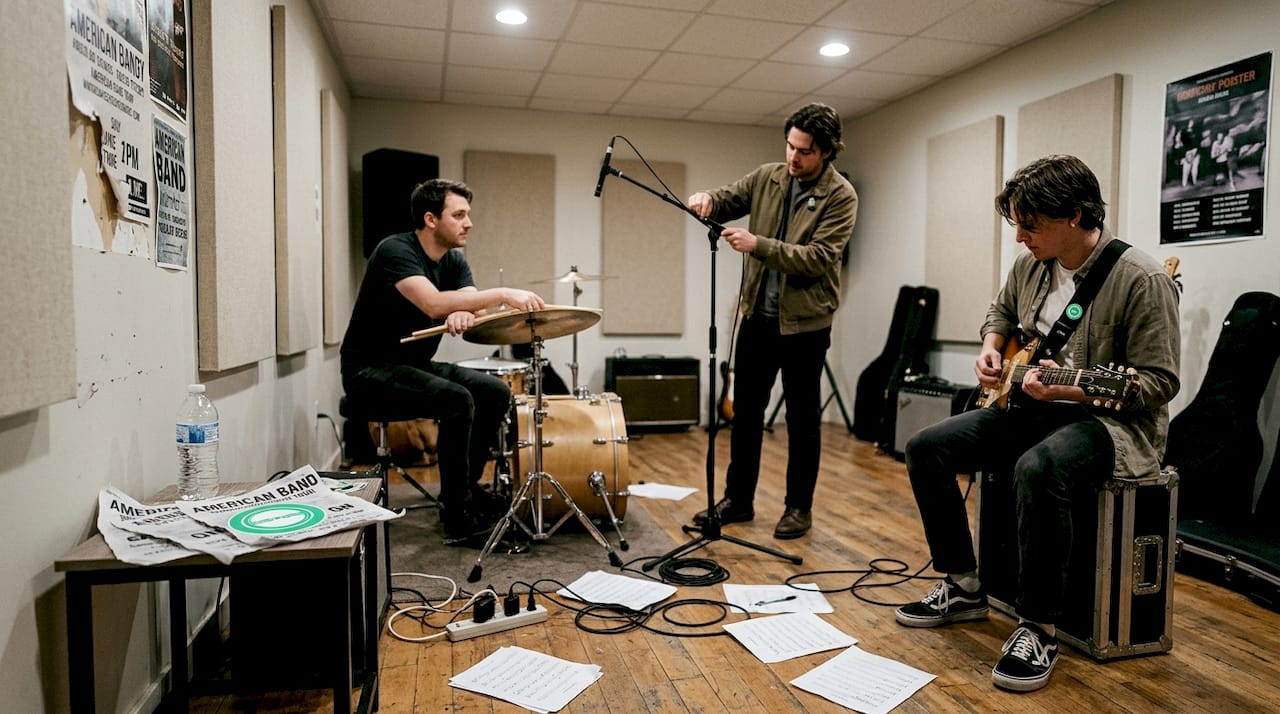
The size and composition of your group matters more than most organizers realize. Aim for 5 to 10 players with a diverse mix of instruments and backgrounds. Too few players and the session feels thin; too many and it becomes a traffic jam of ideas with no one listening. Five to ten hits the sweet spot where energy is high and everyone gets heard.
Here is how to organize a local jam that actually keeps people coming back:
- Pick a consistent time and place. Irregular scheduling kills momentum. A monthly or biweekly slot that people can put in their calendar builds habit.
- Communicate the format in advance. Will you play standards? Originals? Freeform? Knowing what to expect lowers the anxiety for newcomers.
- Designate a loose leader. Someone needs to call the first song, manage transitions, and keep things moving. This does not need to be the most skilled player, just the most organized one.
- Mix skill levels deliberately. A room full of advanced players can feel intimidating and competitive. A mix creates teaching moments and keeps the energy collaborative rather than performative.
- Follow up after the session. A quick message to the group, sharing a recording or just acknowledging what worked, keeps the community warm between sessions.
Pro Tip: Pair experienced musicians with newer players intentionally. When a seasoned guitarist takes five minutes to explain a chord voicing to a beginner, both players benefit. The beginner learns, and the experienced player deepens their own understanding by teaching it.
For a deeper look at sustaining these gatherings, explore community building for jams and music skill sharing tips that help your group grow without losing its original energy.
What most musicians miss about community building
Here is the uncomfortable truth most guides skip: musicians tend to camp in one mode. Either they go all-in on online networking and never show up in person, or they stick to their local scene and ignore the reach that digital platforms offer. Neither approach alone builds a community that lasts.
The musicians we see thriving are the ones who treat online and offline as two parts of one strategy. They use platforms to discover people and build familiarity, then convert those connections into real sessions. The synergy compounds.
There is also a widespread obsession with finding the "perfect" jam session, the right vibe, the right skill level, the right genre. That search for perfect becomes an excuse to never commit. The best communities are built on inclusion, not curation. Show up, contribute, and let the chemistry develop over time.
Humility and etiquette consistently outweigh raw skill in determining who becomes a valued community member. The most technically gifted player in the room is often not the one people want to play with again. The one who listens, encourages, and shows up reliably? That person becomes the anchor. Explore skill sharing insights to understand how giving your knowledge away freely is actually the fastest path to earning respect.
Connect and collaborate: Next steps with JamClub
You now have a clear picture of how to build a music community that works across both digital and physical spaces. The next step is putting those strategies into motion with the right tools behind you.
JamClub is built specifically for musicians who want to move from discovery to action. Whether you want to find jam sessions near you, host your own with RSVP management and real-time messaging, or simply connect with local players who share your style, the platform handles the logistics so you can focus on the music. You can also report jam sessions happening in your area to help grow the local scene. Best of all, it is completely free. Head to JamClub and start building the community you have been looking for.
Frequently asked questions
How do I find musicians to collaborate with online?
Create complete profiles on platforms like SoundCloud, BandLab, or JamClub, then engage actively through comments and reposts. SoundCloud and BandLab are built around these social mechanics, making genuine discovery straightforward when you participate consistently.
What is the best remote jamming software for low latency?
JamKazam is the top choice for real-time remote sessions, consistently achieving under 30ms latency when used with a wired ethernet connection rather than WiFi.
How many musicians should attend a local jam for optimal creativity?
Five to ten players with varied instruments and backgrounds is the ideal range, giving you enough energy and interplay without the session becoming too crowded to navigate musically.
Why is etiquette important in music communities?
Etiquette ensures every player gets space to contribute and grow, which is what keeps people coming back. Respecting turns and volume creates an inclusive atmosphere where musicians at all levels feel welcome rather than judged.