
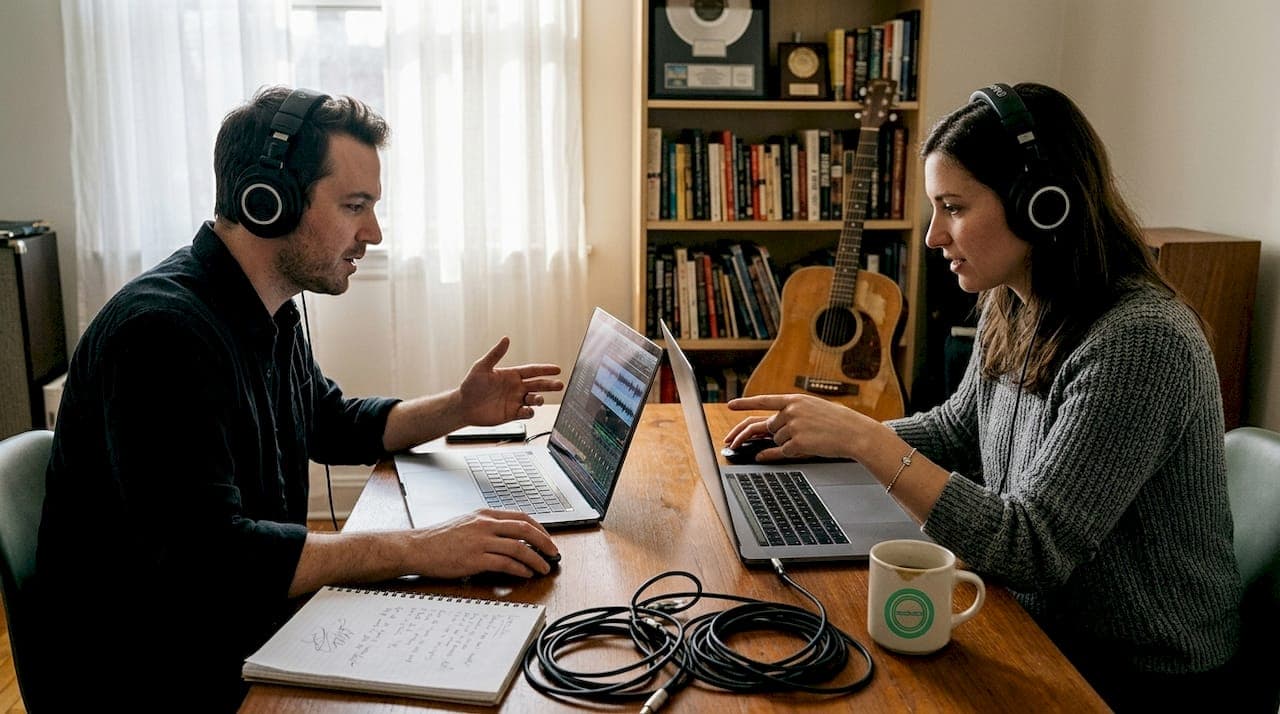
The music collaboration platforms market was valued at $3.8 billion in 2025 and is projected to nearly triple to $9.6 billion by 2034. That is not just a tech story. It is a signal that musicians everywhere, from bedroom producers to touring artists, are actively seeking creative partners beyond their zip codes. Global music collaboration is no longer a niche pursuit for the well-connected or the professionally established. If you play, sing, produce, or simply love music, the tools and communities available today make cross-border creative work more accessible than ever before.
Table of Contents
- The global music collaboration boom: What's driving it?
- How musicians collaborate globally: Tools, platforms, and methods
- Creative benefits: Why global collaborations spark innovation
- Real-world success strategies: How to launch and nurture global music projects
- Overcoming obstacles in global music collaborations
- A fresh perspective: What most guides miss about global collaborations
- Start your global collaboration journey with JamClub
- Frequently asked questions
Key Takeaways
| Point | Details |
|---|---|
| Collaboration market is booming | Global music collaboration platforms are growing at over 10% annually, making it easier than ever to connect. |
| Anyone can participate | Musicians and enthusiasts at any level can join global projects and benefit creatively. |
| Diverse tools and workflows | Platforms offer both asynchronous and real-time ways to create music across borders. |
| Creative and career growth | Working with creators worldwide expands your skills, network, and musical style. |
| Preparation prevents problems | Clarifying goals, credits, and communication solves most obstacles before they start. |
The global music collaboration boom: What's driving it?
The numbers behind global music collaboration are striking. The market valued at $3.8B in 2025, growing at a compound annual growth rate of 10.8% toward $9.6 billion by 2034, reflects a fundamental shift in how musicians work and connect. This is not hype. It is investment following real demand.
Several forces are converging to fuel this growth. Affordable recording technology means a musician in Lagos or Lisbon can produce broadcast-quality audio on a laptop. High-speed internet has made file sharing fast and reliable. And platforms built specifically for online music sharing have removed the friction that once made remote collaboration feel clunky or unreliable.
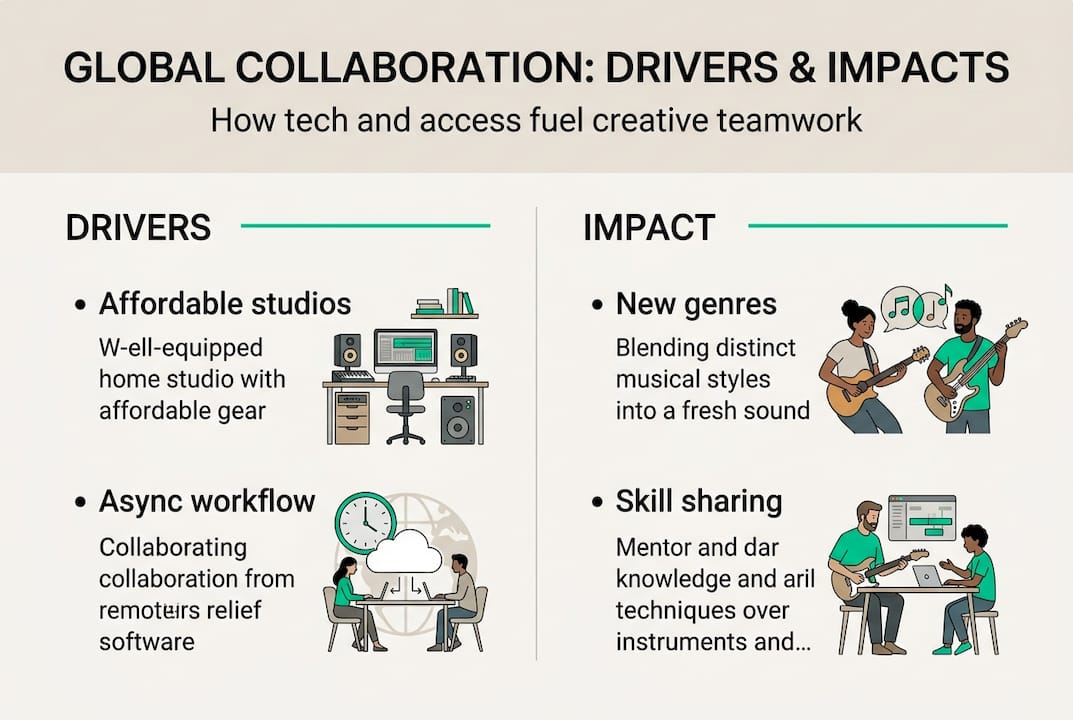
Here is a quick look at what is driving the surge:
- Affordable tech: Home studios are now within reach for most musicians, regardless of budget.
- Async tools: Platforms like Splice and BandLab let collaborators work on their own schedules across time zones.
- Sync tools: Low-latency apps allow real-time jamming across continents.
- Cross-cultural curiosity: Audiences are hungry for genre-blending sounds, pushing musicians to seek out creative music diversity.
- Social media reach: Artists can discover and pitch potential collaborators through streaming data and social signals.
| Driver | Impact |
|---|---|
| Affordable home studios | Lower barrier to entry for all skill levels |
| Async workflow tools | Flexible scheduling across time zones |
| Sync/low-latency platforms | Real-time creative sessions across borders |
| Cross-cultural curiosity | Demand for genre fusion and new sounds |
| Streaming and social data | Easier discovery of compatible collaborators |
The cross-cultural collaboration trends show that this is not limited to major label artists. Independent musicians are building global networks, finding creative partners, and releasing music that reaches audiences they could never have accessed working alone.
How musicians collaborate globally: Tools, platforms, and methods
Understanding the mechanics of global collaboration helps you choose the right approach for your goals. There are two main workflows: asynchronous and synchronous.
Asynchronous collaboration means each musician records their part independently and passes the file along, like a musical relay race. Synchronous collaboration means everyone plays or creates together in real time, using low-latency tools to minimize delay. Asynchronous workflows via Splice and BandLab are the most common starting point because they remove the pressure of scheduling across multiple time zones.
Here is a comparison of popular platforms:
| Platform | Best for | Key feature |
|---|---|---|
| BandLab | Beginners and songwriters | Free, browser-based DAW with stem sharing |
| Splice | Producers and beatmakers | Sample library plus project file sync |
| SoundCloud | Discovery and feedback | Public sharing with comment threads |
| SoundBetter | Professional sessions | Paid marketplace for session musicians |
| Spotify | Audience building | Streaming reach and playlist placement |
To get started with a remote collaboration, follow these steps:
- Choose a platform that fits your workflow and skill level.
- Set clear creative goals before you share a single file.
- Agree on file formats, tempo, and key upfront.
- Share stems or drafts and give specific, constructive feedback.
- Use real-time collaboration tools when you want live creative energy.
- Review and finalize together, then document credits.
Pro Tip: Before you record a single note, set up a split sheet. This document records who contributed what and how revenue will be divided. Sorting this out early prevents misunderstandings later and protects every collaborator fairly.
For more structured guidance on making sessions productive, check out these jam session tips that apply whether you are working locally or globally.
Creative benefits: Why global collaborations spark innovation
The creative case for going global is compelling. When you collaborate with musicians from different backgrounds, you are not just adding another instrument to the mix. You are introducing entirely different musical vocabularies, rhythmic traditions, and emotional frameworks.
Access to diverse genres and instruments opens doors that local scenes simply cannot. A guitarist in Nashville working with a kora player in Dakar will produce something neither could have imagined alone. That is the power of creative collision.
"Cultural intelligence and a shared vision are the two strongest predictors of a successful cross-border music project. When both are present, the networking potential for all skill levels becomes enormous."
Here is what global collaboration consistently delivers:
- Cross-cultural learning: You absorb new scales, rhythms, and production techniques organically.
- Boosted innovation: Unfamiliar constraints force creative problem-solving.
- Wider listener base: Your collaborator's audience becomes your audience.
- New market exposure: A feature from a local artist in another country can open regional streaming markets.
- Stronger musical connection: Shared creative experiences build lasting professional relationships.
The skill sharing benefits of global collaboration compound over time. Each project adds to your toolkit, your network, and your creative range. Musicians who collaborate globally consistently report that the experience reshapes how they approach their own solo work.
Real-world success strategies: How to launch and nurture global music projects
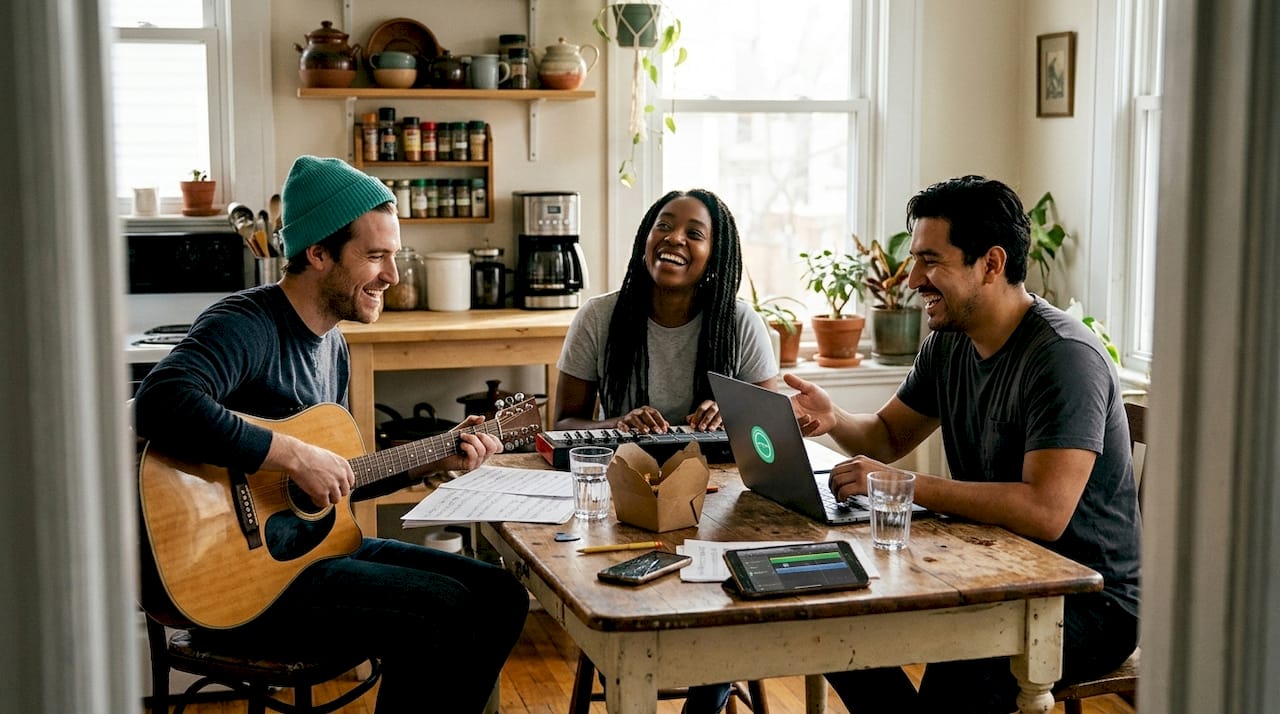
Knowing the benefits is one thing. Actually launching a global project is another. Here is a practical roadmap that works regardless of your skill level or genre.
Musicians can launch global projects via BandLab or Splice with no prior experience in remote collaboration. The tools are designed to be accessible. What matters more is your approach.
- Find collaborators: Use streaming data, social media, and community platforms to identify musicians whose style complements yours.
- Propose shared goals: Be specific. "I want to blend Afrobeats percussion with indie folk guitar for a four-track EP" is better than "let's make something cool."
- Agree on workflow and tools: Decide upfront whether you will work async or sync, and which platform you will use.
- Clarify credits and splits: Document everything before creative work begins.
- Start small: A single remix or feature is a lower-stakes way to test the working relationship.
- Use localization strategies: Adapt lyrics, titles, or promotional materials for your collaborator's home market.
Pro Tip: Flexibility is your most valuable skill in global collaboration. Schedules shift, files get corrupted, and creative visions evolve. Build buffer time into every deadline and treat surprises as part of the process rather than obstacles.
Exploring creative music scenes in different regions can also spark ideas for who to reach out to. And if you want to understand how musical gatherings for creativity translate into online spaces, the principles are remarkably similar.
Overcoming obstacles in global music collaborations
Every global collaboration comes with friction. That is not a flaw in the process. It is part of it. The musicians who thrive are the ones who anticipate common challenges and have strategies ready.
The most frequent obstacles include:
- Time zone gaps: A 10-hour difference makes real-time communication difficult. Async workflows solve most of this.
- Language barriers: Even when both parties speak English, musical terminology and feedback styles can differ significantly.
- Unclear ownership: Without documented agreements, disputes over credits and revenue are common.
- Creative misalignment: Different expectations about the final sound can derail projects mid-process.
- Tech incompatibility: Different DAWs, sample rates, or file formats create unnecessary delays.
Strategies that consistently work:
- Set expectations in writing before any creative work begins.
- Use shared time zone tools like World Time Buddy to schedule check-ins.
- Document all credit and revenue agreements in a split sheet from day one.
- Communicate openly about creative direction at every stage, not just at the end.
- Develop your music diversity benefits awareness by learning about your collaborator's musical tradition before you start.
Cultural intelligence, often called CQ, is the ability to work effectively across cultural differences. It is a learnable skill, and it is arguably the most important one for any musician pursuing global collaborations. CQ is not about knowing every cultural norm. It is about staying curious, asking questions, and treating differences as assets rather than complications.
A fresh perspective: What most guides miss about global collaborations
Most articles about global music collaboration focus on tools and platforms. That is useful, but it misses the deeper shift that makes collaborations actually work.
The real breakthrough is not finding the right app. It is being willing to reshape your creative habits and let go of the assumption that your way of working is the default. Musicians who succeed globally are not just technically skilled. They treat open-mindedness as a practice, not a personality trait.
Friction, the kind that comes from working with someone who hears music differently than you do, is not a problem to solve. It is the source of the most interesting work. The uncomfortable moments, when a collaborator suggests something that feels wrong at first, are often where the best ideas live.
At JamClub, we have seen this play out repeatedly. The musicians who build the strongest global networks are not the most technically advanced. They are the ones who invest in community skill sharing and treat every collaboration as a learning opportunity. Micro-communities, small groups of musicians who trust each other across borders, consistently produce more innovative work than one-off collaborations between strangers.
Start your global collaboration journey with JamClub
You now have the framework, the tools, and the mindset to pursue global music collaborations with confidence. The next step is finding the right community to make it real.
JamClub is built for exactly this. Whether you want to try JamClub to find musicians who match your style, connect with a broader music community app that spans genres and skill levels, or simply create a jam session and invite collaborators from anywhere in the world, JamClub gives you the tools to make it happen. It is free to join, easy to use, and designed to turn creative curiosity into real musical partnerships. Your next global collaborator is already out there.
Frequently asked questions
What are the best platforms for global music collaboration?
BandLab, Splice, SoundCloud, and SoundBetter are among the top platforms enabling musicians to collaborate globally, each serving different workflows and skill levels.
Is global music collaboration only for advanced musicians?
Not at all. Musicians at any skill level can launch global projects using accessible platforms like BandLab and Splice, which are designed to be beginner-friendly.
How do musicians handle credits and revenue splits in remote collaborations?
Setting up split sheets early in the project is essential to ensure every contributor receives fair credit and payment before disputes arise.
What challenges should I expect in a global music collaboration?
Time zone differences, cultural misunderstandings, and unclear expectations are common. Cultural intelligence and shared vision are the most effective tools for navigating these challenges.
Why is global collaboration important for music innovation?
It introduces diverse sounds, ideas, and audiences that local scenes cannot provide, and cross-cultural learning boosts innovation while expanding your listener base significantly.