
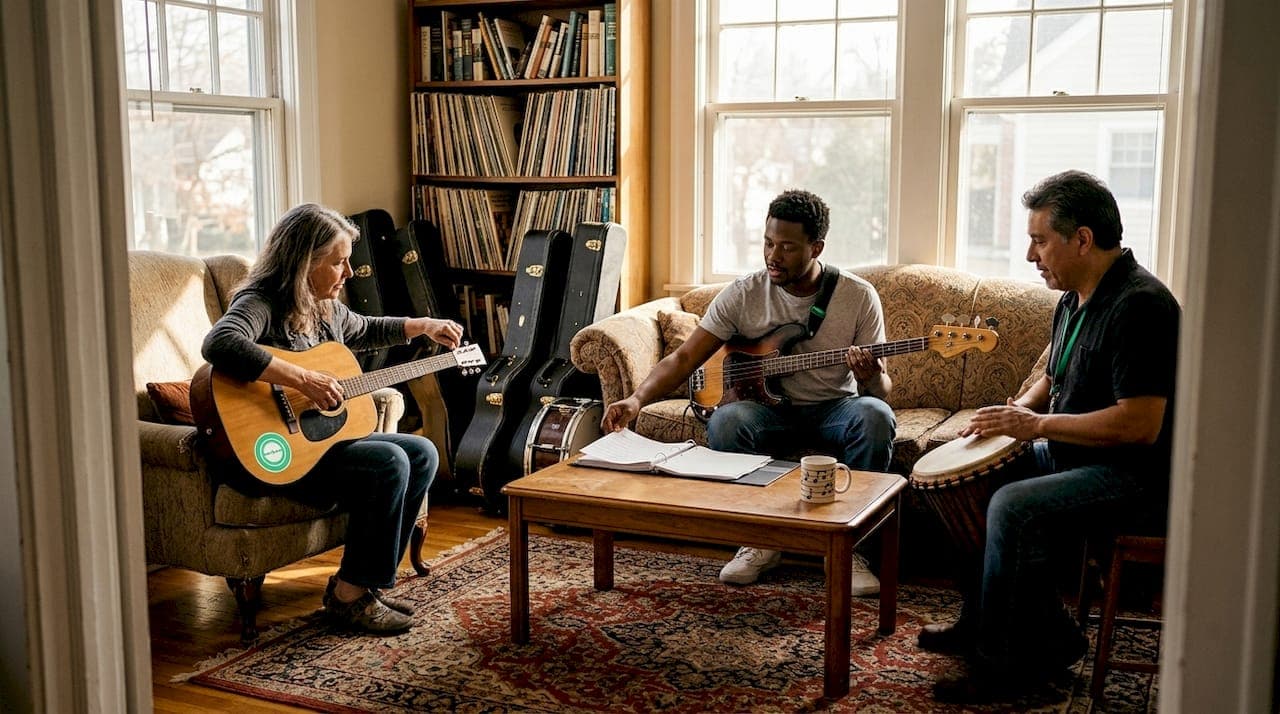
Most musicians assume that sticking to familiar genres and playing with the same circle of friends is the safest path to improvement. That assumption is wrong. Music diversity fosters cultural exchange in jam sessions in ways that no single-genre practice ever could. When you mix styles, instruments, and backgrounds in one room, something unexpected happens: creativity multiplies, skills sharpen faster, and the music itself becomes richer. This article breaks down exactly why diversity in music-making matters, what the research says, and how you can put it into practice at your next jam.
Table of Contents
- Setting the stage: What is music diversity?
- The cultural impact of music diversity: Beyond notes and rhythms
- Collaborative advantages: Diversity sparks creativity and skill growth
- Overcoming challenges: Navigating diversity in jam sessions
- Practical steps: Fostering music diversity in your sessions
- Connect, learn, and grow with JamClub
- Frequently asked questions
Key Takeaways
| Point | Details |
|---|---|
| Cultural enrichment | Music diversity in jams builds cultural understanding and community bonds. |
| Creativity boost | Mixing genres, backgrounds, and skills enhances creative exploration and skill growth. |
| Practical inclusion | Simple steps like inviting diverse musicians and rotating leadership create more dynamic, inclusive sessions. |
| Challenge management | Skill mismatches and genre boundaries are best handled by clear ground rules and experienced guidance. |
| Platform support | Tools like JamClub help musicians connect and build diverse jam communities with ease. |
Setting the stage: What is music diversity?
Music diversity is not just about playing jazz one week and rock the next. It covers the full spectrum of genres, instruments, cultural traditions, and the varied backgrounds of the people making music together. In a jam session, that might mean a classical violinist sitting next to a blues guitarist, or a West African drummer locking in with a hip-hop beatboxer. The combination is the point.
Music has always functioned as a universal language, connecting people across borders where words fail. When diverse traditions meet in a single session, they do not cancel each other out. They blend, creating something neither player could have produced alone. That is the core value of music diversity in community music-making.
For jam sessions specifically, blending traditions and styles keeps the energy alive. A session locked into one genre can plateau quickly. Introduce an unfamiliar style, and every musician in the room has to listen harder, adapt faster, and contribute more thoughtfully. Check out this successful jam session checklist to see how diversity fits into a well-run session from the start.
Key elements of music diversity in jams include:
- Genre variety: Blues, jazz, folk, funk, world music, and beyond
- Instrument range: Strings, brass, percussion, electronic, and voice
- Skill levels: Beginners, intermediates, and seasoned pros in the same room
- Cultural backgrounds: Different musical traditions and regional styles
- Compositional approaches: Improvised, structured, or hybrid formats
Pro Tip: Actively seek out jams that feature at least one genre you have never played before. Even one unfamiliar session per month will expand your ear, your technique, and your musical vocabulary faster than any practice routine.
The cultural impact of music diversity: Beyond notes and rhythms
Once you understand what music diversity means in practice, the next question is: what does it actually do for people? The answer goes well beyond musical skill. Empirical studies show that exposure to diverse music increases cultural awareness and tolerance and strengthens community cohesion. That is not a soft claim. It is backed by measurable data.
Jam sessions, in particular, build what sociologists call social capital. When musicians from different neighborhoods, ethnicities, or age groups share a stage, they build trust and mutual respect that extends beyond the music. This effect is especially strong in vulnerable or marginalized communities, where shared creative experiences can bridge gaps that formal programs cannot.
"When we started mixing flamenco with jazz at our weekly jam, the room changed. People who had never spoken to each other were suddenly finishing each other's musical sentences. That kind of connection does not happen by accident." — Community jam organizer, Chicago
The data supports this experience. Here is a snapshot of how music diversity affects communities:
| Outcome | Low diversity sessions | High diversity sessions |
|---|---|---|
| Cultural awareness | Minimal growth | Significant increase |
| Social tolerance | Unchanged | Measurably higher |
| Community cohesion | Moderate | Strongly reinforced |
| Creative output | Predictable | Expanded and varied |
| Musician retention | Lower | Higher over time |
The benefits of sharing musical experiences across cultural lines are not just feel-good outcomes. They are documented, repeatable results. And they feed directly into the health of your local music scene creativity, making the whole community stronger.
Some of the most consistent cultural benefits include:
- Reduced in-group bias among regular jam participants
- Greater openness to unfamiliar musical structures and rhythms
- Stronger sense of belonging for musicians from minority backgrounds
- Increased cross-cultural friendships formed through music
Collaborative advantages: Diversity sparks creativity and skill growth
The cultural benefits lead directly to practical advantages you can feel in real time during a jam. When you mix skill levels, instruments, and genres in one session, the creative ceiling rises for everyone involved. A beginner learns by watching. An advanced player is challenged to simplify and communicate. Both grow.
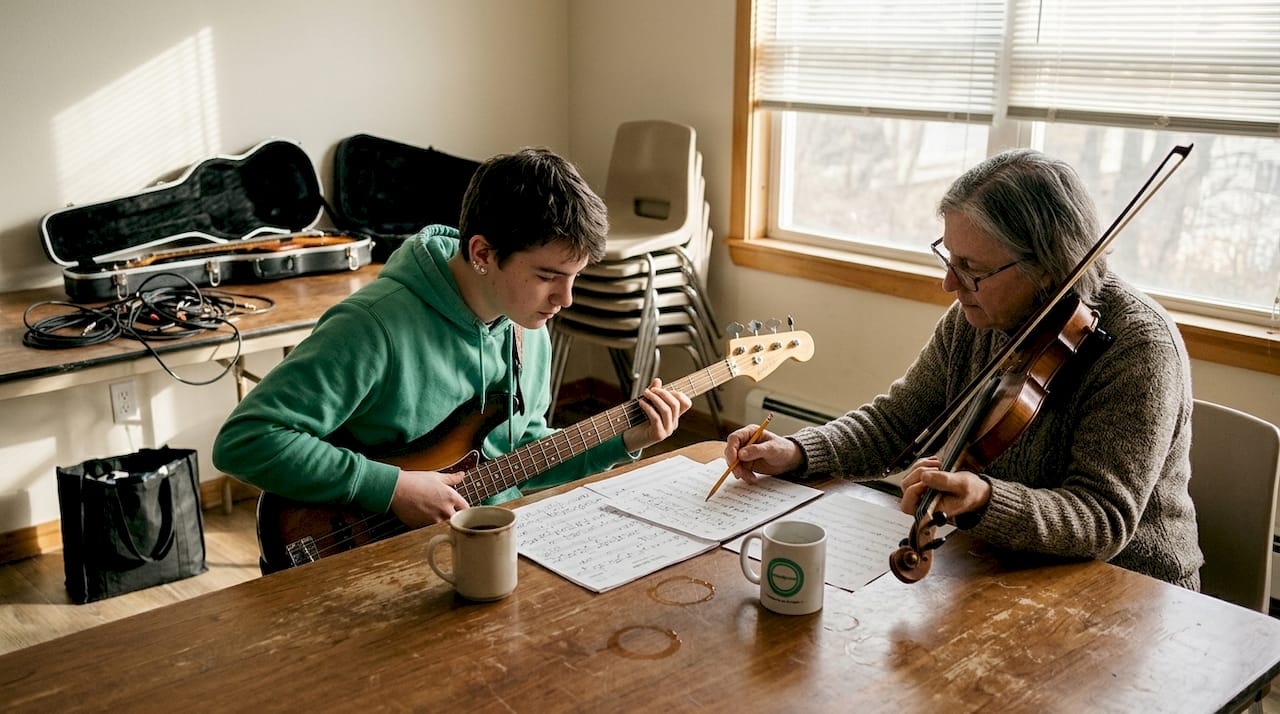
Research on jam session hosting tips confirms that a diverse participant and instrument mix achieves a critical mass for dynamic jams, enriching exploration for everyone in the room. That sweet spot tends to land between 5 and 10 musicians. Too few, and the energy feels thin. Too many, and coordination breaks down. Five to ten diverse players is where the magic consistently happens.
Genre fusion is another powerful driver. When a reggae bassist meets a country fiddler, neither player can rely on muscle memory alone. They have to negotiate, listen, and invent. Genre diversity boosts creativity and opens new pathways for innovation that single-genre sessions simply cannot replicate. This is also why musical gathering creativity tends to spike when organizers intentionally mix styles.
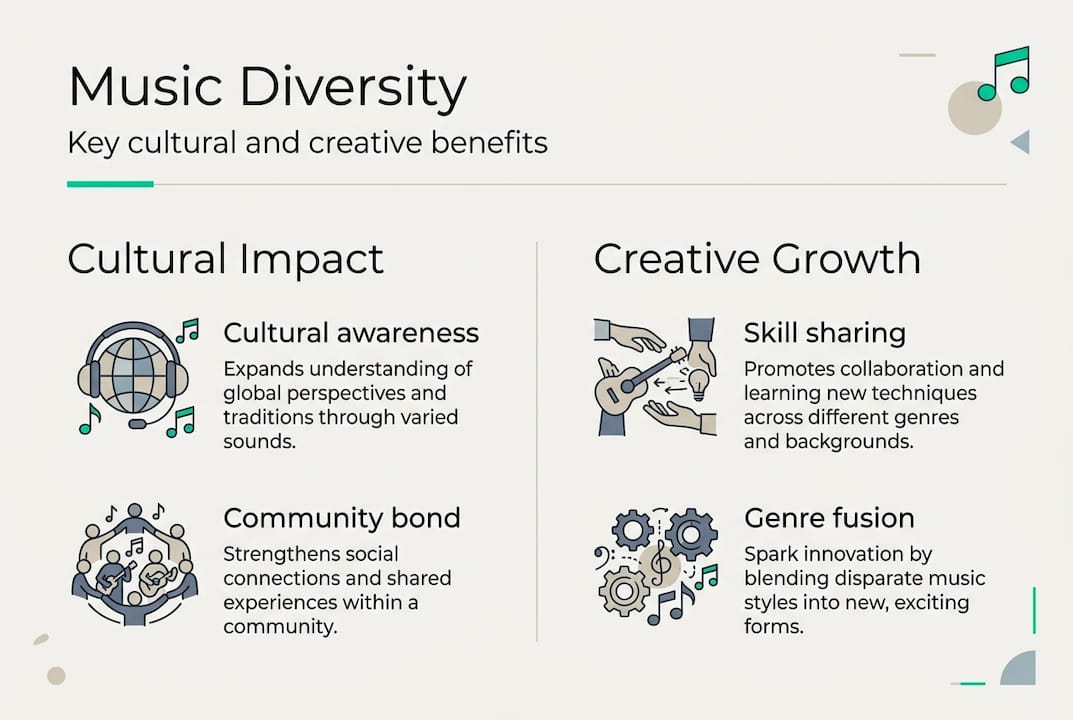
Here is how diverse and homogenous jam sessions compare across key dimensions:
| Dimension | Homogenous session | Diverse session |
|---|---|---|
| Creativity level | Moderate, familiar | High, unpredictable |
| Skill development | Incremental | Accelerated |
| Audience impact | Niche appeal | Broader engagement |
| Innovation potential | Low | High |
| Long-term growth | Plateaus quickly | Sustained momentum |
For musicians interested in music sharing collaboration, diverse sessions also create more shareable, interesting content. A fusion performance captures attention in ways a standard genre session rarely does. If you are planning your next event, the local event planning for jams guide offers a solid framework for building diversity into your session from day one.
Overcoming challenges: Navigating diversity in jam sessions
Appreciating the benefits is one thing. Handling the real-world friction that comes with diversity is another. Skill mismatches are the most common issue. When a seasoned jazz pianist sits next to a beginner guitarist, the gap can feel discouraging for both players if it is not managed well.
The solution is structure. Setting ground rules at the start of every session, balancing instruments and skill levels intentionally, and rotating leadership throughout the night keeps things moving and fair. Experienced musicians can guide newer players without taking over, which builds confidence on both sides.
Genre boundaries are another friction point. Players sometimes feel protective of their style, especially in mixed sessions. The fix is simple: frame the session as exploratory rather than performative. Nobody is auditioning. Everyone is experimenting. That reframe changes the entire dynamic.
Here is a step-by-step approach to handling the most common diversity challenges:
- Before the session: Communicate the genre mix and skill range in your invitation so players arrive with the right expectations.
- At the start: Set clear ground rules, or "jamiquette," covering listening, turn-taking, and volume balance.
- During the session: Pair experienced players with beginners for at least one song to encourage mentorship.
- Mid-session: Rotate who leads each piece so no single style dominates.
- After the session: Invite brief feedback so the group can improve the format together.
Small jams work especially well for beginners, while fusion jams showcase genre diversity for growth in more experienced groups. Projects like Fusion Jams on YouTube demonstrate how community diversity can become a creative asset rather than a logistical headache. For deeper guidance on music community building and how to structure inclusive sessions, there are resources that walk you through the process step by step.
Pro Tip: Rotate who picks the opening song each session. This single change forces the group to adapt to different styles regularly and prevents any one genre from becoming the default.
If you want to grow your network while navigating these challenges, live music event connection and learning how to establish local music connections are practical starting points.
Practical steps: Fostering music diversity in your sessions
Knowing the challenges is useful. Having a concrete action plan is better. The first step is establishing jamiquette, a set of shared norms that make diverse sessions feel safe and productive for everyone. This is not about rigid rules. It is about creating enough structure so that spontaneity can actually flourish.
Improvisation is central to this. Improvisation in jams enhances creativity and audience experience through what researchers call interactional dissensus and relational plasticity. In plain terms: when musicians disagree musically and adapt to each other in real time, the result is more interesting for everyone listening. Encouraging that productive tension is a skill worth developing.
Growing diversity over time requires intentional outreach. Invite musicians from different cultural backgrounds, post your sessions in spaces where different communities gather, and rotate instruments so players are occasionally pushed outside their comfort zone. Use a music event discovery guide to find sessions that already model the kind of diversity you want to build.
Specific actions to promote diversity in your jams:
- Invite broadly: Reach out to musicians from genres you do not usually play with
- Rotate instruments: Encourage players to try an unfamiliar role for one song per session
- Feature a tradition: Dedicate part of each session to a specific cultural music style
- Welcome all levels: Explicitly state in your invite that beginners are encouraged
- Document and share: Record sessions and share them to attract a wider range of musicians
- Debrief together: End each session with a short conversation about what worked and what to try next
These steps do not require a big budget or a formal organization. They require intention and consistency. Over time, they transform a regular jam into a genuine community.
Connect, learn, and grow with JamClub
Building a diverse musical community is easier when you have the right tools to find and connect with musicians who share your curiosity. That is exactly what JamClub is built for.
The JamClub platform lets you discover nearby jam sessions, filter by genre and skill level, and connect with musicians from backgrounds you might never encounter otherwise. Whether you want to join an existing diverse session or host your own, JamClub gives you the infrastructure to make it happen. You can report a jam to add your session to the community map, or simply explore what is already happening near you. As a free music community app, JamClub removes the barriers between you and the kind of rich, diverse musical collaboration this article has been about.
Frequently asked questions
How does music diversity promote creativity in jam sessions?
Mixing genres and backgrounds boosts collaborative creativity by forcing musicians to listen and adapt in real time. Genre diversity boosts creativity and improvisation enhances audience experience through the productive tension of different musical perspectives meeting in one space.
What practical steps can musicians take to encourage diversity?
Invite musicians from varied backgrounds, clarify genres upfront, rotate leadership throughout the session, and set ground rules at the start to make sessions more inclusive and welcoming for everyone.
Does music diversity have documented social benefits?
Yes. Studies show music diversity increases cultural awareness, tolerance, and strengthens community cohesion, particularly in vulnerable groups where shared creative experiences build lasting social bonds.
Are there challenges with genre diversity in jam sessions?
Genre diversity can create confusion or skill mismatches, but experienced guidance and clear session rules resolve most issues quickly, turning potential friction into productive creative tension.
How large should a diverse jam session be for best results?
A dynamic jam typically thrives with 5 to 10 musicians from varied backgrounds and instruments, reaching a critical mass for creativity that smaller or larger groups rarely achieve.