
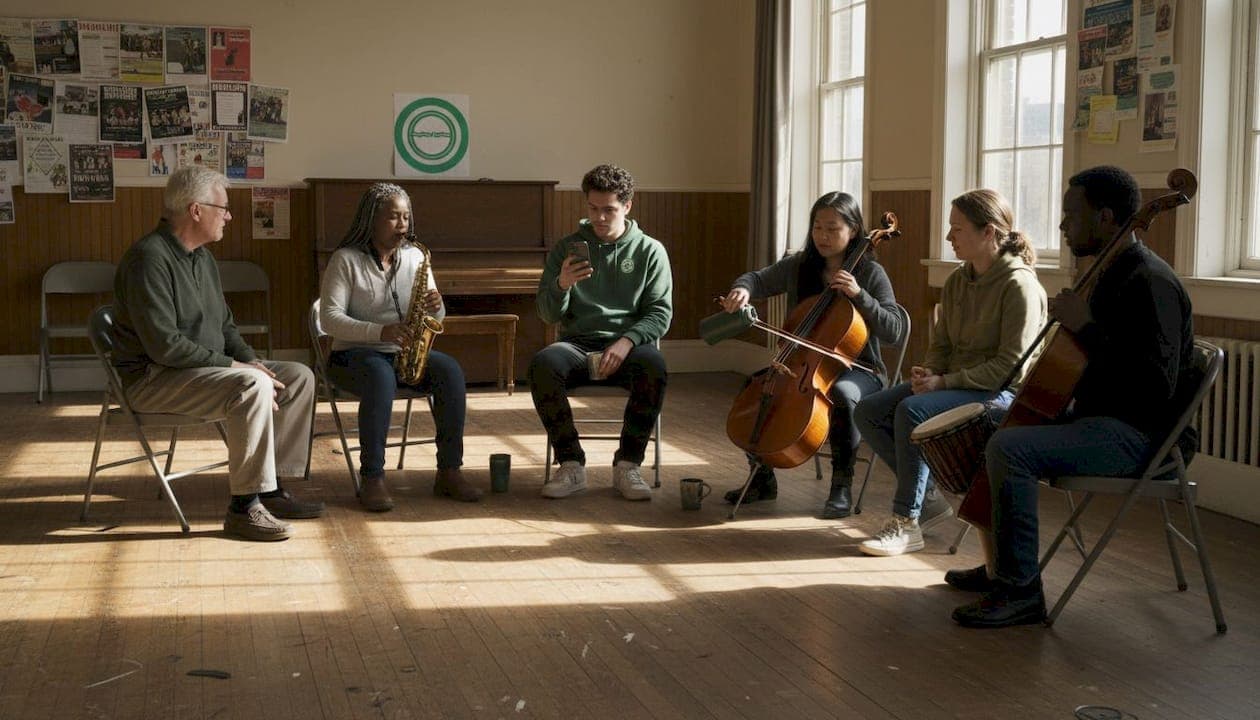
Most musicians assume a local music scene is a battleground where everyone competes for the same gigs, the same fans, and the same spotlight. That assumption keeps a lot of talented players isolated and stuck. The truth is that music scenes function more like living ecosystems, where every interaction, every shared stage, and every late-night jam session feeds the whole community. Whether you play guitar in your bedroom or front a band on weekends, plugging into your local scene can accelerate your growth in ways that solo practice simply cannot match.
Table of Contents
- What is a music scene and why does it matter?
- How do jam sessions drive collaboration and creativity?
- Key elements and etiquette for thriving in jam sessions
- The broader impact: how music scenes shape communities and innovation
- Practical steps for getting involved in your local music scene
- Take your musical journey further with JamClub
- Frequently asked questions
Key Takeaways
| Point | Details |
|---|---|
| Music scenes foster growth | Participating in music scenes helps you learn, collaborate, and innovate with other musicians. |
| Jam sessions boost creativity | Improvisational jams enhance your musical imagination, listening, and flow. |
| Etiquette is vital | Understanding jam rules ensures everyone enjoys and benefits from sessions. |
| Scenes benefit communities | Healthy music scenes enrich local culture, support economies, and create opportunities beyond music. |
| Start participating now | You can join, learn, and contribute to your local music community, no matter your skill level. |
What is a music scene and why does it matter?
A music scene is more than a collection of venues or a genre tag. It is a social and creative ecosystem built from repeated interactions between musicians, fans, promoters, and venues over time. Think of it as a neighborhood where everyone knows each other's musical language.
Music scenes function as small ecosystems where musicians repeatedly cross paths, enabling organic band formation, collaboration, and knowledge sharing. That repeated contact is what separates a scene from a one-off concert. You run into the same drummer at three different open mics, and suddenly you have a bandmate.
"A scene is not a genre. It is a community of people who keep showing up for each other."
Scenes serve several key functions that benefit musicians at every level:
- Band formation: Casual encounters lead to serious musical partnerships.
- Knowledge sharing: Veterans pass techniques and industry wisdom to newcomers.
- Creative feedback: You get honest, real-time reactions from peers who understand your craft.
- Resource pooling: Gear, rehearsal spaces, and contacts get shared freely.
- Emotional support: A healthy scene celebrates wins and cushions setbacks.
Scenes do not only exist in smoky bars or rehearsal studios. They thrive in community centers, online forums, and social media groups. Building local music connections is the foundation, and those connections can start anywhere people gather around music. The habit of sharing musical experiences is what keeps a scene alive and growing.
How do jam sessions drive collaboration and creativity?
Jam sessions are the creative heartbeat of any music scene. They are where theory meets practice, where strangers become collaborators, and where musical ideas that would never survive a rehearsal room suddenly come alive.
Jam sessions emphasize improvisation, turn-taking, shared standards like the 12-bar blues, and etiquette that keeps the musical conversation flowing. That structure is not restrictive. It is liberating, because everyone knows the rules of the road and can focus on expression.
The science backs this up. Improvisatory jam sessions enhance shared flow states, emotional synchrony, and collective musical experience among participants. In plain terms, jamming together literally synchronizes musicians emotionally and creatively in ways that rehearsing alone cannot.
Here is a quick look at how jam sessions compare to solo practice across key growth areas:
| Growth area | Solo practice | Jam session |
|---|---|---|
| Improvisation skills | Limited | High impact |
| Listening and response | None | Core skill |
| Emotional connection | Internal | Shared and amplified |
| Network building | None | Direct and organic |
| Creative risk-taking | Low pressure | Encouraged |
| Skill gap bridging | Self-directed | Peer-accelerated |
Jam sessions also help bridge skill gaps faster than almost any other method. When a beginner plays alongside an experienced musician, they absorb phrasing, timing, and dynamics through osmosis. It is the musical equivalent of learning a language by moving to the country.
Key benefits of regular jamming include:
- Faster ear training through real-time listening
- Confidence building in unpredictable musical situations
- Exposure to new genres, rhythms, and techniques
- Stronger stage presence developed in a low-stakes environment
Pro Tip: Before your first jam, learn two or three common standards in the genre you are joining. Knowing a 12-bar blues or a basic jazz progression gives you a safety net and lets you focus on listening instead of scrambling for chords.
Check out this jam session checklist before you go, and explore how musical gatherings boost creativity for deeper insights on the creative side of jamming.
Key elements and etiquette for thriving in jam sessions
Knowing how to play your instrument is only half the equation at a jam session. The other half is knowing how to be in the room. Etiquette is not about being stiff or formal. It is about making the experience great for everyone.
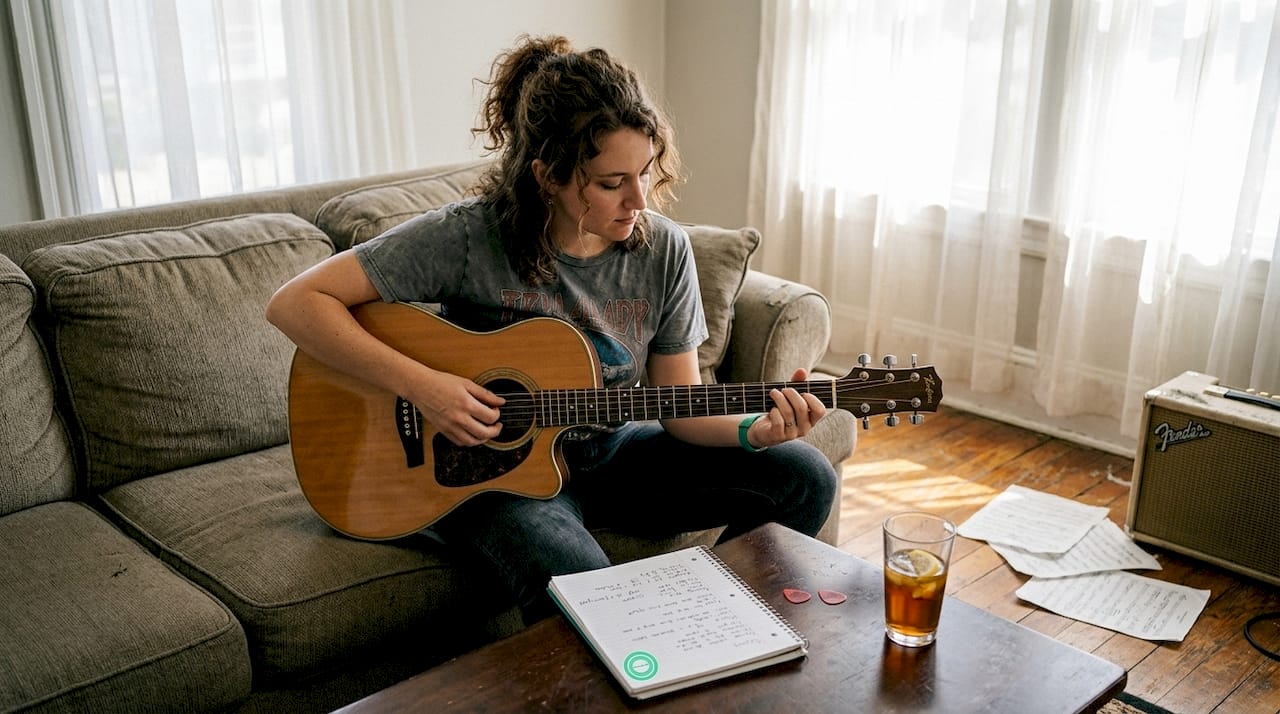
Jam sessions require watching for chord changes, maintaining steady rhythm, and respecting volume so no single player drowns out the group. These are not optional courtesies. They are the mechanics that keep the music moving.
Here are the core practices to follow:
- Prepare before you arrive. Learn the common songs or standards for that genre. Nothing kills a jam faster than someone who does not know the changes.
- Listen more than you play. Especially early on, your ears are your most important instrument.
- Take turns soloing. Watch for visual cues from the leader or other players. When someone nods at you, that is your moment.
- Keep your volume balanced. Match the room, not your ego. A bass player who overpowers the vocalist ruins the vibe for everyone.
- Encourage beginners. A nod, a smile, or a quick "nice one" after someone's solo costs nothing and builds community.
- Check your ego at the door. The goal is collective music, not a personal showcase.
Pro Tip: Arrive 15 to 20 minutes early and just watch the first set before jumping in. You will pick up the room's energy, the key signatures being used, and the unspoken social dynamics. That observation time is worth more than any warm-up.
For a full breakdown of what makes sessions run smoothly, the successful jam session etiquette guide covers everything from gear setup to post-jam networking. If you want to host your own event, the planning successful jam events resource walks you through the logistics.
The broader impact: how music scenes shape communities and innovation
The benefits of a thriving music scene extend well beyond the musicians themselves. Healthy scenes create ripple effects that touch local economies, education, and social cohesion.
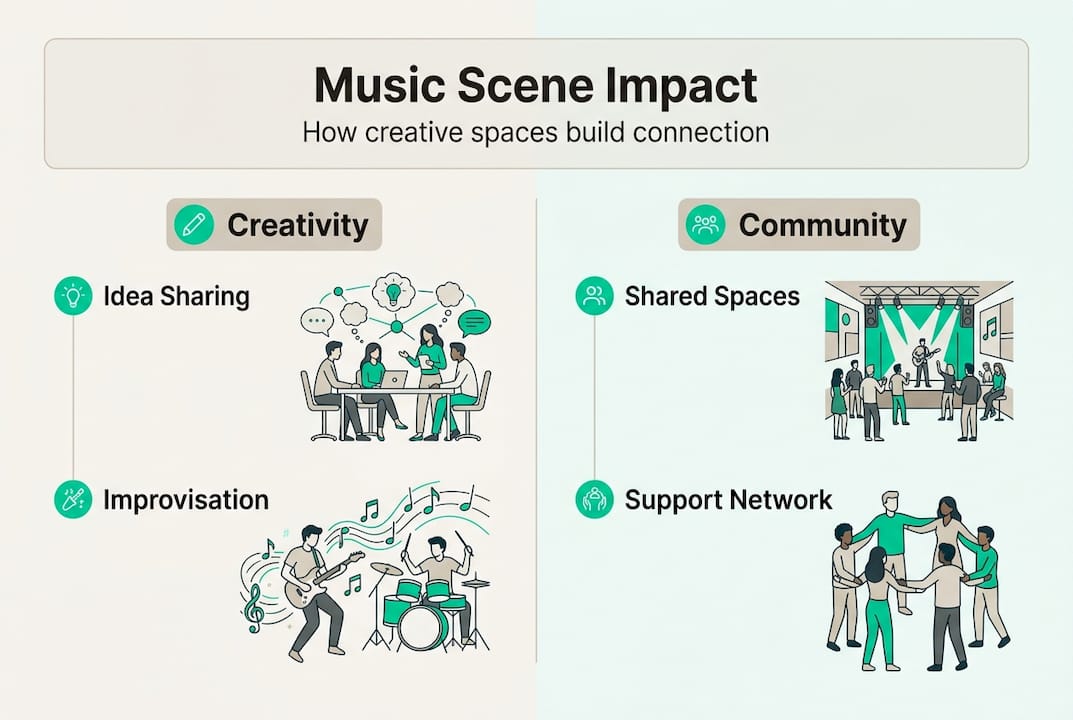
Scenes build local economies, enable shared resources, and sometimes partner with local organizations and societies. Venues stay open, music stores survive, and recording studios get booked. The economic case for supporting your local scene is real and measurable.
But scenes can also die. Competition, cliques, and a lack of welcoming culture push newcomers away and shrink the talent pool. Large jams risk chaos but also offer innovation when strong leadership and clear etiquette keep things on track. The difference between a scene that thrives and one that collapses often comes down to whether the established players actively welcome new ones.
Research from organizational behavior shows that jazz jam models foster innovation through mentorship, democratic leadership, and open collaboration. These same principles apply directly to any music community trying to stay creative and relevant.
Here is a comparison of what healthy versus struggling scenes look like in practice:
| Factor | Healthy scene | Struggling scene |
|---|---|---|
| Newcomer welcome | Warm and inclusive | Cold or territorial |
| Knowledge sharing | Open and frequent | Guarded or absent |
| Collaboration | Cross-genre and regular | Siloed by clique |
| Economic activity | Venues and studios thrive | Closures and decline |
| Innovation | Constant and exciting | Stagnant |
The musicians who invest in music community building and focus on building a music network are the ones who keep scenes alive. That investment pays back in opportunities, friendships, and creative breakthroughs that no amount of solo practice can generate.
Practical steps for getting involved in your local music scene
Understanding the value of music scenes is one thing. Actually showing up is another. Here is a straightforward action plan to get you from the sidelines to the center of your local community.
Musicians should start by attending local jams, learning etiquette, collaborating via events, and using jams to build networks. That sequence matters. Observe first, then participate, then contribute.
Step-by-step guide to getting started:
- Research your local venues. Search for open mic nights, jam sessions, and live music events in your area. Coffee shops, bars, community centers, and music schools all host them.
- Attend as an audience member first. Watch how the session runs, who leads it, and what the vibe is before you bring your instrument.
- Introduce yourself. After the session, talk to the host or a friendly musician. A simple "I loved that set, I play bass" opens more doors than any business card.
- Sign up for your first slot. Most open jams have a sign-up sheet. Put your name down for one song and commit to showing up prepared.
- Follow up after the session. Exchange contacts with people you connected with. A quick message the next day keeps the relationship warm.
- Contribute beyond playing. Volunteer to help set up, share event posts on social media, or bring a friend. Scenes grow when everyone pitches in.
Dealing with first-time nerves is normal. Every musician in that room was a beginner once, and most of them remember how it felt. Focus on listening and supporting others rather than performing, and the anxiety fades quickly.
Useful resources to help you find your footing include this music event discovery guide and this deeper look at establishing local connections that stick.
Take your musical journey further with JamClub
Everything covered in this article points to one core truth: music grows faster in community than in isolation. Finding the right jams, meeting the right musicians, and building the right network are the real accelerators.
JamClub is built specifically for this. The JamClub platform lets you discover local jam sessions near you, connect with musicians across instruments and skill levels, and coordinate in real time through built-in messaging. Whether you want to find your next session or create a jam session of your own with RSVP management and community tools, JamClub makes it simple. It is completely free to use, so the only thing standing between you and your next musical connection is signing up.
Frequently asked questions
What is a music scene exactly?
A music scene is a local network where musicians interact, collaborate, and build community through shared events, venues, and jam sessions. It is defined by repeated encounters that lead to organic band formation and creative growth.
How do jam sessions improve musicianship?
Jam sessions sharpen improvisation, listening, and real-time creativity in ways solo practice cannot replicate. Empirical research confirms that group improvisation enhances shared flow and emotional synchrony between players.
What are some common jam session rules?
Respect turn-taking, keep your volume balanced, and follow the chord changes or cues from the session leader. Jam etiquette also includes preparing standard songs in advance and encouraging less experienced players.
Can beginners join music scenes?
Absolutely. Most scenes actively welcome new musicians because fresh energy keeps the community growing. Showing up consistently and being willing to listen and learn is all it takes to earn your place.
What challenges do music scenes face today?
Competition between musicians, oversized jams without clear leadership, and exclusionary culture are the biggest threats. Strong etiquette and inclusive leadership are the most effective tools for keeping a scene healthy and welcoming.