

TL;DR:
- Grassroots music hosting fosters community, creative collaboration, and provides accessible venues for emerging artists.
- Successful events depend on careful planning of venue, artists, promotion, and logistics, regardless of size.
- Supporting local music scenes through small gatherings builds lasting cultural connections beyond mainstream industry focus.
The live music industry pulls in billions every year, yet grassroots venues often struggle financially while stadium tours dominate headlines. That gap tells a bigger story: the most meaningful music experiences often happen in basements, backyards, and community halls, not arenas. Whether you're a guitarist looking to bring your neighborhood together or a drummer ready to host your first jam session, understanding music event hosting gives you the tools to make it real. This guide walks you through exactly what hosting involves, the core mechanics behind it, and practical strategies you can apply no matter your experience level.
Table of Contents
- What is music event hosting?
- Core mechanics of successful event hosting
- Jam sessions and community-driven events
- Common challenges and edge cases
- A modern perspective: Why grassroots music hosting matters now
- Turn your event into a success with JamClub
- Frequently asked questions
Key Takeaways
| Point | Details |
|---|---|
| Hosting defined simply | Music event hosting means creating and managing live music gatherings, from house jams to large shows. |
| Core steps needed | Successful events rely on venue choice, artist booking, budgeting, promotion, and logistics planning. |
| Jam sessions matter | Jam sessions foster creativity, skill growth, and authentic community connection for musicians. |
| Challenges are solvable | Anticipating noise, weather, and team dynamics helps avoid pitfalls in hosting. |
| Grassroots impact | Community-driven hosting keeps music culture alive, making connections more valuable than profits. |
What is music event hosting?
With a fresh perspective on the significance of hosting, it's essential to clarify exactly what music event hosting involves. At its core, music event hosting means planning, organizing, and managing a live music experience from start to finish. That definition is broader than most people assume. It covers everything from a 10-person living room jam to a ticketed outdoor showcase with multiple acts.
The most common formats include:
- Concerts and ticketed shows: Structured performances with a set lineup and paying audience
- Jam sessions: Informal, improvisational gatherings where anyone can jump in
- Open mic nights: Rotating performers, usually with a sign-up sheet and a time limit per act
- Community showcases: Curated events celebrating local talent, often tied to a neighborhood or scene
People host music events for a wide range of reasons. Some want to build community. Others crave creative collaboration or a low-pressure way to develop their performance skills. Many just want to give local musicians a stage they wouldn't otherwise have access to.
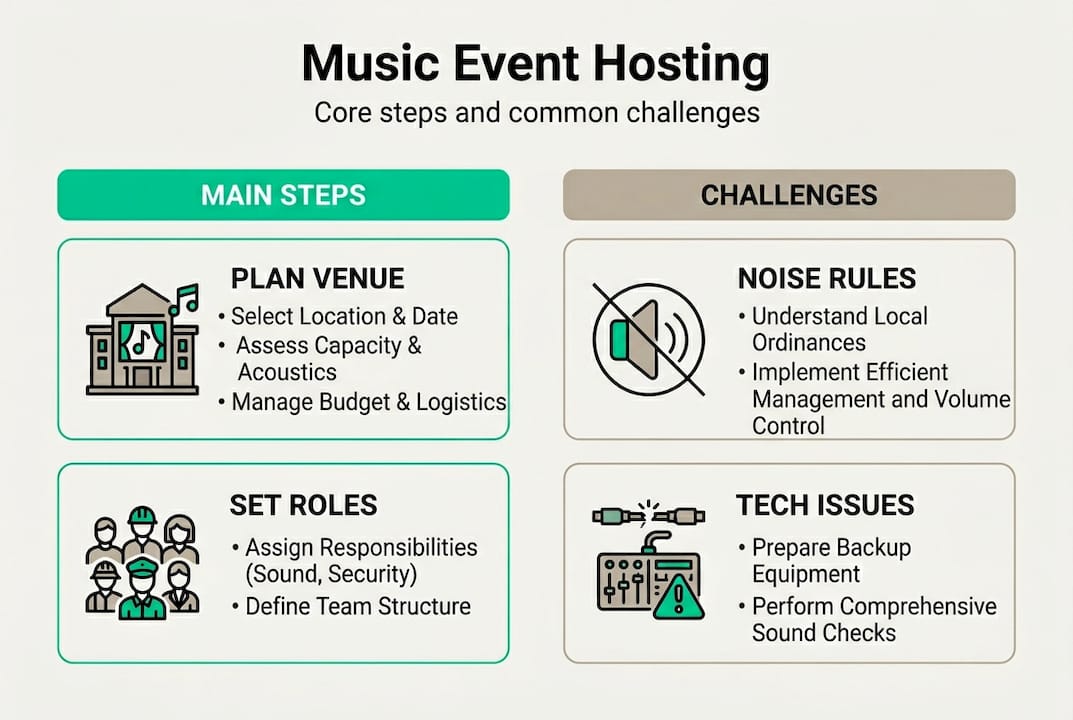
The good news: you don't need to be a professional promoter to pull it off. Musicians, fans, and community organizers all host successful events every week. What separates a smooth event from a chaotic one usually comes down to preparation. As the core responsibilities show, venue selection, artist booking, budgeting, promotion, and logistics are the building blocks every host needs to address.
"Hosting a music event isn't about having industry connections. It's about having a vision and being organized enough to execute it."
If you're just starting out with organizing music gatherings, the learning curve is real but manageable. The musicians who thrive as hosts are the ones who treat their events like a creative project, not just a party.
Core mechanics of successful event hosting
Now that you know the basic definition, let's break down the core mechanics that set events up for success. These aren't rigid rules. Think of them as pressure points where preparation pays off.
- Venue selection: Match the space to your audience. Consider capacity, acoustics, parking, and accessibility. A room that fits 30 people feels electric when full; the same crowd in a 200-person hall feels deflating.
- Artist booking: Research acts before reaching out. Ask for Electronic Press Kits (EPKs), which include bios, recordings, and booking info. Mix experience levels to keep the energy varied and the bill interesting.
- Budget and equipment: Allocate funds for PA systems, lighting, and any rental gear. Always build in a buffer for last-minute costs. Equipment failures happen, and having a plan B saves the night.
- Promotion: Use social media, event listing sites, and local partnerships. A flyered coffee shop and a well-timed Instagram post can fill a room faster than you'd think.
- Logistics: Schedule soundchecks, confirm setlists, and create contingency plans for tech failures or weather disruptions. A written runsheet shared with everyone involved cuts confusion significantly.
These key mechanics apply whether you're running a 20-person open mic or a 200-person ticketed show. Scale changes, but the fundamentals don't.
For deeper guidance, the local event planning tips on the JamClub blog break down venue scouting and scheduling in practical detail. The community jam session checklist is also worth bookmarking before your first event.
One statistic worth keeping in mind: 52% of Americans attend live music events every year. Smart planning and genuine community investment are what turn casual attendees into loyal regulars.
Pro Tip: Always visit the venue in person before booking. Photos miss a lot, including noise bleed from neighboring spaces, awkward load-in routes, and poor sight lines that make stages nearly invisible from the back.
Jam sessions and community-driven events
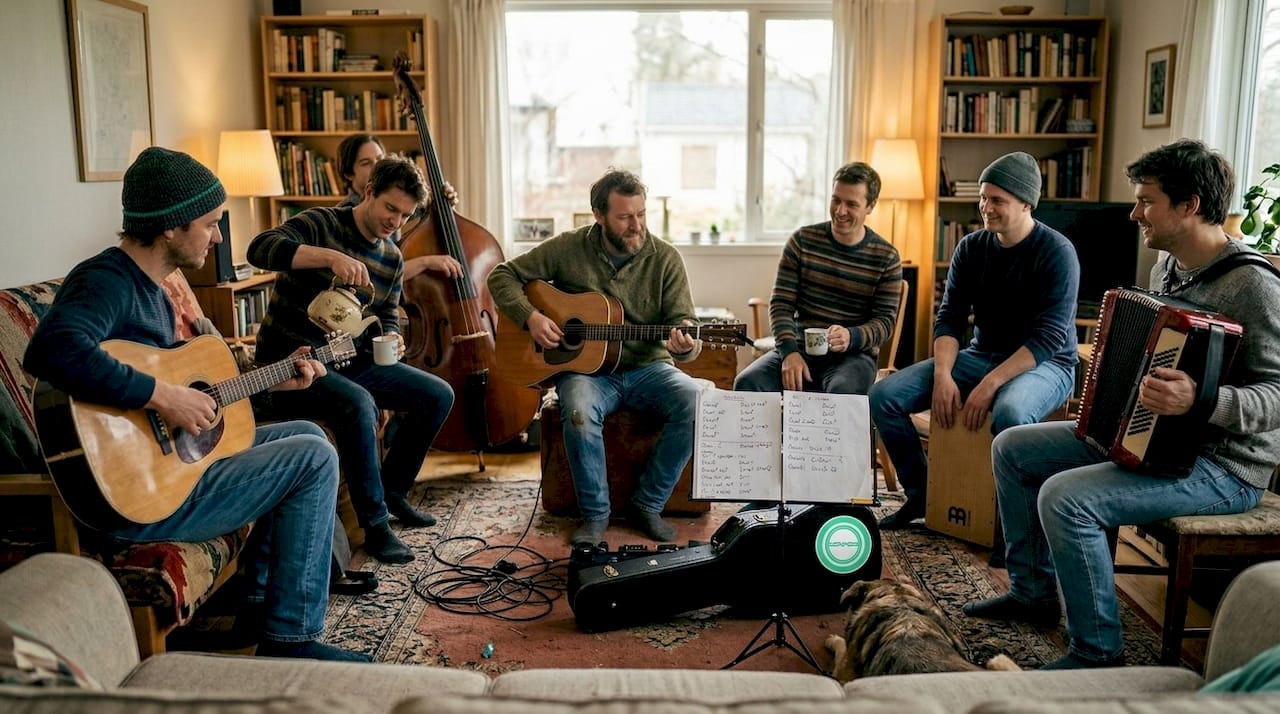
While large events require detailed logistics, smaller community gatherings and jam sessions present their own set of considerations. Jam sessions are informal, improvisational gatherings built around musical conversation rather than polished performance. No two are exactly alike, and that flexibility is part of the appeal.
The factors that make or break a jam session:
- Genre and style: Decide in advance whether it's a blues night, an open genre session, or something more specific. Mixed-genre jams work, but everyone needs to know what they're walking into.
- Venue and noise: Plan genre and pick a noise-friendly space. Home jams need neighbor consideration; rented spaces need noise curfew awareness.
- Gear and setup: A basic PA system, microphones, and a reliable drum kit (or cajon for quieter spaces) cover most situations. Confirm who's bringing what before the session.
- Etiquette, or "jamiquette": Respect turn-taking, balance your volume with others, and listen as much as you play. The best jammers are the ones who make everyone else sound better.
Aim for 5 to 10 participants with varied experience levels. That mix creates the right creative tension: beginners learn fast, and experienced players are challenged to communicate across skill gaps.
A simple structure that works: casual introductions, a warmup song everyone knows, rotating lead roles on each tune, and a group wrap-up to close. It keeps the session from drifting and gives newer players a framework to follow.
| Feature | Jam session | Concert |
|---|---|---|
| Structure | Flexible, improvised | Fixed setlist, scheduled |
| Setup time | 30 to 60 minutes | 2 to 6 hours |
| Audience role | Often participatory | Passive observer |
| Primary goal | Collaboration and fun | Performance and entertainment |
| Typical size | 5 to 20 people | 50 to thousands |
For more on maximizing these gatherings, jam session networking explores how these sessions build lasting musical relationships. If you want to branch out, exploring jam session types can open doors to formats you haven't tried yet.
Pro Tip: Post a short set of house rules at the start of every session. Printed or written on a whiteboard, a few clear expectations keep things running smoothly without anyone feeling called out.
Common challenges and edge cases
Understanding the basics is important, but anticipating pitfalls will set your event apart. Every host runs into obstacles. The ones who handle them well are usually the ones who saw them coming.
Here are the most frequent obstacles and practical solutions:
- Noise restrictions: Research local ordinances before you plan anything outdoors or at home. Many cities cap residential noise at 10 or 11 PM. Violating these rules can get your event shut down mid-set.
- Weather for outdoor events: Book tents or identify a backup indoor venue. Never assume a clear forecast holds. Have a communication plan ready to alert attendees fast if conditions change.
- Virtual jam latency: Apps like Jamulus are built for low-latency online playing. Standard video call tools like Zoom introduce delays that make real-time jamming nearly impossible.
- Artist mismatches: Genre or skill mismatches kill momentum. Vet your participants in advance and, for larger events, set clear expectations about musical direction.
- Overbooked slots: Too many performers and not enough time leads to rushed sets and frustrated artists. Build buffer time into every slot.
"The best-run events aren't the ones where nothing goes wrong. They're the ones where the host was ready when something did."
As common disruptions like noise issues, weather surprises, virtual latency, and skill mismatches show, each format comes with its own risk profile.
| Challenge | Live event | Virtual event | Hybrid event |
|---|---|---|---|
| Noise restrictions | High risk | None | Moderate |
| Tech failures | Low to moderate | High | High |
| Weather disruption | High (outdoor) | None | Moderate |
| Attendance drop-off | Moderate | High | Moderate |
| Communication lag | Low | High | Moderate |
Exploring networking event opportunities can also help you connect with experienced hosts who've already navigated these situations and are willing to share what they learned.
A modern perspective: Why grassroots music hosting matters now
With a view of common challenges, it's time to consider why grassroots hosting truly matters for the musical community. The mainstream conversation about live music almost always focuses on headliners, festival lineups, and streaming numbers. But the foundation of any healthy music scene is built in rooms that seat 20 people, not 20,000.
Grassroots hosts prioritize fun and connection over monetization. That's not a weakness. It's a different model with different rewards: community trust, artistic freedom, and relationships that last longer than any single event.
The uncomfortable truth is that most musicians who host their own events underestimate how much they're contributing. They're keeping music culture alive in neighborhoods that can't sustain a proper venue. They're giving emerging artists a first stage. They're creating the conditions where collaboration happens naturally, where bands form, where sounds evolve.
Building these communities takes patience, but the payoff is real. The JamClub blog's piece on building music communities captures this well: local networks built through small events often outlast the venues themselves. If you're hosting for the love of music and community, you're doing something the mainstream industry genuinely cannot replicate.
Turn your event into a success with JamClub
If you're ready to put these ideas into practice, you don't have to do it alone. JamClub was built specifically for musicians who want to host, find, and grow music events without wading through complicated tools or empty platforms.
With JamClub, you can create and manage jam sessions in minutes, handle RSVPs, and coordinate with participants through real-time messaging. Whether you're planning your first open mic or your tenth community showcase, the platform keeps everything in one place. You can also host a new jam directly from the site, or simply discover local musicians in your area who are ready to play. It's free, it's community-driven, and it's built around exactly the kind of grassroots hosting this guide is all about.
Frequently asked questions
What does a music event host do?
A music event host plans and manages all elements of a live music gathering, from choosing the venue and booking artists to handling promotion and day-of logistics.
How do you host a successful jam session?
Choose a genre, select a noise-friendly space, invite a diverse group of players, and set clear etiquette expectations. Successful jams require solid preparation across all four of those areas.
What challenges should first-time music event hosts expect?
Noise restrictions, tech failures, weather changes for outdoor events, and coordinating mixed skill levels are the most common hurdles. Noise issues and latency are especially common for virtual and hybrid formats.
Why are jam sessions important for musicians?
Jam sessions build real skills and real relationships in ways that solo practice can't replicate. They build community and improve skills by putting musicians in spontaneous, collaborative situations that accelerate growth.