
TL;DR:
- Different networking events serve unique goals like collaboration, industry exposure, or community building.
- Smaller events like open mics foster organic relationships, while large conferences offer industry insights.
- Consistent participation in local scenes is vital for sustainable musical careers.
Choosing the right networking event as a musician can feel like picking a single song from an endless playlist. You know something good is out there, but the sheer variety of open mics, songwriter festivals, industry conferences, and immersive camps makes it hard to know where to start. The truth is, each event type is designed to create different outcomes. Some are built for raw collaboration; others open doors to mentorship, industry exposure, or simply finding your local tribe. This guide breaks down the major types of musician networking events so you can match the right room to your goals and stop showing up to the wrong ones.
Table of Contents
- How to choose the right networking event for musicians
- Open mics: Accessible performance and community
- Songwriter festivals and in-the-rounds: Stories, showcases, and connections
- Songwriting camps and workshops: Immersive collaboration for all levels
- Conferences, summits, and competitions: Networking at scale
- Summary table: Quick comparison of event types
- Our perspective: Why most musicians overlook the value of smaller events
- Find the right jam session for you
- Frequently asked questions
Key Takeaways
| Point | Details |
|---|---|
| Know your goals | Choosing the right event depends on whether you want to collaborate, learn, or perform. |
| Event size matters | Small jams foster close connections, while conferences offer broad exposure and resources. |
| Mix event types | Participating in different events maximizes creative and professional networking. |
| Prepare for success | Arriving early and bringing the right gear helps you make the most of any event. |
How to choose the right networking event for musicians
Before you commit to any event, it helps to know what you actually want from it. Are you looking for a co-writer? A bandmate? Career advice from someone further along the path? Or just a chance to play in front of people without the pressure of a full gig? Your answer should drive your decision.
Here are the key factors to weigh when evaluating any musician networking event:
- Your primary goal: Collaboration, performance practice, industry exposure, or mentorship
- Event size: Grassroots jams typically draw 10 to 80 people, while industry conferences can attract thousands of attendees
- Cost and accessibility: Local jams and open mics are usually free or low cost; paid conferences and selective camps require a bigger investment
- Attendee background: Are you looking to connect with peers at your level, or do you want access to professionals and educators?
- Formality: Casual jam circles feel very different from structured panel discussions
The beauty of networking through jam sessions is that they remove almost every barrier. No application, no ticket price, no pressure. But that informality also means the connections you make are more organic and often more lasting. On the other end of the spectrum, conferences deliver access to hitmakers and industry insiders in a way that grassroots events simply cannot.
If you are just starting to build local music connections, begin with smaller, low-stakes events and work your way up. Knowing what energizes you in a room of 20 musicians will help you navigate a room of 2,000.
Pro Tip: Write down three specific outcomes you want from your next event before you go. This keeps you focused and makes follow-up conversations much easier.
Open mics: Accessible performance and community
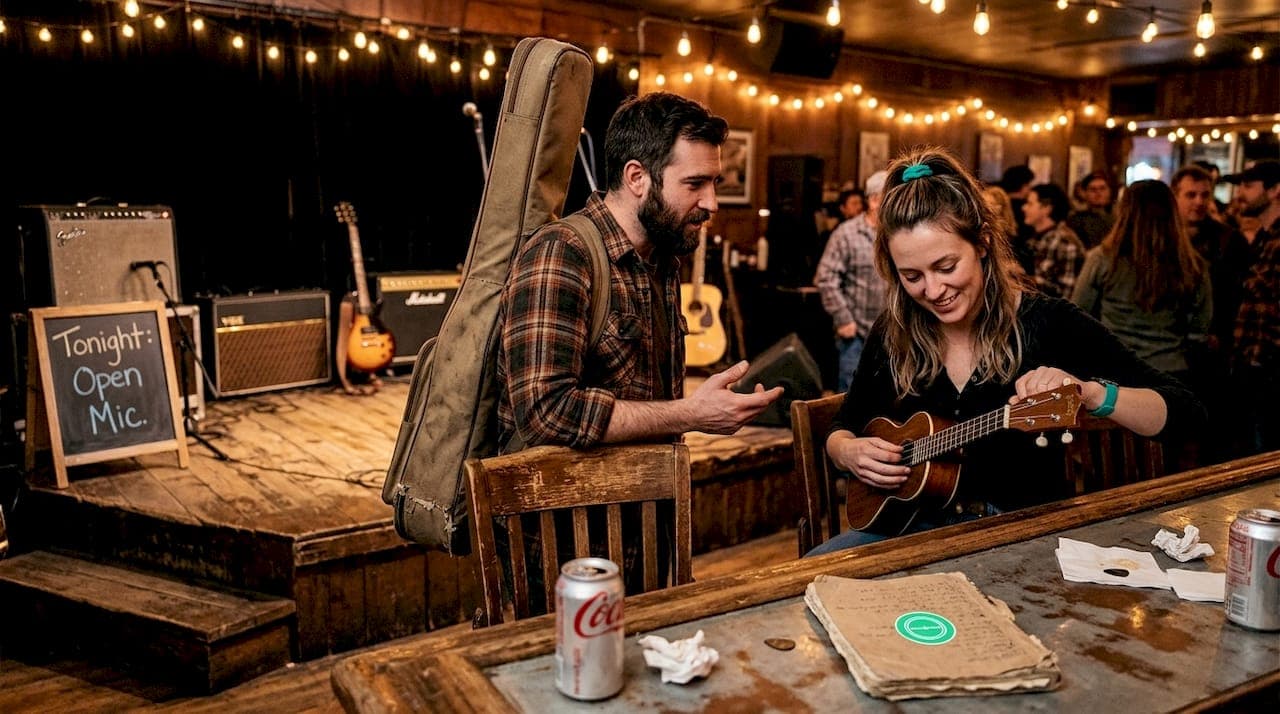
Open mics are the front door of live music networking. They are designed to be welcoming, low-pressure, and repeatable, which makes them one of the most effective tools for building a local music community over time.
Typically, open mics offer sign-up based sets of 1 to 3 songs or 8 to 12 minutes in a listening room format. They attract solo acts, duos, and small groups across all skill levels. That mix is actually a feature, not a bug. Watching a seasoned guitarist follow a nervous first-timer teaches you things no workshop can replicate.
To make the most of open mic experiences, follow these best practices:
- Arrive early: Sign-up slots fill fast, and arriving early lets you meet the host and settle in
- Bring your own gear: Many venues provide a PA system, but having your own cables, picks, and capo saves headaches
- Stay for the whole night: The musicians who stick around are the ones who build real relationships
- Support the venue: Buy a drink, tip the staff, and respect the space that hosts the event
The benefits of live music events go beyond the stage. Open mics are where bands quietly form over post-show conversations. They are where a guitarist meets the singer they have been looking for, or where a producer spots a voice worth developing.
Pro Tip: After your set, stay in the audience and genuinely compliment other performers. Authenticity is remembered, and musicians talk to each other.
Songwriter festivals and in-the-rounds: Stories, showcases, and connections
If open mics cast a wide net, songwriter festivals pull the focus tight. These events are built around the craft of songwriting itself, and the format known as "in-the-round" is their signature experience.
In a round, performers swap originals and share the stories behind their songs in intimate settings. Instead of one artist commanding the stage, three or four writers sit in a circle and take turns. The result is something closer to a conversation than a concert. You hear how other writers think, what inspires them, and how they solve the same creative problems you wrestle with.
Songwriter festivals typically include:
- Intimate showcase performances
- Meet and greet sessions with featured artists
- Q&A panels on craft and the music business
- Informal networking receptions where real conversations happen
"The round format strips away the performance armor. When a writer explains why they wrote a song, the room gets very quiet. That honesty is what creates real connection."
These events attract songwriters and instrumentalists who are serious about their craft. They are ideal if you want to connect on a creative level rather than a purely professional one. Exploring local music scenes that host regular songwriter nights is a great way to find these opportunities without traveling far. For broader discovery, songwriter event platforms can help you locate events in your region.
Songwriting camps and workshops: Immersive collaboration for all levels
Single-night events are great for sparking connections, but songwriting camps and workshops are where those connections deepen into real creative partnerships.
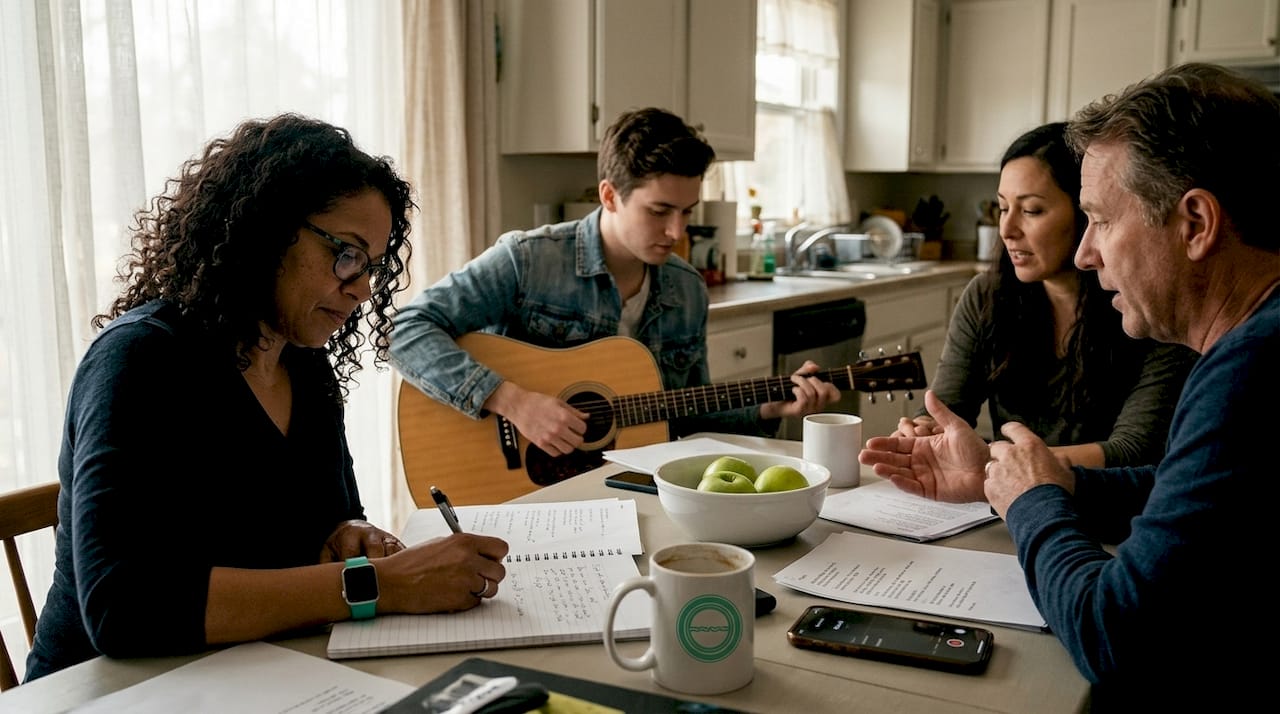
These multi-day programs combine co-writing sessions, mentorship from established artists, and skill-building panels in a focused environment. Participants are often intentionally paired with writers outside their genre to push creative boundaries. According to post-camp surveys, 95% of participants felt more inspired and connected after attending an immersive songwriting camp. That number reflects something real: when you spend three days writing with strangers, they stop being strangers.
Here is what a typical songwriting camp experience looks like:
- Day one: Icebreaker sessions, genre and style matching, initial co-writing pairings
- Day two: Deep co-writing blocks, mentor feedback sessions, panel discussions on craft and career
- Day three: Song showcases, group reflection, and contact exchange for ongoing collaboration
These camps are open to serious amateurs, music educators, and working professionals. They are especially valuable if you want to strengthen both your skills and your network at the same time. Understanding the different music group types before attending helps you know which collaborators to seek out. For a concrete example of what these programs offer, check out songwriting camp info from established organizations.
Pro Tip: Before a camp, prepare a short list of your creative strengths and the gaps you want to fill. Sharing this honestly with co-writers on day one accelerates the whole process.
Conferences, summits, and competitions: Networking at scale
When you are ready to move beyond your local scene, industry conferences and competitions offer a different kind of opportunity. These are the events where the music business and the music itself overlap.
Conferences like the ASCAP Experience gather 2,000 or more creators for keynotes, panels, and direct feedback from hitmakers. You can sit in a room and hear a Grammy-winning producer explain exactly how they approach a track. That kind of access is genuinely rare. Summits and conferences also offer structured networking sessions, pitch opportunities, and mentorship meetups that are hard to replicate anywhere else.
Competitions and showcases add a performance layer. Events like the Stax Music Academy showcase ask participants to submit originals and perform before judges, with prizes ranging from cash to studio time. Youth-focused competitions often blend performance with dedicated networking panels, making them excellent entry points for younger musicians.
| Event type | Cost | Size | Best for |
|---|---|---|---|
| Open mic | Free to low | 10 to 50 | Beginners, community building |
| Songwriter festival | Low to mid | 50 to 300 | Creative connection, craft focus |
| Songwriting camp | Mid to high | 20 to 100 | Deep collaboration, skill growth |
| Conference or summit | High | 500 to 5,000+ | Industry access, career advancement |
| Competition or showcase | Low to mid | Varies | Exposure, prizes, feedback |
"Large conferences are where you learn the industry. Local jams are where you build the relationships that sustain a career."
For tips on planning large music events or reviewing a jam session checklist before you attend, those resources will help you show up prepared. The industry conference guide from Music Biz is also worth bookmarking for upcoming events.
Summary table: Quick comparison of event types
Here is a side-by-side look at all the major event types covered in this guide, so you can match the right format to your current goals.
| Event type | Target audience | Typical cost | Average size | Best networking outcome |
|---|---|---|---|---|
| Open mic | All levels, solo acts | Free to $10 | 10 to 50 | Local community, collaborators |
| Songwriter festival | Songwriters, instrumentalists | $20 to $100 | 50 to 300 | Creative peers, co-writers |
| In-the-round event | Songwriters | Free to $30 | 20 to 80 | Intimate creative bonds |
| Songwriting camp | Serious amateurs, pros | $200 to $1,000+ | 20 to 100 | Lasting co-writing partnerships |
| Industry conference | Professionals, career-focused | $300 to $1,500+ | 500 to 5,000+ | Industry contacts, mentors |
| Competition or showcase | All levels | $10 to $50 entry | Varies | Exposure, judges, prizes |
Use this table as a quick reference when a new event crosses your radar. Match the format to your current stage, your budget, and the specific connection you are looking to make. No single event type wins for everyone. The right choice is the one that moves you toward your next goal.
Our perspective: Why most musicians overlook the value of smaller events
There is a common assumption in the music world that bigger equals better when it comes to networking. A conference with 3,000 attendees must offer more opportunity than a Thursday night jam with 25 people, right? We think that logic gets it backwards most of the time.
Small events lower the social barriers that make networking feel awkward. When there are only 20 people in a room, you are not competing for anyone's attention. Conversations go deeper, follow-ups actually happen, and the people you meet become real collaborators rather than business cards you forget.
The musicians we see build the most sustainable careers are the ones who show up consistently to their local scene. They attend the same jam every week. They become known. That repeated exposure builds trust in a way that a single conference badge never can. Discovering local jam sessions and committing to them regularly is, in our experience, the most underrated career move available to any musician at any level.
That said, the ideal approach is hybrid. Use large events for industry access and inspiration. Use small events for the real work of building a musical community. Neither alone is enough.
Find the right jam session for you
Now that you know the landscape, the next move is simple: get in the room. Whether you are a first-time open mic performer or a seasoned songwriter looking for a co-writer, the right event is out there.
JamClub makes it easy to find jam sessions near you without the guesswork. Browse local events by instrument, skill level, or genre. Connect with musicians before you even walk through the door. Or, if nothing in your area fits what you need, create your own session and let JamClub handle the RSVP management and coordination. The JamClub platform is free to use and built specifically for musicians who want to stop searching and start playing. Your next great collaboration could be one session away.
Frequently asked questions
What is the best type of networking event for new musicians?
Open mics are usually the most accessible starting point, offering sign-up based sets of 1 to 3 songs in a supportive environment that builds both confidence and community.
How do songwriter rounds differ from open mics?
Songwriter rounds have performers swap originals and stories in small, intimate circles, creating deeper creative bonds, while open mics are broader, less curated, and open to any style or format.
Are music conferences worth attending if I'm not a professional?
Yes. Many conferences like the ASCAP Experience offer beginner-friendly panels and open networking sessions that deliver real value regardless of where you are in your career.
What should I bring to a jam or open mic?
Bring your primary instrument and all necessary accessories; following best practices like arriving early and supporting the venue will also help you make the most of the experience.