
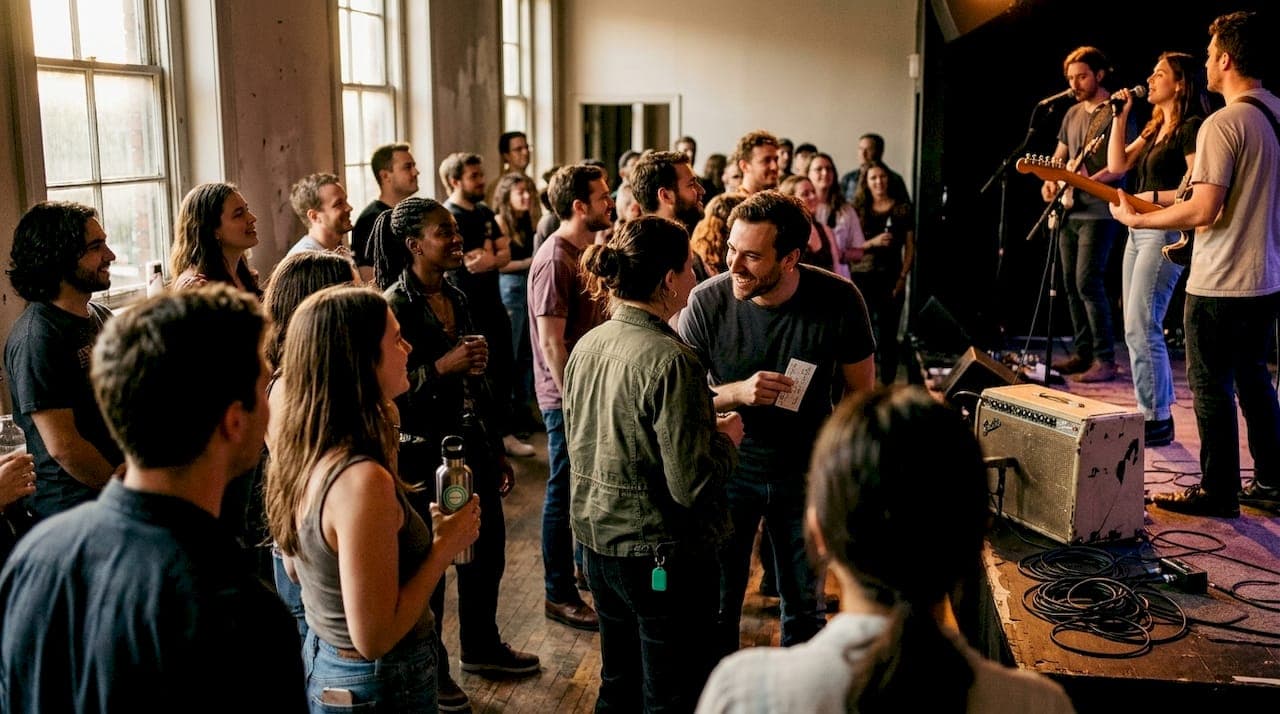
Scientific studies show that live music events increase community engagement by 60% and spark collaborations for 70% of musicians who attend them. Yet many musicians still rely almost entirely on social media posts and streaming platforms to grow their networks. That gap between digital convenience and real-world impact is exactly what this guide addresses. Whether you play guitar at open mics or simply love being in the crowd, live events offer something no algorithm can replicate: genuine human connection, spontaneous creativity, and the kind of relationships that actually move careers forward.
Table of Contents
- Live music events supercharge social bonds and community
- Networking and collaboration: career-changing connections
- Artistic and emotional benefits: why live events move us
- Not one-size-fits-all: nuanced motivations and edge cases
- From insight to action: getting the most from live music events
- Take your live music experience further with JamClub
- Frequently asked questions
Key Takeaways
| Point | Details |
|---|---|
| Live events build community | Attending live music events increases social engagement and strengthens bonds with others who share your passion. |
| Networking sparks collaboration | Industry events help musicians and enthusiasts find new partners, projects, and professional growth. |
| Artistic experience is unique | Live music creates heightened emotion and inspiration not found in digital formats. |
| Know your goals | Whether you seek connection, growth, or deep listening, set intentions to get the most from every event. |
Live music events supercharge social bonds and community
The social science behind live events is surprisingly compelling. Research confirms that 60% increased community engagement is a measurable outcome for people who regularly attend live music gatherings. That number isn't just a feel-good statistic. It reflects real shifts in how people relate to each other, form friendships, and build lasting networks.
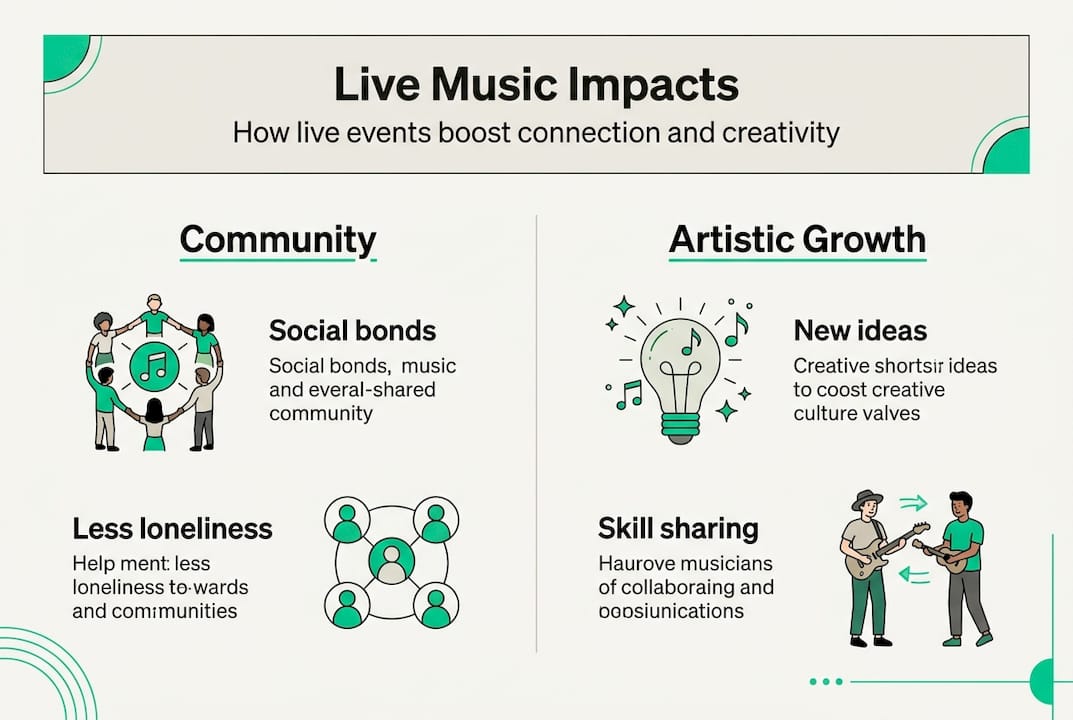
Shared musical experiences do something unique to the brain. They reduce loneliness, trigger feelings of belonging, and create what researchers call "social glue." When you're standing next to a stranger who reacts to the same guitar riff the same way you do, a bond forms instantly. That's not something a playlist or a livestream can manufacture. Musical gatherings and creativity reinforce each other in ways that compound over time.
| Social outcome | Online platforms | Live music events |
|---|---|---|
| Community engagement | Low to moderate | High (up to 60% increase) |
| Loneliness reduction | Minimal | Significant |
| Friendship formation | Slow, surface-level | Fast, deeper bonds |
| Network durability | Often short-lived | Long-lasting |
Here's what consistent live event attendance tends to produce:
- Stronger local music networks built on face-to-face trust
- Reduced social isolation, especially for musicians who work independently
- A sense of shared identity that online communities rarely replicate
- Opportunities to meet collaborators, mentors, and fans in one room
"Music is the shorthand of emotion" — and in a live setting, that shorthand becomes a full conversation between strangers who suddenly feel like old friends.
The link between musical experiences and connection is well documented, and well-being and shared experiences are deeply intertwined. Attending live events isn't just fun. It's genuinely good for you.
Networking and collaboration: career-changing connections
Beyond community, live events directly shape musical journeys through collaboration. The numbers here are striking: 70% of musicians find their collaborators through in-person networking at events, not through DMs or email chains. That's a majority of working musicians crediting a handshake, a conversation after a set, or a shared backstage moment as the origin of their most important creative partnerships.
Live music events facilitate the kind of trust-building that online outreach simply can't replicate. When you watch someone perform, you immediately understand their style, energy, and commitment. That context makes every conversation afterward more meaningful.
| Factor | Live networking | Online outreach |
|---|---|---|
| First impression quality | Immediate, authentic | Delayed, curated |
| Trust-building speed | Fast | Slow |
| Collaboration conversion | High | Low to moderate |
| Relationship depth | Deep | Often surface-level |
To make the most of networking at live events, follow these steps:
- Arrive early. The best conversations happen before the main act, not after.
- Introduce yourself with context. Say what you play and what you're working on, not just your name.
- Ask genuine questions. People remember who made them feel heard.
- Exchange contact info in the moment. Don't rely on memory or social media searches later.
- Follow up within 48 hours. A quick message referencing your conversation keeps the momentum alive.
Events like networking at ATXM Night Shift show how structured musician meetups turn casual introductions into paid gigs and long-term creative partnerships. Learning how to establish local music connections and build a local music network starts with showing up consistently.
Pro Tip: Follow up within 48 hours of meeting someone at a live event. Reference something specific from your conversation. That one detail signals that you were genuinely paying attention, and it dramatically increases the chance of a real collaboration forming.
Artistic and emotional benefits: why live events move us
The benefits aren't only social or practical. The music itself feels different in person. A randomized study on live concerts found that physical presence of musicians produces significantly higher emotional responses and greater physiological arousal compared to watching the same performance via livestream. Heart rates rise. Skin conductance increases. People report more "goosebumps moments" in live settings than in any digital format.
Here's what's happening biologically:
- Dopamine release spikes during live performances, creating feelings of pleasure and reward
- Oxytocin (the bonding hormone) increases when people share music in a physical space
- Cortisol levels drop, reducing stress and anxiety in real time
- Mirror neurons activate more strongly when watching a live performer than a screen
These aren't minor effects. Music concert well-being effects are measurable and lasting. People who attend live events regularly report higher baseline mood, stronger feelings of purpose, and deeper emotional connection to music as an art form.
For musicians specifically, watching peers perform live is one of the fastest ways to grow artistically. You pick up phrasing, stage presence, and emotional delivery in ways that YouTube tutorials can't teach. Discovering live music events in your area is one of the most underrated moves for artistic development. The future of live music is bright precisely because these in-person experiences are irreplaceable.
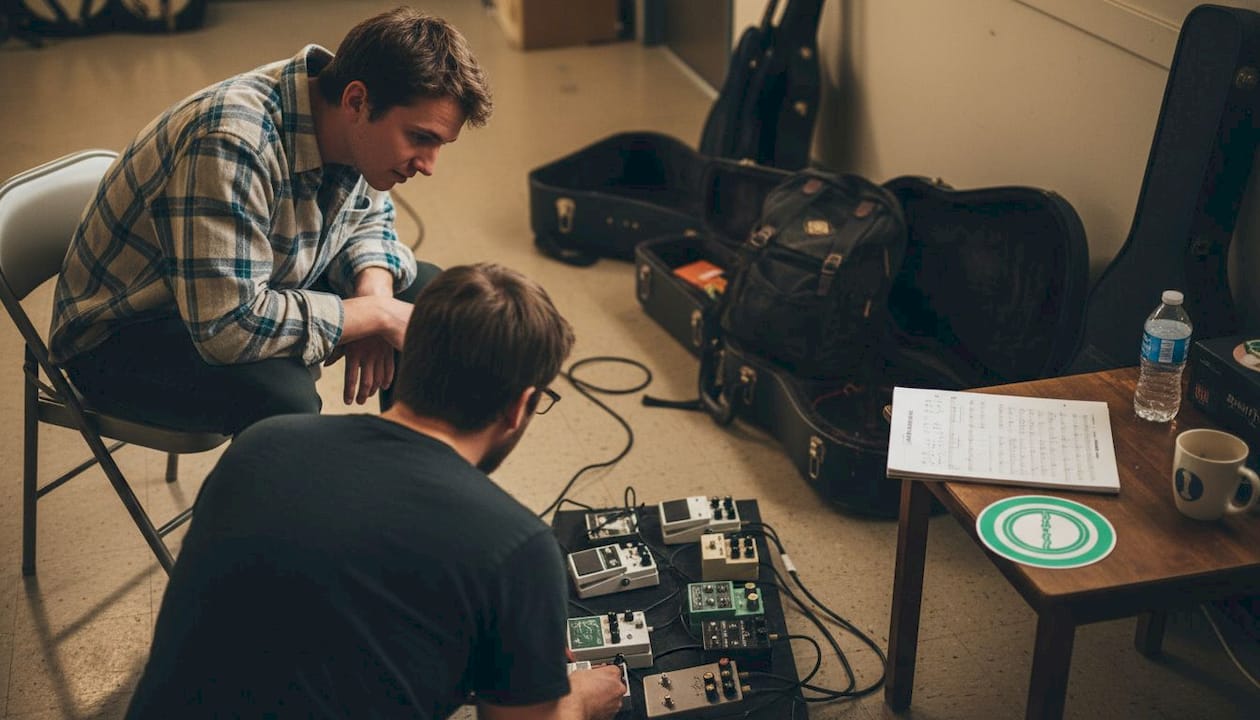
Pro Tip: Before attending a live show, set a specific artistic intention. Maybe you want to study how the bassist locks in with the drummer, or how the vocalist handles crowd energy. Focused observation turns a night out into a masterclass.
Not one-size-fits-all: nuanced motivations and edge cases
While most reports are positive, let's cover different motivations and potential pitfalls. Not everyone attends live events for the same reasons, and that's completely valid. Research shows that some audiences prioritize individual artistic immersion over communal interaction. For these listeners, a live concert is a deeply personal experience, not a networking opportunity. Both approaches are legitimate.
There's also a less-discussed reality in music networking: competition. Networking events can foster both collaboration and friction. Ego, jealousy, and territorial behavior do exist in music scenes, particularly at high-level industry events where stakes feel higher. Acknowledging this helps you navigate it more effectively.
"The music scene is a community, but communities have politics. Knowing that going in makes you more resilient, not more cynical."
Common challenges and how to handle them:
- Competitive tension: Focus on your own lane. Genuine curiosity about others disarms defensiveness.
- Cliques and closed circles: Attend events repeatedly. Familiarity opens doors that a single visit won't.
- Introversion: Use the music itself as a conversation starter. "What did you think of that last set?" is an easy opener.
- Negative interactions: Not every connection will click. Move on without burning bridges.
Events like artist development days show both the collaborative potential and the interpersonal complexity of music networks. Understanding music scenes and creativity means accepting the full picture, including the friction. Strong music community building requires navigating these dynamics with patience.
From insight to action: getting the most from live music events
Now let's translate these insights into practical steps for musicians and fans. Data shows that 84% of people say live events give them the most meaningful experiences of their lives. That's not a passive outcome. It comes from intentional participation.
Here's a simple framework to maximize every event you attend:
- Before the event: Research who's performing and who's likely to attend. Set one clear intention, whether artistic, social, or both.
- Arrive early: Venue staff, sound engineers, and opening acts are often the most accessible and well-connected people in the room.
- During the event: Stay present. Put your phone down during sets. Observe actively.
- Introduce yourself: One genuine conversation beats ten business cards handed out without context.
- After the event: Follow up with new contacts within 48 hours. Share something specific you discussed.
- Reflect: What did you learn artistically? Who do you want to see again? What would you do differently next time?
Pro Tip: Set a dual intention before every event: one artistic goal (something you want to observe or learn) and one social goal (one new person you want to connect with). This keeps you focused without making the experience feel transactional.
Building a habit around building vibrant jam sessions and using a jam session community checklist can help you stay consistent and intentional about your live event participation.
Take your live music experience further with JamClub
Everything covered in this guide points to one truth: showing up matters. The connections, the artistic growth, and the community all start with finding the right events and the right people.
JamClub is built exactly for this. Whether you want to find jam sessions near you, host your own with built-in RSVP tools, or connect with musicians who share your style and goals, the JamClub platform puts everything in one place. It's free to use, designed for musicians at every level, and focused on making real-world musical connection easier. Stop scrolling through social media hoping for a collaboration to land in your inbox. Join the music community app that's built around showing up, playing together, and growing as an artist.
Frequently asked questions
What are the biggest networking opportunities at live music events?
Industry mixers, open mics, and artist workshops offer direct access to collaborators, venues, and producers. These settings give musicians a chance to build real relationships that translate into gigs, projects, and long-term creative partnerships.
How do live music events improve mental health and well-being?
Attending live concerts triggers dopamine and oxytocin release, which reduces loneliness and strengthens feelings of connection. Research on concert well-being confirms these effects are measurable and lasting, not just a temporary mood boost.
Are there downsides or challenges in attending live events for networking?
Yes. Competitive environments and ego-driven behavior can sometimes get in the way, particularly at high-profile events. Friction between bands is real, but going in with realistic expectations and a collaborative mindset helps you navigate it.
Can introverts benefit from attending live music events?
Absolutely. Some audiences prefer deep individual immersion over social interaction, and live events fully support that. Even without networking, the artistic and emotional benefits of being physically present at a live performance are significant.