
TL;DR:
- Success relies on preparation, communication, and shared purpose, not just talent.
- Defining clear vision and goals attracts dedicated members and guides growth.
- Building authentic community and maintaining strong relationships sustain long-term musical groups.
Starting a music group sounds exciting until reality hits. Rehearsals fall apart, members lose interest, and creative differences pull people in opposite directions. Many musicians pour weeks of energy into building something, only to watch it dissolve before the first gig. The difference between groups that make it and those that don't rarely comes down to talent. It almost always comes down to preparation, communication, and a shared sense of purpose. This guide walks you through every stage, from defining your sound to booking your first shows, so you can build a group that actually sticks.
Table of Contents
- Define your vision, genre, and goals
- Find the right members and build chemistry
- Rehearse, communicate, and make it official
- Book gigs, build your brand, and grow your audience
- What sets lasting music groups apart: Hard truths and overlooked habits
- Take your music group further with JamClub
- Frequently asked questions
Key Takeaways
| Point | Details |
|---|---|
| Start with a vision | Defining your group’s genre, goals, and audience ensures long-term synergy. |
| Prioritize group chemistry | Recruit members who align with your values and communicate openly for lasting collaboration. |
| Schedule consistent rehearsals | Regular, structured practice and clear roles create strong foundations for growth. |
| Build your audience early | Leverage local gigs, social media, and networking to gain traction and visibility. |
| Focus on sustainability | Enjoy the process, track finances together, and use platforms like JamClub to connect and thrive. |
Define your vision, genre, and goals
Before you recruit a single musician, you need to know exactly what kind of group you want to build. That means defining your musical vision before anything else, including the genre, style, influences, and target audience. Without this foundation, you'll spend months trying to align people who were never on the same page to begin with.
Start by asking yourself a few honest questions. What genre excites you most? Are you chasing blues-soaked rock, punchy indie pop, or something entirely experimental? Who are your musical heroes, and what specific elements of their sound do you want to draw from? Answering these questions clearly helps you attract members who already resonate with your direction.
From there, set concrete goals for the group. Vague intentions like "we want to make it" don't hold up under pressure. Instead, think in specific milestones:
- Record and release a 4-track EP within six months
- Play at least two local open mics before the end of the year
- Build a social media presence with regular content
- Write a full set of original songs within the first quarter
These targets give everyone something measurable to work toward. They also help you filter out members who aren't serious about your pace or direction. Check out these collaboration ideas to keep the creative process fresh as your group develops its identity.
Consider what sets your group apart. Maybe it's a unique instrument blend, a specific cultural influence, or a commitment to writing politically charged lyrics. Whatever it is, naming it early helps shape everything from your sound to your visual branding.
Statistic: 45.8% of charting artists only release one album. That stat underscores how critical it is to build your vision with longevity in mind from day one.
Pro Tip: Write a short "band manifesto," one page that captures your sound, values, and goals. Share it with every potential member and revisit it every few months to make sure you're still aligned.
Find the right members and build chemistry
With your vision clear, the next challenge is finding people who genuinely share your passion and won't bail after three rehearsals. This step takes patience. Rushing it is one of the most common mistakes new groups make.
Start by creating a profile of your ideal bandmate. Think beyond instrument skills. Consider their availability, their attitude in group settings, how they handle constructive criticism, and whether their musical taste overlaps with yours. Skill can be developed. A bad attitude or poor commitment is much harder to fix.
Here's a practical approach to finding prospects:
- Attend local open mics and music events to meet players in the wild
- Post on local musician forums, Facebook groups, and platforms like Bandmix
- Ask friends, teachers, or local music store staff for referrals
- Learn to network with musicians at every opportunity, even casual ones
- Host a casual jam session instead of a formal audition to see how people actually interact
That last point matters more than most guides admit. A formal audition tells you how someone plays under pressure. A jam tells you how they listen, how they respond to other players, and whether they make the room feel good or tense. Those are the qualities that sustain a group.
Communication is key in any band, much like in any close relationship. You need members who can give and receive feedback without it turning into a blowup. Assess this early.
| Quality | Why it matters |
|---|---|
| Musicianship | Baseline competence for the genre |
| Reliability | Shows up, follows through on commitments |
| Communication | Handles feedback and conflict maturely |
| Vision alignment | Shares your goals and creative direction |
| Work ethic | Treats rehearsal like a priority, not an option |
Pro Tip: Focus on shared values and work ethic over technical perfection. A slightly less polished player who is fully committed will almost always outperform a virtuoso who shows up late and checks their phone between songs.
Tap into the broader building music community scene in your area. Local communities often surface the most dedicated players who are actively looking for their next project.
Rehearse, communicate, and make it official
Once your group takes shape, the real work begins. This is where most bands either solidify or start cracking. Consistency is everything at this stage.
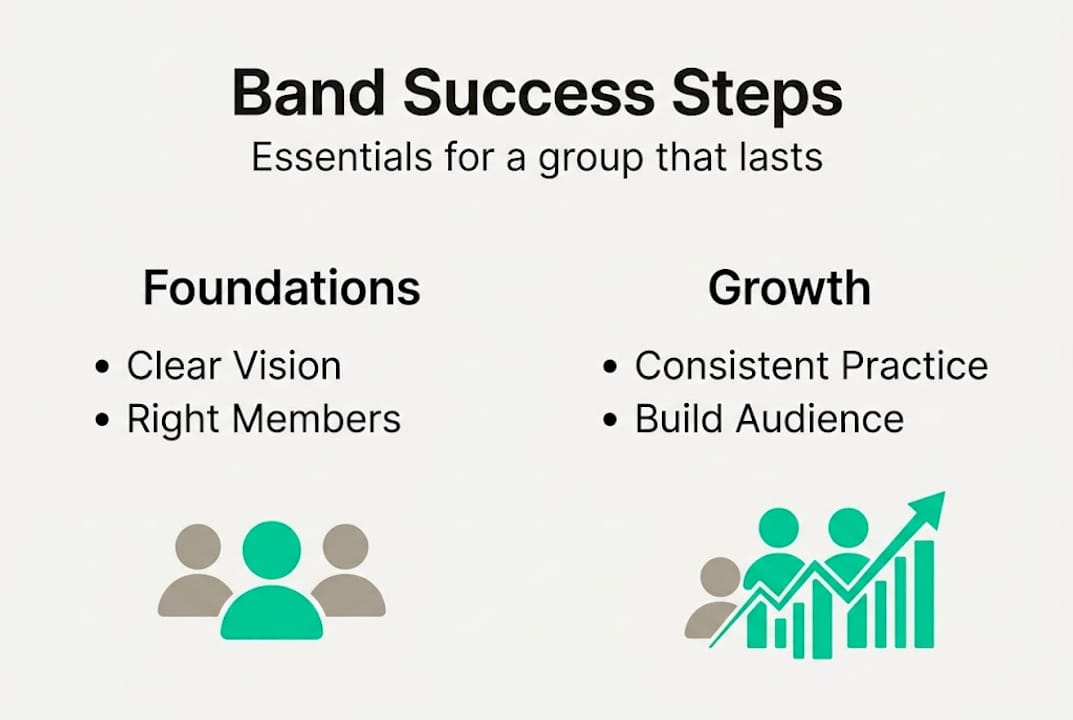
Lock in a weekly rehearsal schedule and treat it like a standing appointment. Not a "we'll figure it out" situation. A fixed day, a fixed location, a fixed start time. Groups that rehearse consistently improve faster and build stronger internal trust. Rehearsal over solo practice is how musical vision actually gets communicated between members.
Here's how to run an effective early rehearsal period:
- Open each session with a brief check-in on how everyone is feeling about the material
- Rotate feedback so every member has a voice, not just the loudest personality
- Set a specific agenda for each session so time isn't wasted
- End every rehearsal with one clear goal for the next meeting
Communication outside rehearsal matters just as much. Use a group chat for logistics, not creative debates. Save the big creative conversations for in-person sessions where tone and body language can prevent misunderstandings.
Use a jam session checklist to structure your early rehearsals so nothing important gets skipped.
Also, get practical about roles and money early. Decide who handles booking, who manages social media, who is the primary contact for venues. Write it down. Then address financial splits upfront.
The median musician income sits around $39,000 per year. Most working musicians aren't living on royalties alone. Track your group's finances early, even when the numbers are small, because the habits you set now will matter when revenue grows.
Pro Tip: Create a shared group calendar and a simple shared budget spreadsheet. Even if you haven't earned a dollar yet, these tools set a professional tone and prevent future disputes.
Book gigs, build your brand, and grow your audience
Your group is rehearsed, your chemistry is solid, and you have a handful of original songs or a tight cover set. Now it's time to perform.
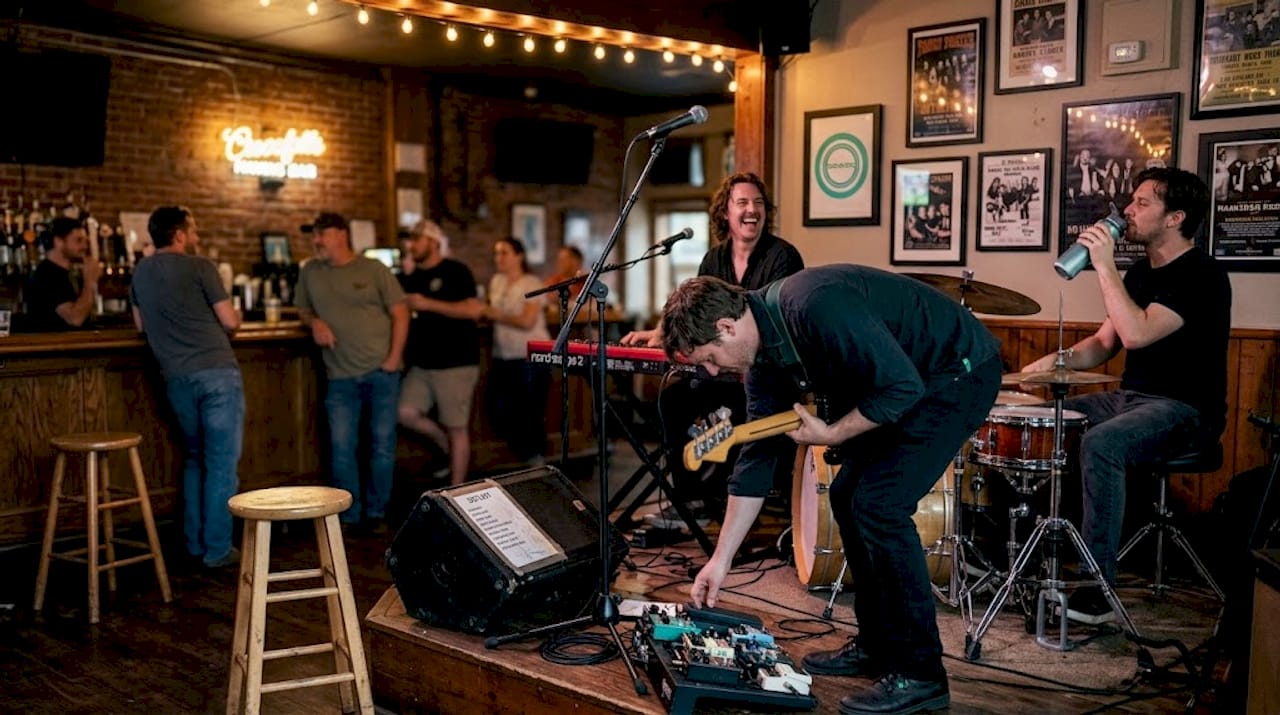
Start small. Seriously. Small packed venues build energy and reputation far more effectively than playing to an empty room in a 500-capacity club. Open mics, local bars, house shows, and community events are your proving ground. These live music events are where real fan relationships begin.
| Venue type | Energy level | Risk level | Best for |
|---|---|---|---|
| Open mic | Medium | Low | First performances, testing material |
| Small bar or café | High | Low | Building a regular local fanbase |
| Medium venue | High | Medium | Growing audience milestone |
| Large venue | Low (if underpromoted) | High | Only when you have real draw |
Alongside live performance, build your online presence from day one:
- Create a professional profile on at least one streaming platform
- Record a short demo or live video to share online
- Maintain a public gig calendar so fans can follow your schedule
- Post consistently on two or three social media platforms
- Engage directly with followers, not just broadcast content
Network constantly. Attend shows by other local acts and genuinely support them. That goodwill comes back. Focus on building a local music network before expanding your reach regionally or nationally.
Statistic: Only 1% of artists capture 90% of all streams. Authentic community connections are your most realistic path to sustainable traction. Also invest time in sharing music online to reach listeners beyond your local scene.
What sets lasting music groups apart: Hard truths and overlooked habits
Most articles about starting a band focus heavily on the exciting stuff: gear, gigs, and going viral. What they rarely address is the unglamorous reality that keeps groups alive for years.
The odds of mainstream success are genuinely slim for most artists. Acknowledging that isn't defeatist. It's clarifying. When you stop chasing fame as the primary metric, you start focusing on what actually sustains creativity: consistent rehearsals, honest conversations, and genuine enjoyment of the process. Peter, Paul and Mary reportedly maintained weekly rehearsals for over 30 years after their commercial peak. Not because they were still charting, but because the practice itself had value.
Most groups that break up don't collapse because of lack of talent. They collapse because of ignored tensions, vague expectations, and the slow erosion of enthusiasm that comes from poor musical networking and isolation. The musicians who build something lasting are the ones who treat group health with the same seriousness they treat their instrument.
Prioritize the relationship. The music will follow.
Take your music group further with JamClub
Putting all these steps into practice is a lot easier when you have the right community around you. JamClub is built specifically for musicians like you who want to connect, collaborate, and perform.
Through the JamClub music community, you can find like-minded players in your area, join or host local jam sessions, and use built-in tools for scheduling and real-time messaging. Whether you're still searching for the right bandmates or ready to organize your first group session, the JamClub platform gives you everything in one place. You can even create a jam session today and start meeting musicians who share your vision. It's free, it's community-driven, and it's designed to make collaboration feel natural.
Frequently asked questions
What is the first step in creating a music group?
Define your vision, genre, and group goals before recruiting members. Having clarity on your direction makes it far easier to attract the right people from the start.
How do I find members for my music group?
Attend local events, use online platforms, and host jam sessions to meet musicians who fit your vision. Networking at shows and building an online presence also help you reach players beyond your immediate circle.
How can music groups stay together long term?
Prioritize open communication, consistent rehearsals, and shared business habits. Communication acts like the foundation of any strong relationship, and bands that neglect it rarely last.
What makes a music group succeed today?
Strong group chemistry, authentic connections in your local scene, and staying focused on the creative process. Starting small and building genuine relationships with fans and fellow musicians is more sustainable than chasing quick exposure.