
TL;DR:
- A well-structured jam invitation specifies genre, date, location, gear, skill level, and RSVP details to ensure quality participation.
- Using multiple invitation channels like social media, direct messages, and forums boosts turnout and community engagement.
- Clear expectations and etiquette, communicated upfront, foster a respectful, balanced, and enjoyable jam session environment.
A poorly planned jam invite does more damage than most musicians realize. When your message is vague about genre, skill level, or even the address, you end up with a room full of confusion instead of music. Getting your invitations right is one of the simplest ways to set the tone for a genuinely great session, attract the right players, and start building something that lasts. This guide walks you through everything: what to include, where to send it, who to invite, and how to establish the kind of shared expectations that keep people coming back.
Table of Contents
- What to include in a music jam invitation
- Choosing your invitation channels
- Building your ideal jam session group
- Setting expectations and jam etiquette
- Why intentional invitations transform music jams
- Ready to grow your jam community?
- Frequently asked questions
Key Takeaways
| Point | Details |
|---|---|
| Detail matters | Clear invitations prevent confusion and attract the right musicians. |
| Choose the right channels | Mix online and personal approaches for maximum response. |
| Diversify your group | Invite a range of instruments and skill levels for a richer experience. |
| Communicate etiquette | Stating rules up front ensures respectful and productive jams. |
What to include in a music jam invitation
Now that you understand why strong invites matter, let's break down exactly what every great jam invitation should include.
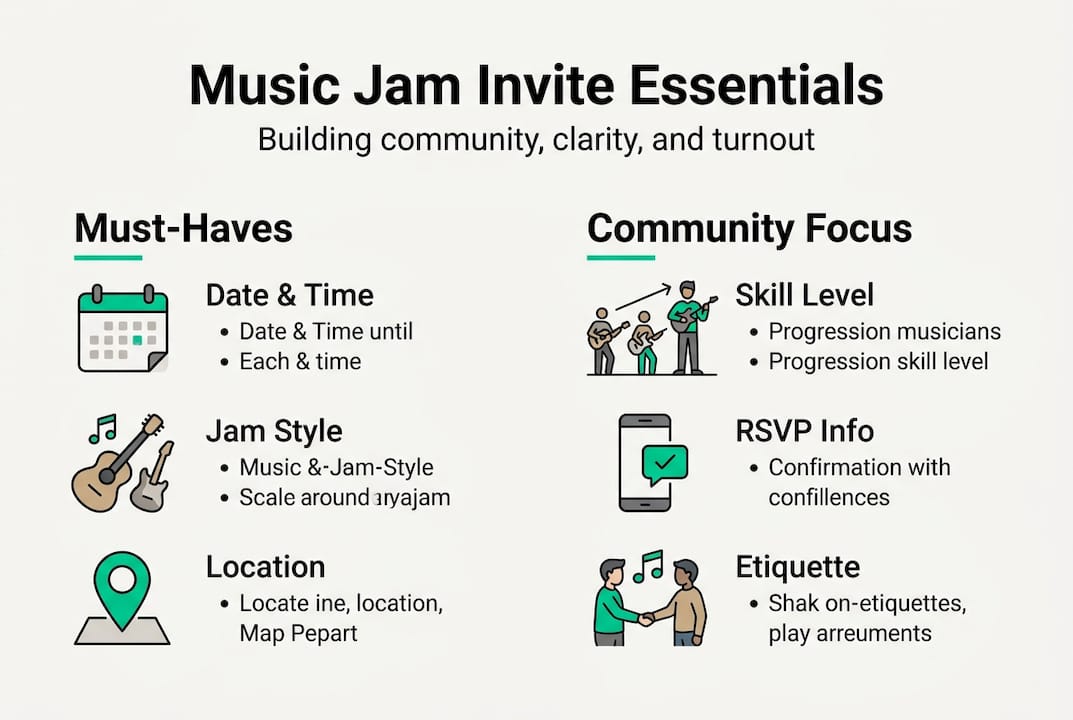
Most people send a quick text or a social media post and hope for the best. That approach almost always leads to low turnout, mismatched skill levels, or guests who show up without the right gear. A well-structured invite removes all that friction before it starts. According to a practical guide on hosting successful jams, invitations should specify genre/style, date, time, location, gear to bring, and the skill level mix you are encouraging.
Here are the must-have fields for any jam invitation:
- Genre or style (blues, jazz, rock, folk, open genre)
- Date and start time (include an approximate end time)
- Location (full address plus parking or transit notes)
- Gear to bring (instrument, amp, cables, pedals, etc.)
- Skill level (beginner-friendly, intermediate, all levels welcome)
- RSVP method (text, app, reply to the message)
Optional but valuable additions include expected session duration, whether snacks or drinks will be available, and whether there is a host song list or if it will be fully free-form. These small details signal that you are organized and serious, which makes guests far more likely to commit.
Here is a simple sample format you can adapt:
| Field | Example |
|---|---|
| Genre | Blues and classic rock |
| Date and time | Saturday, July 12 at 6 PM |
| Location | 124 Maple Ave, Garage entrance |
| Bring | Guitar or bass, your own cables |
| Skill level | All levels welcome |
| RSVP | Text back by Thursday |
| Duration | Approx. 2.5 hours |
Before you send anything, also check out a solid jam session checklist to make sure nothing slips through the cracks. If you want more context on how different music group tips apply to different formats, that is a great read before your first organizing attempt.
Pro Tip: Always state the skill level you welcome, even if it feels obvious. Leaving it out causes anxiety for beginners and frustration for advanced players who expected a more polished session.
Choosing your invitation channels
Once your invitation is ready, it is time to decide how and where to send it to get the best turnout.
The channel you choose shapes who shows up and how reliably they commit. A Facebook event post reaches more people but gets lower engagement. A direct message feels personal but takes longer to send at scale. Network with musicians through multiple touchpoints and you will consistently outperform anyone relying on just one method.
Here is a comparison of common invitation channels:
| Channel | Reach | RSVP reliability | Community feel |
|---|---|---|---|
| Social media groups | High | Low to medium | Medium |
| Direct messages | Low | High | High |
| Music forums | Medium | Medium | High |
| Event platforms | High | Medium | Low |
| Word of mouth | Low | High | Very high |
For most organizers, a combination of two or three channels works best. Use local jam planning strategies that match your existing community size.
Here is a simple step-by-step process to send and track your invites:
- Finalize your invitation copy with all required fields filled in.
- Post to your primary group or community page first.
- Follow up with direct messages to your core players.
- Share in relevant local music forums or community boards.
- Use an RSVP tool or simply ask for a reply to confirm.
- Log who has confirmed so you are not guessing on the day.
For a more streamlined experience, the JamClub platform handles RSVP tracking and messaging in one place, which eliminates the back-and-forth across multiple apps.
As a practical rule from experienced hosts, confirming attendance using local music forums, social media groups, and word of mouth, combined with a check-in 1-2 days before, consistently improves actual turnout.
Pro Tip: Send a brief reminder message to confirmed guests exactly one to two days before the jam. Keep it warm and casual, not a formal reminder. Something like "Can't wait to see you Saturday!" goes a long way.
Building your ideal jam session group
Picking the right invite channels is key, but equally vital is inviting the right musicians for balance and inspiration.
Group composition matters more than most first-time organizers expect. A room full of guitarists with no one holding down the rhythm section creates musical gridlock fast. A mix of instruments, roles, and experience levels keeps energy flowing and makes the session feel alive. Research on hosting a successful jam shows that aiming for 5-10 musicians with instrument diversity and a mix of skill levels, including at least one experienced player to guide beginners, produces the most dynamic and enjoyable sessions.
Here are the key roles to try to fill when building your list:
- Rhythm guitar or keys (harmonic foundation)
- Bass guitar (groove and pulse)
- Drums or percussion (the backbone of the whole session)
- Lead instrument (guitar, sax, violin, etc.)
- Vocals (optional but great for accessibility)
- Wildcard (any unusual or fun instrument that adds texture)
Five musicians is your floor. Under that number and the energy can feel thin, with too much pressure on each individual. Ten is roughly your ceiling before coordination becomes the main challenge. Within that range, you want at least one or two players with strong experience who can call a key, suggest a tempo, and help newer players find their footing.
Inviting musicians who play different jam session types also keeps things interesting. A player used to structured jazz jams brings a different vocabulary than someone from open mic nights, and that creative friction often produces the most memorable moments. Understanding music diversity benefits can help you see why varied backgrounds in a room consistently elevate the quality of what gets made.
Setting expectations and jam etiquette
Once you have your group assembled, make sure everyone is on the same page by communicating clear expectations.
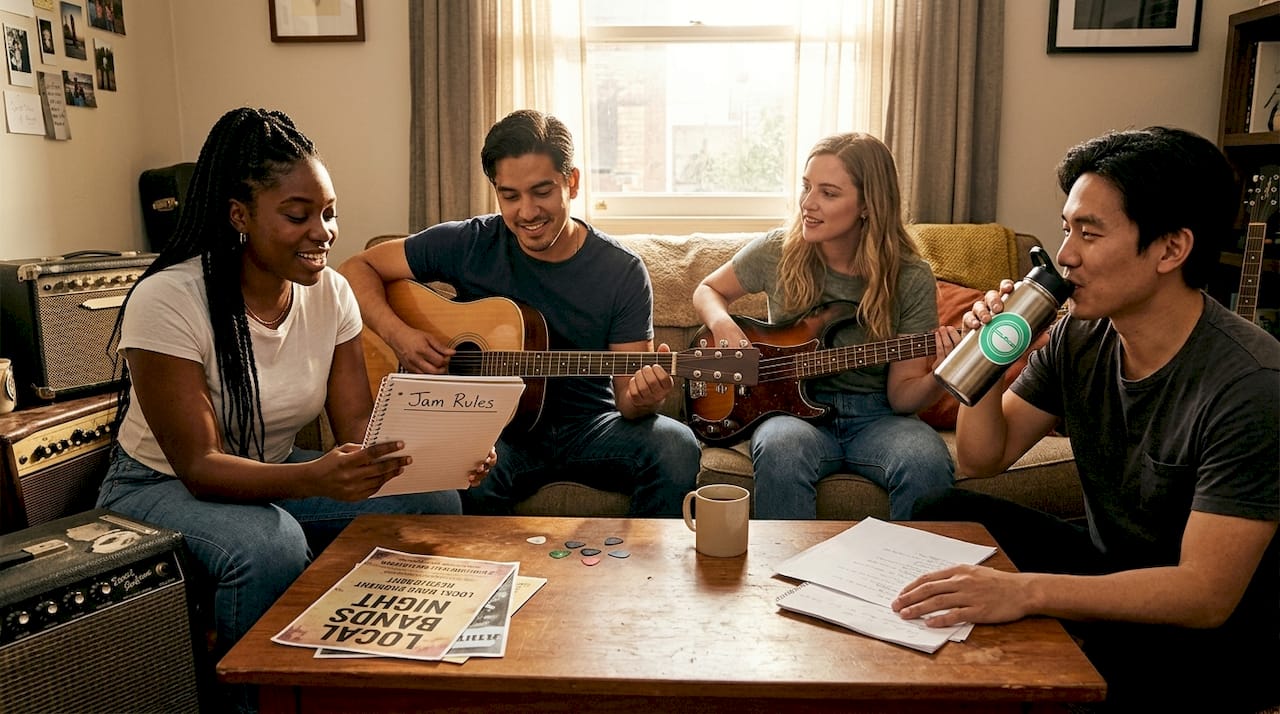
Etiquette is the invisible structure that keeps a jam from becoming a chaotic noise session. Most awkward jam moments happen not because people are rude, but because no one spelled out the unwritten rules. Your invitation is the perfect place to do that, before anyone even shows up. Ground rules around listening actively and respecting turns along with balanced volume and no dominating behavior form the foundation of a healthy session culture.
Here are four etiquette rules worth including directly in your invitation:
- Take turns leading each song or section. No one musician drives the whole session.
- Listen more than you play. The best jammers spend as much time listening as they do contributing.
- Match the room volume. If the drummer is playing softly, everyone adjusts down. No one should be forcing the volume up.
- Welcome mistakes. This is a jam, not a performance. Errors are part of the process.
"The best jam sessions are built on generosity, not talent. When musicians listen first and play second, the music takes care of itself."
This kind of mindset, stated clearly from the start, filters for the right people and sets a tone that carries through the whole evening.
Use the full jam etiquette checklist to cover anything you might have missed when prepping your invitation.
Pro Tip: Read the rules aloud at the start of your jam, even if everyone has already seen them. It takes 60 seconds and immediately signals that this is an intentional, respectful space.
Why intentional invitations transform music jams
Having covered the practical aspects, here is our take on the deeper impact that thoughtful invitations have on music culture.
Most organizers treat invitations as a logistics checkbox. Date, time, address, done. But an invitation is actually the first act of community building. The moment someone reads your invite and feels like it was written for them specifically, a real connection has already started. That is not an accident. It is a result of intentional language, clear structure, and a visible respect for the invitee's time and skill.
Jams that "just see who shows up" rarely build anything lasting. The ones that grow into regular events, that turn into bands, friendships, and creative partnerships, almost always started with a host who cared enough to communicate well from the beginning. Invitations that articulate expectations also quietly filter out participants who are not a good fit, which protects the culture of the group over time.
We have seen firsthand how music gatherings and community thrive when people feel welcomed, prepared, and respected before they even walk in the room. Your invitation is where that experience begins.
Ready to grow your jam community?
If you are ready to put these tips into action, discover tools that make jam invitations and organizing effortless.
JamClub was built specifically for musicians who want to organize and find jams without the headache of juggling multiple apps, group chats, and spreadsheets. Whether you are hosting your first session or trying to grow a regular weekly jam, the platform gives you everything in one place.
With JamClub, you can send polished invitations, manage RSVPs, message your guests in real time, and grow your local music network, all for free. The platform features are designed to reflect exactly what working musicians need. Ready to try it? Create a jam session today and see how much easier organizing can be when the tools actually match the way musicians think.
Frequently asked questions
What should I include in a music jam invitation?
Always specify the jam style, date, time, location, what to bring, and which skill levels are welcome. A clear invite format removes guesswork and boosts your turnout.
How many musicians should I invite to a jam session?
Aim for 5-10 musicians for the best dynamic range and energy. That sweet spot, backed by session hosting research, keeps the group large enough to be interesting but small enough to stay coordinated.
What's the best way to confirm jam session attendance?
Follow up with invitees one to two days before through whichever channel you used to invite them. Simple, warm reminders consistently improve confirmed turnout over no-follow-up approaches.
How do I set jam session etiquette for guests?
List expected behaviors, like taking turns, listening actively, keeping volume balanced, and avoiding solo domination, directly in your invite. Clear ground rules in advance prevent awkward corrections during the session itself.