

TL;DR:
- Jam sessions promote skill development, creativity, and community connection for musicians of all levels.
- Regular attendance enhances improvisation, listening, and confidence while fostering valuable networking.
- Engaging in jams benefits live performances, audience connection, and supports local music venues.
Most musicians assume jam sessions are reserved for seasoned pros who already know everyone in the room. That assumption costs beginners, intermediate players, and even advanced musicians real opportunities. Jam sessions are one of the most accessible, high-impact ways to grow as a player and as a person in the music world. Whether you play guitar, keys, drums, or anything in between, engaging with your local music scene through jams builds skills, friendships, and creative momentum that solo practice simply cannot replicate. This guide breaks down exactly why scene engagement matters and how you can make the most of it.
Table of Contents
- The real reasons musicians engage with the music scene
- How jam sessions fuel creativity and collaboration
- Jam sessions as engines for networking and community building
- Why audience engagement and emotional impact matter
- What most guides miss about music scene engagement
- Take the next step: Find your jam session community
- Frequently asked questions
Key Takeaways
| Point | Details |
|---|---|
| Engage for growth | Jam sessions enhance musicianship, confidence, and creative collaboration for all skill levels. |
| Network and sustain | Active scene participation connects you with peers and helps sustain local music communities. |
| Spark audience impact | Improvisational live jams boost emotional audience engagement and memory. |
| Overcome real obstacles | Skill gaps and chaotic sessions happen, but adaptation and private practice lead to enduring growth. |
The real reasons musicians engage with the music scene
Most people think musicians show up to jams to perform. The real motivation runs much deeper. Jam sessions and skill development show that musicians engage primarily for skill growth including improvisation, listening, collaboration, and confidence building applicable to all skill levels. That covers a lot more ground than just showing off.
Think about what happens when you practice alone. You repeat what you already know. You avoid the parts that feel uncomfortable. A jam session flips that dynamic completely. You are forced to listen, respond, and adapt in real time. That pressure is uncomfortable at first, but it is exactly where growth lives.
Here are the core benefits musicians consistently report from scene engagement:
- Improvisation skills that transfer directly to performance confidence
- Active listening developed by playing with others in real time
- Creative inspiration sparked by hearing different styles and approaches
- Networking connections that lead to bands, gigs, and collaborations
- Emotional resilience built through navigating unfamiliar musical situations
- Community belonging that keeps musicians motivated long-term
One of the most overlooked benefits is community support. Music can be isolating. Practicing alone for months without feedback or encouragement drains motivation faster than most musicians expect. Scene engagement through jams creates a feedback loop of inspiration. You hear someone play something unexpected, and suddenly you want to practice again.
"The music scene is not a ladder to climb. It is a web to weave yourself into."
This matters for beginners especially. The myth that jam sessions are only for advanced players is one of the most damaging ideas in music culture. In reality, most local jams welcome all skill levels. Beginners learn by watching and listening. Intermediate players stretch by playing with people better than them. Advanced musicians stay sharp by teaching and adapting.
You can grow creativity and connection at any point in your musical journey. The scene does not require a minimum skill level. It requires a willingness to show up.
How jam sessions fuel creativity and collaboration
Understanding motivations, we can see how jam sessions offer a special environment for creativity that is genuinely hard to replicate elsewhere.
Musical improvisation research reveals something fascinating: in free improvisation, musicians balance cooperation and creative dissensus for the best outcomes. Familiarity and co-presence among players enable more relational flexibility and deeper exploration of non-cooperative modes. In plain terms, the best jams happen when players know each other well enough to push back creatively without things falling apart.
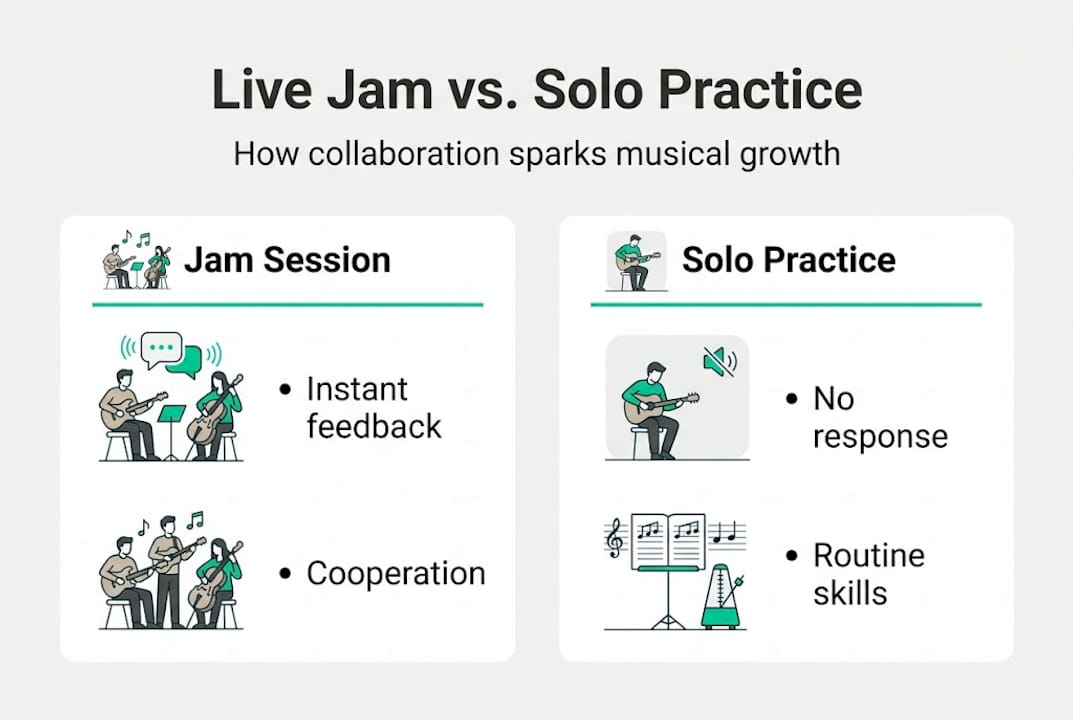
This is why regular attendance at the same jam builds something special over time. The first few sessions feel awkward. By the fifth or sixth, you start to anticipate each other. That is when genuinely surprising music gets made.
Pro Tip: During a jam, resist the urge to always lead or always follow. The most creative moments come from switching roles mid-song. Try dropping out for eight bars, then re-entering with a completely different energy.
Here is a quick comparison of how live jams stack up against virtual or solo practice:
| Factor | Live jam session | Virtual or solo practice |
|---|---|---|
| Real-time feedback | Immediate | Delayed or absent |
| Creative tension | High | Low |
| Listening skills | Actively developed | Limited development |
| Spontaneous ideas | Frequent | Rare |
| Community connection | Strong | Weak |
| Comfort zone pressure | Consistent | Self-directed |
Virtual sessions have their place. They are convenient and accessible. But the table above makes it clear that live jams offer something fundamentally different. The physical co-presence creates a kind of creative pressure that digital formats struggle to match.
You can find practical jam session tips for navigating different group dynamics, from open mics to structured ensemble sessions. And if you are curious about how technology fits in, there are also digital tools for jam sessions that can help you prepare, coordinate, and even record your sessions for later review.
The key takeaway here is simple. Creativity is not a solo sport. It thrives on friction, response, and the unpredictability of other human beings making music in the same room as you.
Jam sessions as engines for networking and community building
With creativity flowing, musicians can unlock even more value by connecting with others through scene engagement.
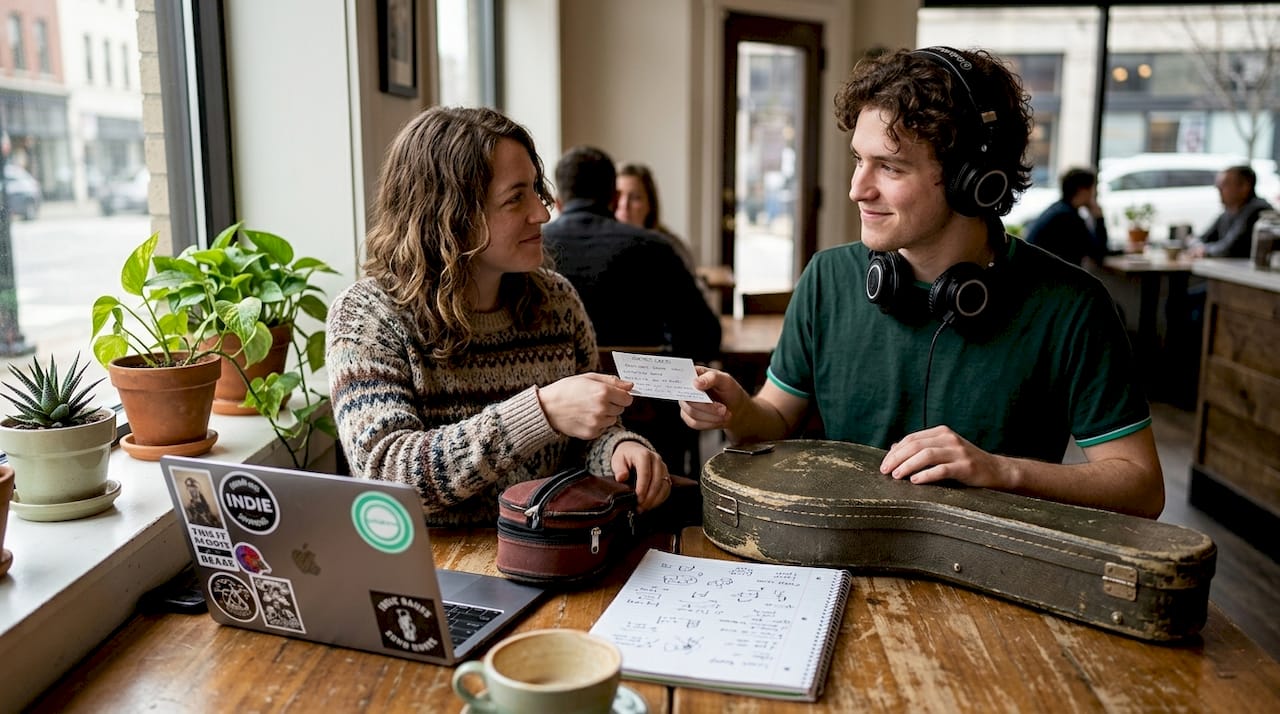
Jam sessions are one of the most natural networking environments in any creative field. Unlike industry events or formal showcases, jams strip away the performance pressure and create genuine human interaction around music. Jam sessions and community research shows they foster community building, networking, and collaborative opportunities by breaking barriers between performers and audience while nurturing emerging talent.
That last point matters. When the line between performer and listener blurs, something powerful happens. Audience members become collaborators. Collaborators become bandmates. Bandmates become lifelong creative partners.
Here is a practical sequence for using jams as a networking tool:
- Show up consistently to the same weekly or monthly jam so people recognize you
- Introduce yourself between sets, not just during the music
- Follow up digitally by connecting on social platforms or messaging apps after the event
- Offer to collaborate on a small project before committing to a full band situation
- Bring something to share, whether that is a song idea, a recording, or just encouragement
Pro Tip: Create a simple digital profile with your instrument, style, and contact info. A QR code on your phone takes ten seconds to share and makes follow-up effortless.
The networking stakes are higher than ever right now. 64% of independent venues were unprofitable in 2024 and 2025, which means the venues that host jams need musician participation to survive. When musicians organize and attend jams, they are not just growing personally. They are actively sustaining the spaces where music culture lives.
The music community building process starts with showing up. And building your music community through consistent scene engagement creates a network that pays dividends for years.
Why audience engagement and emotional impact matter
Networking is one side of the story. Audience engagement is the other crucial pillar of music scene success.
When musicians improvise and interact during a performance, audiences respond differently. It is not just a feeling. Studies on audience impact confirm that improvisatory jam-like performances enhance audience perception of musical convincingness and emotional engagement compared to strict adherence to a fixed arrangement.
In other words, when you take risks on stage, the audience feels it. They lean in. They stay present. They remember the show.
"Audiences do not just hear music. They feel the relationship between musicians."
That relationship is built in jams. The comfort with uncertainty, the ability to respond to a bandmate's unexpected move, the willingness to let a song go somewhere unplanned. All of that translates directly to more compelling live performances.
Here are three specific ways live jams build stronger connections with listeners:
- Authenticity signals: Improvised moments feel real to audiences because they are. No two performances are identical, which creates a sense of presence and spontaneity.
- Emotional mirroring: When musicians visibly respond to each other, audiences unconsciously mirror those emotional cues, deepening their own engagement.
- Shared discovery: When something unexpected and beautiful happens in a jam, the audience experiences that discovery alongside the musicians, creating a shared memory.
You can find more on this at live music events and get a practical framework from the successful jam sessions checklist to make sure your next session delivers on all three fronts.
The emotional impact of a great jam extends well beyond the room. People talk about it. They share clips. They come back next time and bring friends.
What most guides miss about music scene engagement
Before you jump into your next jam, here is a hard-won perspective most musicians wish they had heard sooner.
Most articles about jam sessions paint a rosy picture. Show up, play music, make friends. The reality is messier. Skill gaps are real. Some jams have competitive or unwelcoming energy. Beginners sometimes walk away feeling worse than when they arrived. That is not a reason to avoid jams. It is a reason to choose them carefully.
Private jams with a small, trusted group often produce more growth than large open sessions, especially early on. The intimacy lowers the stakes and raises the creative risk-taking. Once you build confidence there, the open jams feel much more manageable.
Jams can also be chaotic and frustrating. That is part of the process. The musicians who stick with it through the awkward, disorganized sessions are the ones who build real resilience and real relationships. Growth is not linear, and neither is community involvement.
Co-presence, being in the same room as other musicians, beats virtual collaboration for most creative work. The physical feedback loop is irreplaceable. Use digital tools to coordinate and prepare, but prioritize live sessions whenever possible.
If you want to promote musical gatherings in your area, start small. One trusted partner, one consistent space, one recurring time. Build from there.
Pro Tip: If a jam feels overwhelming, step out, regroup, and try again with new partners. Walking away from one bad session is not failure. It is smart self-management.
Take the next step: Find your jam session community
Ready to put all of this into action? Here is how you can get involved today.
JamClub makes it easy to move from reading about jam sessions to actually being in one. Whether you want to find a local session happening this weekend or create your own and invite musicians in your area, the tools are right there waiting for you.
You can find or create jam sessions on the JamClub platform, or discover local jams already happening near you. The community is free to join, welcoming to all skill levels, and built specifically for musicians who want to connect, collaborate, and grow. Explore JamClub and take the first step toward the music scene you have been looking for.
Frequently asked questions
What are the biggest benefits of joining jam sessions?
Jam sessions build skills including improvisation, listening, and confidence while also providing networking opportunities and community inspiration for musicians at every level.
How do jam sessions help with musical creativity?
Jams encourage real-time cooperation and creative tension between players, which consistently sparks new musical ideas that solo practice rarely produces. Free improvisation research confirms that balancing cooperation and dissensus drives the most creative outcomes.
Do jam sessions build connection with the audience?
Yes. Improvisatory performances measurably increase audience perception of emotional authenticity and musical convincingness compared to fixed, rehearsed arrangements.
How does scene engagement impact music venues?
Musician participation through jams helps keep independent venues financially viable. With 64% of venues unprofitable in 2024 and 2025, musician-led scene building through jams is one of the most direct ways to support the spaces where live music happens.