
TL;DR:
- Starting new musical projects can reignite creativity and help musicians develop new skills. Collaborative group efforts provide fresh perspectives, reduce burnout, and expand networks. Diversifying projects supports long-term career resilience and industry adaptability.
Creative blocks, isolation, and burnout are more common in music than most people admit. Plenty of musicians, from bedroom producers to touring veterans, hit a wall where their current project feels like it has run out of road. The good news? Starting fresh is one of the most underrated tools any musician has. Launching a new collaborative project can reignite your passion, sharpen your skills, and connect you with people who push your music in directions you never expected. This guide breaks down exactly why and how new musical projects transform your creative life.
Table of Contents
- Breaking the cycle: Escaping stagnation and finding creative renewal
- Collaboration and community: Why group projects matter in 2026
- Experimentation and skill growth: How new projects push musicians forward
- Career sustainability: Managing risks and thriving in a changing music industry
- Our take: The real reasons musicians need new projects now
- Ready to join or create your next musical project?
- Frequently asked questions
Key Takeaways
| Point | Details |
|---|---|
| Creative renewal | New projects provide a fresh start and help musicians escape old habits or group baggage. |
| Collaboration boosts skills | Group work and jam sessions rapidly improve musical ability and creative thinking. |
| Career resilience | Starting multiple projects helps musicians manage risks and stay active in a changing industry. |
| Digital platforms enable connection | Online collaboration tools make starting a group or jam easier than ever. |
Breaking the cycle: Escaping stagnation and finding creative renewal
Every band or project carries history. Sometimes that history is beautiful. Other times, it becomes a weight that pulls everything down. Old tensions, creative disagreements, or simply the pressure of a shared identity can quietly choke the joy out of making music. The longer a project runs without evolving, the more it can start to feel like a job nobody signed up for.
That is exactly why so many musicians find relief in starting something new. New projects let musicians escape the baggage of old ones and inject fresh creative energy into their work. There is no back catalog of arguments to manage, no expectations from an existing fanbase to navigate. Just new people, new sounds, and new possibilities.
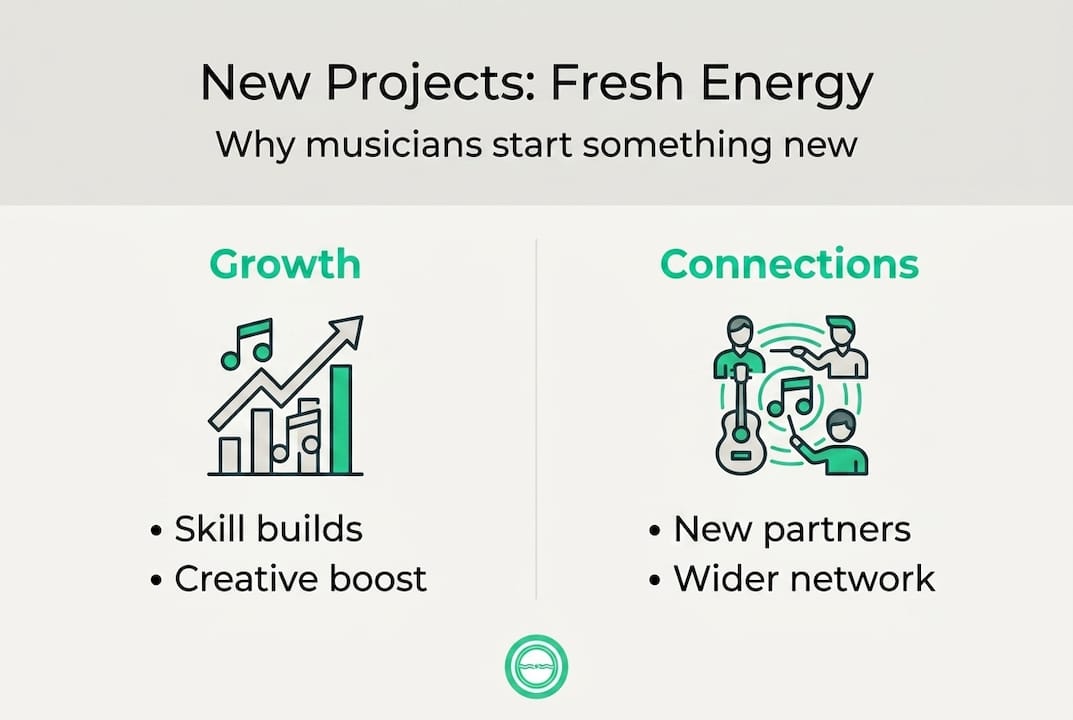
This creative renewal is not limited to struggling musicians, either. Some of the most celebrated artists in history have launched side projects and supergroups precisely because they craved a reset. Think of how differently musicians play when they are not locked into a predetermined role.
Here is what typically changes when you start a new project:
- Fresh perspectives: New collaborators challenge your assumptions about how a song should sound.
- Role flexibility: You might lead, support, or experiment in ways your current project would never allow.
- Motivation spike: A new goal with new people naturally increases energy and commitment.
- Reduced pressure: Without an established audience, you can take risks you normally would not.
"Starting a new band is not an admission of failure. It is a deliberate act of creative self-preservation."
When you work with different musicians, collaboration boosts creativity in measurable ways. You absorb new techniques, rethink familiar habits, and produce work that surprises even yourself. And promoting creativity at music gatherings shows just how much environment and community shape the music you make. Change your environment, change your output.
Collaboration and community: Why group projects matter in 2026
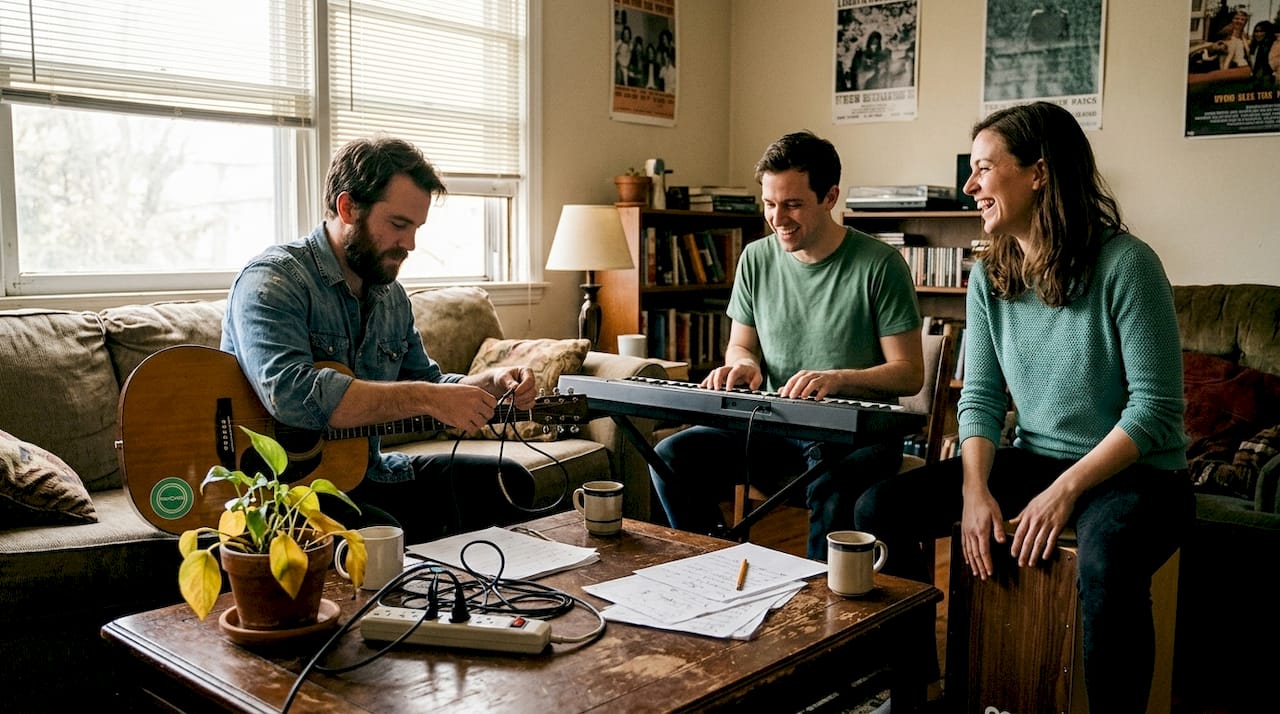
Solo music has never been more technically accessible. Anyone with a laptop can record, mix, and release a full album from their bedroom. But accessibility does not automatically produce fulfillment. In fact, the rise of the solo act has quietly fueled a loneliness epidemic in the music world that most industry conversations overlook.
Traditional bands are declining partly because labels favor solo artists and because economic pressures like touring costs and poor merch revenue make group projects harder to sustain. That creates a real gap in the musical ecosystem, and it is one that collaborative projects can fill.
Group projects do more than make music. They build relationships that support musicians through the inevitable hard patches. A rotating cast of collaborators means you are constantly meeting new people, learning from mentors, and finding unexpected audiences. It is one of the healthiest structures a working musician can build into their career.
| Project type | Key benefit | Best for |
|---|---|---|
| Traditional band | Shared identity, deep chemistry | Long-term commitment |
| Rotating collective | Flexibility, diverse exposure | Experimental musicians |
| Online collaboration | Global reach, low overhead | Remote or solo artists |
| Jam session group | Spontaneous creativity, community | All skill levels |
The growth of music sharing and collaboration tools has made forming and sustaining group projects easier than ever. You no longer need a shared rehearsal space to build something meaningful together.
Pro Tip: Try different ways to jam together before committing to a single format. A loose, low-stakes session often reveals the best creative chemistry faster than any structured audition.
Experimentation and skill growth: How new projects push musicians forward
There is a specific kind of growth that only happens in unfamiliar musical territory. When you play with the same people for years, everyone's strengths and weaknesses become predictable. The arrangements stop surprising anyone. The feedback loop closes. New projects blow that loop wide open.
When you collaborate with different musicians, you encounter rhythmic approaches, harmonic ideas, and production sensibilities you have never considered. Your ear is forced to work harder. Your hands adapt. That is not just enjoyable, it is genuinely transformative for your development as a player.
Here is how new collaborative projects drive measurable skill growth:
- Rhythmic precision: Playing with a new drummer or percussionist exposes gaps in your timing you never knew existed.
- Active listening: Group settings require you to hear and respond in real time, which sharpens your musical awareness fast.
- Economy of playing: New collaborators naturally push you to leave space, a skill that takes most musicians years to develop.
- Improvisation: Low-stakes jams create the ideal pressure for stretching beyond your comfort zone.
- Songwriting instincts: Collaborative writing forces you to edit, compromise, and articulate your creative vision more clearly.
Jam sessions and collaborations improve rhythm, listening, economy, improvisation, and songwriting through real-time feedback. This is not passive learning. It is immediate, responsive, and deeply effective.
Pro Tip: Use tools that enhance jam sessions to record your collaborative experiments. Listening back reveals growth patterns you cannot hear in the moment.
Both digital jams and in-person sessions offer distinct experimental benefits. Online collaboration removes geographic limits. In-person sessions offer the raw energy of shared physical space. Smart musicians use both.
Career sustainability: Managing risks and thriving in a changing music industry
A single project is a single point of failure. Most musicians understand this intuitively but underestimate how much it matters over a 10 or 20-year career. The music industry is genuinely unpredictable. Trends shift, platforms change their algorithms, and labels restructure constantly.
Music careers are precarious, with musicians showing high career survival rates but frequently transitioning into skilled adjacent jobs when a single path fails. Multiple projects act as a financial and creative buffer. If one project stalls, another keeps you active, visible, and earning.
The numbers back this up. The music collaboration platform market was valued at $3.8 billion in 2025 and is projected to grow to $9.6 billion by 2034, driven by remote production and platform-based collaboration. This is not a niche trend. It is a structural shift in how music is made and sustained professionally.
| Career approach | Risk level | Income diversity | Community support |
|---|---|---|---|
| Single band or project | High | Low | Limited |
| Multiple collaborative projects | Moderate | High | Strong |
| Solo artist only | High | Variable | Minimal |
| Mixed portfolio | Low | High | Broad |
Key reasons to build multiple projects into your career:
- Income diversification: Different projects can reach different markets and revenue streams.
- Skill visibility: Each project showcases a different side of your musicianship to potential collaborators and bookers.
- Resilience: A project going quiet does not sideline your entire career.
- Network growth: More projects mean more relationships, which directly feeds future opportunities.
Exploring international collaboration trends shows how geographic diversity in your project portfolio adds another layer of sustainability. Cross-cultural projects open doors to audiences and opportunities that purely local projects simply cannot reach.
Our take: The real reasons musicians need new projects now
Most conversations about starting new projects frame it as a reaction to something going wrong. A bad breakup with bandmates, a creative direction that lost steam, a label deal that fell through. That framing misses the bigger picture entirely.
New projects are not crisis management. They are routine career maintenance. The musicians who thrive long-term treat launching new collaborations the way athletes treat cross-training. It is not a sign that your current pursuit is failing. It is how you stay sharp, connected, and genuinely excited about the work.
Shared workload is another underappreciated benefit. Multiple projects sustain careers by spreading creative and logistical labor across collaborators, which reduces the isolation and exhaustion that quietly ends so many music careers. No single musician should be carrying the entire weight of their creative output alone.
The musicians who are growing creative scenes in 2026 are not waiting for the perfect conditions or the right label deal. They are starting projects, inviting collaborators, and treating every new musical relationship as a potential foundation for something lasting. That mindset shift, from project loyalty to project fluency, is what separates musicians who endure from those who burn out.
True longevity is built by seeking new musical homes regularly, not by clinging to old ones past their natural life.
Ready to join or create your next musical project?
Knowing why new projects matter is the first step. The next one is finding the right people to make music with. That is exactly where JamClub comes in. JamClub makes it simple to find collaborators who match your style, skill level, and goals, whether you want to join an existing session or build something from scratch.
You can join JamClub for free and start connecting with musicians in your area right now. Browse sessions, send messages, and find your next creative partner without the guesswork. Want to take the lead? Explore the JamClub platform to see how easy it is to host your own sessions, manage RSVPs, and grow a community around your music. Ready to jump in? Create your own jam and see who shows up.
Frequently asked questions
What are the main benefits of starting a new music project?
Starting a new project renews your creative energy and expands your skills through fresh collaboration. It also grows your network by connecting you with musicians who bring entirely new perspectives to your work.
How does collaboration help musicians grow?
Collaboration puts you in real-time feedback situations that sharpen your listening, rhythm, and improvisation fast. Playing with others also exposes you to new styles and ideas that solo practice simply cannot replicate.
Are new band projects a safer career path for musicians today?
Yes, because they spread your creative and financial risk across multiple income and visibility streams. Career research shows that musicians with diverse project portfolios are better positioned to weather industry shifts.
Can online tools help form successful music projects?
Absolutely. The platform market growth to a projected $9.6 billion by 2034 shows how effectively digital tools now connect musicians across distances to collaborate and create together.